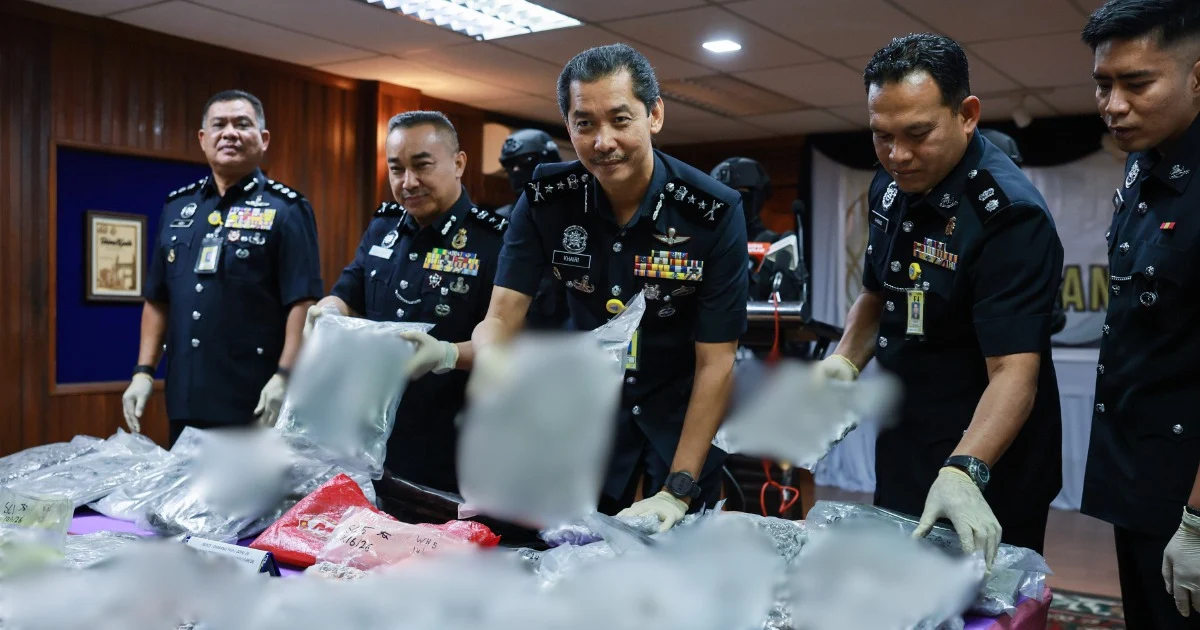
Two brothers have been taken into custody by police in Kuala Terengganu following the discovery of a substantial drug cache worth RM1.76 million at their residence in Kampung Duyong Besar. The operation marks a significant enforcement success for the state's narcotics division and underscores the ongoing challenge of organised drug trafficking networks operating across residential neighbourhoods in Malaysia.
The brothers allegedly converted their family home into a clandestine storage operation for controlled substances, exploiting the property's location to facilitate distribution activities. Investigators have indicated that the arrangement suggests a level of sophistication beyond isolated drug possession, pointing towards involvement in a larger trafficking enterprise. The scale of the seizure indicates that the residence served as more than a casual stash house, rather functioning as a strategic logistics point within what appears to be a consolidated supply chain.
The investigation began when law enforcement received intelligence regarding suspicious activities at the property. Plain-clothes officers conducted surveillance before executing a warranted search of the premises, where they uncovered the substantial quantity of drugs concealed in locations throughout the building. The methodical approach taken by authorities demonstrates standard protocols for dismantling suspected trafficking infrastructure, with officers prioritising the preservation of evidence and careful documentation of findings.
This bust reflects an escalating pattern of residential drug operations across Malaysia, particularly in East Coast states where porous borders and established supply routes facilitate trafficking. Kampung Duyong Besar, like other residential areas across Terengganu, has experienced increased narcotics-related activity over recent years. By establishing storage operations in seemingly ordinary homes, traffickers attempt to evade detection by blending into residential communities whilst maintaining proximity to distribution networks.
The RM1.76 million valuation represents the street value of the seized narcotics, suggesting the seizure encompassed multiple drug types in significant quantities. Such diversified stocks typically indicate an operation serving multiple distribution tiers rather than a single buyer arrangement. The volume recovered from a single residential location highlights how major trafficking organisations compartmentalise their operations, reducing exposure whilst maintaining sufficient stock to sustain market supply across wide geographical areas.
Authorities have indicated that both brothers will undergo questioning regarding the extent of their involvement and potential connections to broader trafficking networks. Police are particularly interested in identifying the source of the supply and downstream recipients of the drugs, as apprehending the brothers represents a crucial link in understanding the complete operational structure. Intelligence gathered during interrogation may facilitate further arrests and the dismantling of additional drug distribution nodes operating in the region.
The arrests come amid broader intensification of narcotics enforcement across Malaysia. The Royal Malaysian Police have prioritised combating drug trafficking as a national security concern, recognising the corrosive impact of narcotics on communities and the relationship between drug crime and other criminal activities. Terengganu, positioned strategically on Malaysia's East Coast, represents a critical enforcement jurisdiction given its geographical significance in regional trafficking patterns.
Residential drug operations pose particular challenges for law enforcement because they obscure criminal activity within the fabric of ordinary neighbourhoods, complicating intelligence gathering and public cooperation. The arrests of the two brothers demonstrate that systematic policing and community information can effectively penetrate such operations. Residents who report suspicious activities play an essential role in disrupting trafficker networks, as surveillance alone cannot reliably detect clandestine storage facilities without external intelligence sources.
The case underscores broader dynamics of drug trafficking in Malaysia, where family-based operations continue to feature prominently. Extended family networks often handle different operational aspects, from manufacturing or importation through to storage, distribution, and retail sales. This compartmentalisation provides security and deniability, making prosecutions more complex as individual family members can claim limited knowledge of the overall operation.
Moving forward, the seizure will require coordinated investigation involving the Terengganu police contingent and federal narcotics agencies. Laboratory analysis of the seized substances will confirm exact drug types and quantities. Investigators will pursue leads regarding the source suppliers, examining banking records, communication logs, and associates to construct the broader trafficking picture. The eventual judicial proceedings against the brothers will provide opportunity for prosecutors to establish the sophistication and scale of their operation.
For Malaysian communities, particularly those in Terengganu, the bust reinforces the persistent challenge posed by organised narcotics trafficking. Despite significant enforcement efforts and rising conviction rates, drug trafficking networks demonstrate considerable operational flexibility, adapting methods and locations to maintain market supply. Sustained law enforcement vigilance, combined with community vigilance, remains essential for disrupting these criminal enterprises and protecting neighbourhoods from the harms associated with large-scale drug operations.

