A random knife attack at one of Hong Kong's upmarket residential complexes on Monday morning left two people requiring hospital treatment after a male resident launched an unprovoked assault on multiple targets. The incident at Baguio Villa in the Southern District has renewed concerns about sudden violent outbursts within densely populated residential settings, where such incidents pose particular risks to both residents and service workers moving through shared spaces.
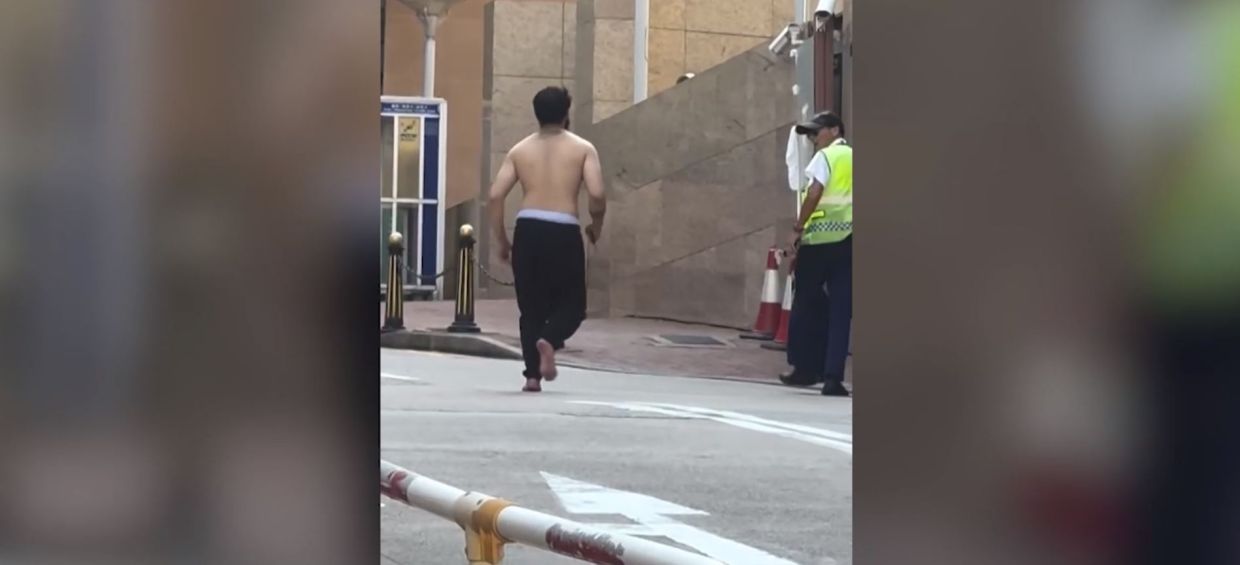
Police took a 22-year-old man into custody following the assault, which unfolded rapidly across the estate's grounds around 9am. According to accounts from local media, the suspect departed his unit at block 47 in an unusual state—wearing only sweatpants while otherwise unclothed—suggesting possible psychological distress or mental health crisis at the time of the incident. His attire and behaviour would have immediately drawn attention from residents and security personnel observing the morning activities around the property.
The violence escalated as the bare-chested, barefoot suspect moved through the estate. Upon encountering a male pedestrian near block 43, he charged directly at the individual with his knife drawn. The intended victim managed to evade the initial thrust through quick reflexes, narrowly avoiding injury in what could have been a serious stabbing. The failed attack did not deter the assailant, who immediately redirected his aggression toward security personnel staffing the residential complex.
The security team became the next focus of the suspect's violence. A confrontation ensued between the knife-wielder and the first responding guard, with physical contact and struggle occurring as the suspect attempted to inflict harm. The initial skirmish drew additional security staff into the area, who rushed to assist their colleague under attack. This intervention forced the suspect to abandon his direct engagement with security and flee from the immediate confrontation.
His retreat path took him toward a foreign domestic helper who happened to be passing through the estate grounds. Unable to escape the assailant's pursuit, the domestic worker suffered a stab wound to the back, a particularly vulnerable target that heightened the severity of the injury. This attack on a service worker highlights how such violent incidents disproportionately affect Hong Kong's migrant domestic labour force, who move through residential estates as part of their regular employment duties and often lack protective resources available to permanent residents.
The assault drew rapid intervention from multiple parties. Security guards who had engaged the suspect moments earlier, joined by concerned bystanders and passersby who witnessed the unfolding violence, moved to physically restrain the knife-wielder. Their collective action prevented further attacks and maintained the suspect in place until uniformed police officers arrived and took him into custody. The coordinated response from both professional security and civilian witnesses prevented the incident from escalating into additional casualties.
Both victims received medical attention. The injured security guard and the stabbed domestic helper were transported to hospital for treatment of their injuries. While details regarding the severity of their wounds and recovery prognosis remained limited, the hospitalisation of both individuals confirmed the physical impact of the assault. The case raises ongoing questions about security protocols and emergency response procedures at Hong Kong's residential properties, particularly in relation to managing potential mental health crises among residents.
Following the suspect's arrest, police conducted a search of his residential unit at block 47. Investigators discovered a pet cat within the flat that bore signs of injury, specifically damage to its right ear. Officers documented evidence suggesting the suspect had inflicted harm on the animal prior to leaving his home and commencing his attacks on people outside. The injured cat was removed from the property and transferred to the Society for the Prevention of Cruelty to Animals for veterinary care and treatment.
The presence of an injured animal at the suspect's residence adds another dimension to understanding the incident, as violence toward pets sometimes precedes or accompanies episodes of interpersonal violence. Animal welfare authorities now have involvement in the case alongside police investigators, who are examining whether the suspect's actions stemmed from acute psychological distress, substance influence, or other contributing factors. The incident underscores how mental health crises within residential communities can manifest in multiple forms of harm—toward animals, service workers, security personnel, and random residents.
The Baguio Villa attack reflects broader concerns within Hong Kong society regarding sudden violent incidents in supposedly secure, affluent residential environments. Luxury estates typically implement security measures including gated access and uniformed personnel, yet these safeguards proved insufficient to prevent a resident from launching an assault that injured multiple people. Property management authorities across Hong Kong are likely reviewing security protocols and staff training in light of this incident, particularly regarding identification and de-escalation of residents exhibiting signs of psychological distress or crisis.

