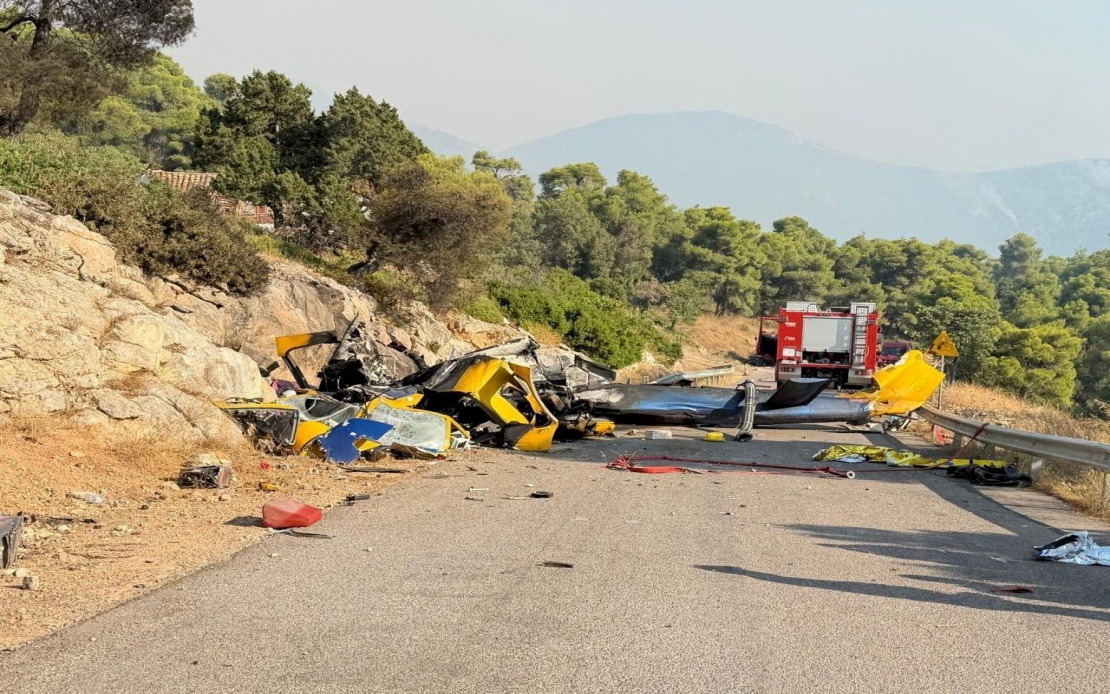
A tragedy unfolded in western Greece on Sunday when two firefighting helicopters collided during aerial operations against a massive wildfire ravaging the Attica region, claiming the lives of two crew members and leaving two others injured or recovering from the incident. The collision, which occurred near the coastal settlement of Psatha, sent emergency responders scrambling to conduct a comprehensive search and rescue operation in what became one of the deadlier aviation accidents connected to Greece's current wildfire crisis.
According to Fire Service spokesperson Vassilis Vathrakogiannis, the fatalities included a Danish pilot and a Greek firefighting coordinator who were operating one of the two Bell helicopters engaged in firefighting efforts. The other aircraft in the collision carried a British pilot and another Greek firefighting coordinator, both of whom survived the crash, though one sustained injuries requiring medical attention. Each helicopter had been staffed with two crew members, making the total personnel involved in the accident four individuals.
The two Bell helicopters were contracted specifically to augment Greece's aerial firefighting capabilities as the nation grapples with an unusually severe wildfire season. These rented aircraft were providing crucial support to ground-based firefighting teams battling the extensive blaze that had engulfed swaths of Attica and the neighbouring Boeotia region. The loss of even one helicopter significantly reduces available resources during a period when every asset is needed to contain the spreading flames.
Greek authorities have indicated that determining the precise cause and circumstances surrounding the mid-air collision remains an ongoing investigation. Initial reports suggest the helicopters were manoeuvring during active firefighting operations when the collision occurred, but officials have been cautious about drawing conclusions before a full examination of the wreckage and operational data is completed. Such investigations typically examine factors including pilot communication, weather conditions, visibility, positioning of aircraft, and coordination protocols between the two crews.
The collision comes amid an intensifying wildfire season across Greece, where multiple large fires are simultaneously burning across the country. The combination of exceptionally high temperatures, persistent drought conditions, and strong winds has created ideal conditions for rapid fire spread, overwhelming even well-resourced fire services. The loss of firefighting helicopter capacity during such critical circumstances raises immediate concerns about the ability to contain existing fires and respond to new outbreaks.
The Attica region, which encompasses the greater Athens metropolitan area, holds particular strategic importance given its proximity to the nation's capital and major population centres. Wildfires threatening this zone pose risks not only to rural communities and natural resources but also to the broader infrastructure and safety of one of southeastern Europe's largest urban concentrations. The scale and intensity of the current fire season has prompted emergency mobilisation of resources nationwide, including military assets and international assistance from neighbouring countries.
For Malaysia and Southeast Asian nations monitoring Greece's crisis, the incident underscores the vulnerability of aerial firefighting operations during extreme weather and fire conditions. The collision demonstrates how rapidly situations can become dangerous when multiple aircraft operate in close proximity amid challenging environmental circumstances. Regional fire services and aviation authorities may review similar protocols governing their own helicopter operations during peak wildfire seasons to identify potential safety improvements.
The accident also highlights the critical shortage of specialised firefighting assets during major disasters. Many nations, including those in Southeast Asia, rely on rented or contracted helicopters during crisis periods, making the loss of even one aircraft a significant operational setback. Greece's experience suggests the importance of maintaining redundancy in aerial firefighting capacity and ensuring robust coordination systems between multiple aircraft operating simultaneously.
The investigation into the collision will likely produce important findings relevant to aviation safety standards for emergency response operations. Greek authorities, in coordination with aviation regulators, will examine whether existing protocols were followed and whether modifications to procedures or training requirements are warranted. Such findings typically become available to the international aviation community and inform best practices adopted by emergency services globally.
The surviving crew members, particularly the injured Greek firefighting coordinator, will provide crucial testimony regarding the events immediately preceding the collision. Their accounts, combined with technical analysis of the helicopter wreckage and operational records, will form the foundation of the official investigation report. This comprehensive examination process may take weeks or months to complete, during which Greece continues battling its persistent wildfire emergency with reduced aerial resources.

