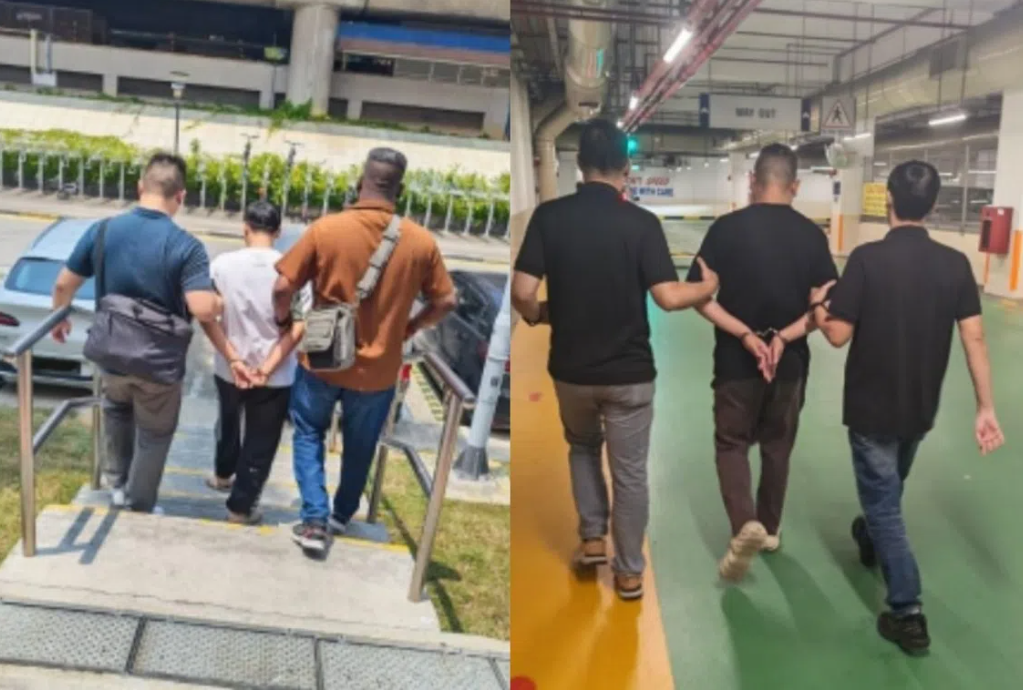
Singapore authorities have arrested two Malaysian nationals employed in the mobile phone retail sector on suspicion of orchestrating a sophisticated identity theft operation that weaponised compromised Singpass digital credentials. The pair, aged 25 and 47, were taken into custody on Tuesday, 25 August, after investigations revealed their involvement in a broader criminal syndicate designed to establish fake e-wallet accounts for receiving and concealing scam earnings.
The scheme operated through deliberate misuse of customer trust and proximity. The suspects exploited their position as shop employees to obtain Singpass login details from unsuspecting clients under the pretence of assisting with routine administrative tasks. In at least one documented instance, one of the men offered to help a customer update their Singpass credentials when processing a SIM card purchase, using that access point to covertly establish a LiquidPay payment account. This pattern of weaponising ordinary customer interactions to harvest sensitive authentication credentials represents a troubling evolution in how cybercriminals are blending physical retail environments with digital fraud infrastructure.
LiquidPay, the target platform in this operation, is a digital wallet and payment application managed by Singapore-based fintech company Liquid Group. The choice of this particular service suggests the syndicate had identified it as a relatively accessible vector for money laundering, where accounts could be rapidly deployed to receive illicit transfers before being stripped of funds. The financial throughput of the scheme became evident when authorities traced the full scope of the operation: authorities discovered that more than 160 fraudulent LiquidPay accounts had been registered using the stolen Singpass credentials without the legitimate account holders' knowledge or consent.
The scale of victim exposure extends well beyond individual financial loss. Investigators uncovered that credentials belonging to more than 170 Singaporeans and foreign workers residing in the city-state had been compromised through similar tactics. This broad victimisation base underscores how the operation had functioned as an industrial-scale identity harvesting enterprise rather than an isolated incident of opportunistic fraud. The foreign worker dimension carries particular significance for Southeast Asian nations, as these individuals often face heightened vulnerability to credential compromise given language barriers, unfamiliarity with local regulatory systems, and limited recourse mechanisms.
The monetary impact quantifiable so far reaches $110,063 in scam proceeds that authorities have traced flowing through the fraudulently registered LiquidPay accounts. Police investigations indicate that at least 20 Singapore citizens and work permit holders have been identified as participating in the downstream money laundering phase—registering the fake accounts and facilitating fund transfers. This suggests the operation functioned across multiple tiers, with the Malaysian suspects operating at the credential acquisition stage while other individuals handled the actual deployment and fund movement. Such specialisation within criminal networks demonstrates increasing sophistication in how cross-border cybercrime syndicates are structuring their operations.
The investigation represents a coordinated effort by Singapore's law enforcement and financial security apparatus. The Cyber Command division of the Singapore Police Force led the operation in collaboration with the Singpass Trust & Safety team at the Government Technology Agency of Singapore, reflecting how modern financial crime requires integrated responses spanning law enforcement and technology infrastructure. This coordination became necessary because Singpass serves as Singapore's unified digital identity platform, making its compromise a systemic vulnerability affecting multiple government and private sector services simultaneously.
The legal consequences facing the two arrested Malaysians are substantial. They face charges relating to assisting another person to retain benefits derived from criminal conduct—an offence that carries potential imprisonment of up to 10 years, fines reaching $500,000, or both. These sentences reflect Singapore's increasingly stringent approach to financial crime, particularly where technology platforms are weaponised to launder proceeds from other criminal activities.
Parallel investigations remain active into Singpass users who voluntarily surrendered their account credentials to third parties. These individuals face separate liability under provisions carrying maximum penalties of three years' imprisonment and $10,000 in fines. This prosecutorial approach distinguishes between victims of credential harvesting and those who knowingly compromised their own accounts, though the distinction may blur in cases where users were pressured or deceived into relinquishing access.
The incident carries significant implications for Malaysia's relationship with Singapore regarding cross-border criminal accountability. The use of Malaysian nationals operating through Malaysian employment channels to facilitate financial crimes in Singapore highlights vulnerability gaps in both nations' vetting of retail sector workers who regularly access customer identification information. For Malaysian readers and businesses, the case underscores the risks of credential compromise extending beyond borders and the importance of regulatory coordination on labour vetting for positions involving customer data access.
For the broader Southeast Asian digital finance ecosystem, the Singpass case illustrates how e-wallet platforms—increasingly central to regional financial inclusion efforts—can become infrastructure for money laundering when identity verification systems are compromised upstream. This creates pressure on fintech companies across the region to implement more robust Know-Your-Customer procedures that cannot be bypassed through stolen credentials alone. The incident also demonstrates that digital security in Southeast Asia requires attention not merely to software vulnerabilities but to the human and organisational vulnerabilities through which credentials are harvested in the first place.

