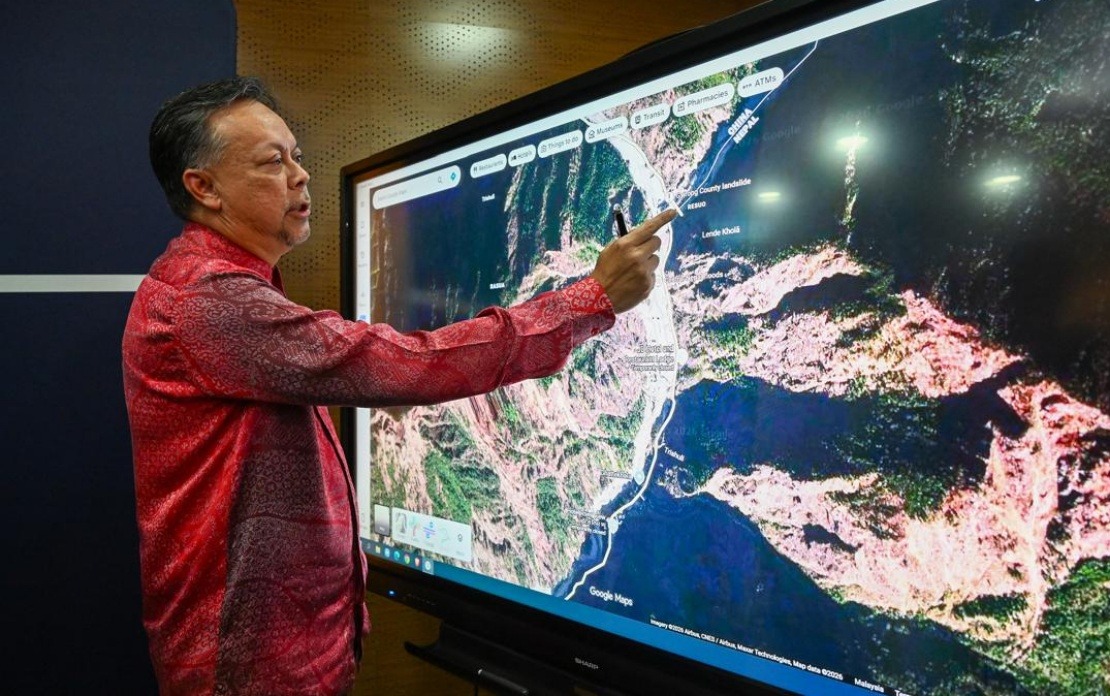
The Malaysian government has located two of its citizens caught in the devastating flash floods and landslides that struck Nepal's Rasua district, though the status of 55 other Malaysians remains uncertain as rescue and verification efforts continue. Datuk Syed Mohamad Hasrin Tengku Hussin, Deputy Secretary-General of the Foreign Ministry handling bilateral affairs, announced on 28 August that while the two individuals had been found, their identities and circumstances were still undergoing cross-verification to ensure accuracy and prevent duplication in the growing list of the unaccounted.
The disaster unfolded on 26 August when the Bote Koshi River overflowed its banks in the Rasua district, triggering catastrophic flooding and landslides that devastated the mountainous terrain. The initial toll of 57 missing Malaysians reflects the significant number of tourists and travellers who frequent Nepal during the summer season, many of whom may have been trekking or sightseeing in the affected regions when the disaster struck. Nepalese authorities have reported rescuing 528 people overall—490 Nepalese nationals and 38 foreign visitors—though notably, no Malaysians have yet been confirmed among those rescued, raising concerns about the fate of citizens in more remote areas.
The challenge facing Malaysian officials extends far beyond simply locating people. The infrastructure destruction wrought by the flooding has rendered the affected areas extremely difficult to access, with roads and bridges severely damaged and communication networks severed. These physical barriers have created a dual crisis: not only are search and rescue operations hampered, but gathering reliable information about Malaysian citizens in those zones has become an arduous process. The destruction of electricity and telecommunications infrastructure means that even those who may have survived cannot easily contact their families or government agencies in Malaysia, creating a vacuum of information that amplifies uncertainty and worry.
Former Minister Datuk Seri Mohamad Hasan has instructed the Foreign Ministry to intensify its efforts, leading to the deployment of additional personnel to coordinate the response. An official from the Malaysian High Commission in Dhaka has been sent to Kathmandu to reinforce the Malaysian Embassy's stretched resources, focusing on information coordination, real-time monitoring of developments, and direct liaison with Nepalese government authorities. This bolstering of on-ground presence reflects the scale of the crisis and the Malaysian government's recognition that consular operations cannot effectively manage such emergencies from a distant location.
The ministry has established formal collaboration channels with multiple stakeholders in Nepal, including the Nepalese Foreign Ministry's dedicated emergency response team, the Nepal Tourism Board, local tour operators, and relevant rescue agencies. This multi-agency approach aims to compile the most comprehensive and accurate picture of Malaysian citizens' whereabouts. Tour operators, in particular, hold valuable information about group bookings and travel itineraries that can help narrow the search parameters and identify which Malaysians were likely to be in affected zones at the time of the disaster.
At home, Malaysia's Foreign Ministry has activated a 24-hour operations centre in Putrajaya specifically to manage this crisis. The centre serves as the nerve centre for the response, receiving calls from worried family members and compiling information from diverse sources—Nepalese authorities, Tourism Malaysia, private tour operators, and individuals' relatives. Within the first few hours of activation, the operations room fielded between 12 and 15 calls from Malaysians desperate for information about loved ones believed to be in Nepal. Each piece of information must be meticulously cross-checked against lists from Nepalese authorities and the ministry's internal databases to prevent the confusion and duplication that inevitably arises in disaster situations when multiple reporting channels exist.
The verification process itself presents an unexpected challenge. Establishing identity with certainty proves difficult when communication is impossible and record-keeping may have been compromised. Nepalese authorities are simultaneously managing their own massive relief efforts for their citizens while cooperating with foreign governments, creating inevitable delays and coordination complexities. The two Malaysians already located exemplify this verification headache; despite being found, their details remained unconfirmed at the time of the ministry's announcement, highlighting how the chaotic nature of disaster zones can obscure even positive developments.
Weather conditions and terrain have become additional adversaries for search teams. The Rasua district's mountainous geography, already treacherous in normal conditions, has been rendered even more dangerous by the flooding and landslides. Rescue operations must contend with continuing risk of secondary flooding from other tributaries and swollen waterways, with Nepalese authorities warning of potential water overflows from border areas. These ongoing hazards mean rescue teams must work under severe constraints, unable to push into certain zones until conditions stabilize, essentially imposing a waiting game on already anxious families and officials.
Malaysians with information about missing relatives or friends are being urged to provide comprehensive details to the operations room, including full names, passport numbers, travel schedules, last confirmed locations, and mobile phone numbers. This structured data collection enables officials to build accurate profiles and cross-reference against emerging information from Nepal. The Foreign Ministry has established two contact channels for the public: a hotline at +603 8887 4570 and an email at [email protected], both monitored continuously.
The incident underscores the vulnerabilities facing Malaysian travellers abroad during natural disasters, particularly in mountainous regions with developing infrastructure. Nepal's tourism industry attracts thousands of Malaysian visitors annually, drawn by trekking opportunities in the Himalayas and cultural sites. While tourism to Nepal generally remains safe and well-managed, seasonal flooding in monsoon regions remains an inherent risk that tour operators and travellers must acknowledge. For Malaysian families awaiting news, the immediate focus remains on the ongoing search operations, but longer term, this crisis may prompt reassessment of travel advisory policies and cooperation agreements with Nepal.
The scale of uncertainty—with 55 of 57 Malaysians unaccounted for—reflects both the disaster's intensity and the communications vacuum that characterizes large-scale natural disasters in remote areas. As hours turn into days, the window for locating survivors diminishes, though rescue teams may still discover people sheltering in inaccessible locations awaiting rescue. The Malaysian government's sustained commitment to verification and transparent communication, embodied in the 24-hour operations centre, aims to provide families with the most reliable information possible under extraordinarily difficult circumstances. Until communication infrastructure is restored and affected areas become fully accessible, uncertainty will likely persist for families of the missing.

