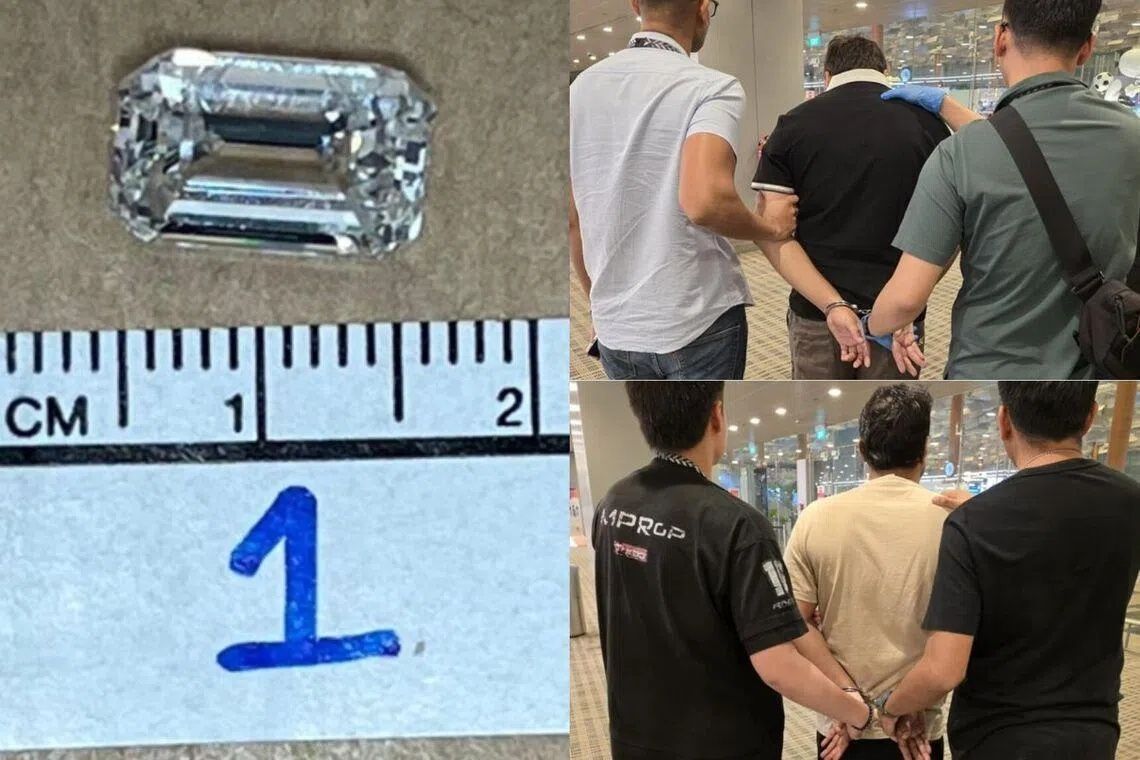
Two suspects aged 30 and 42 have been arrested following the theft of a diamond worth more than S$235,000 from a jewellery store in Singapore's Chinatown district. Police responded to a report at Kreta Ayer Road on June 19 at 3.40pm after shop staff discovered the valuable stone had disappeared. The pair were apprehended at Changi Airport Terminal 3 the same day, and the stolen diamond was recovered during the operation.
Investigators from the Central Police Division and Police Operations Command Centre used a combination of ground work and forensic evidence to track down the suspects. CCTV footage from the jewellery store and surrounding areas, supplemented by police camera recordings, proved instrumental in identifying the two men during follow-up enquiries. The swift progression from report to arrest demonstrates the efficiency of Singapore's law enforcement response to high-value theft cases, a growing concern across Southeast Asia's jewellery retail sector.
According to police findings, the suspects had initially presented themselves as genuine customers interested in purchasing the diamond. While examining the piece at the counter, they executed a sleight-of-hand manoeuvre, swiftly replacing the authentic gem with a counterfeit version. The pair then departed the store without completing any purchase—a detail that triggered immediate suspicion among shop staff.
The shop assistant's vigilance proved crucial to the investigation. When the worker conducted a routine quality check after the men left, the substitution was immediately detected. This discovery prompted the call to police and initiated the rapid apprehension process. The incident underscores the importance of trained retail staff and proper verification procedures in high-end jewellery operations, particularly across the region where similar confidence schemes have become more sophisticated.
The modus operandi employed in this case reflects a common technique used by professional jewellery thieves operating across Asia. The switch-and-walk method relies on customer distraction, shop floor congestion, and momentary lapses in staff attention. By engaging the jeweller's attention through genuine-appearing interest and examination requests, the perpetrators create the appearance of legitimacy while executing the actual theft. This particular approach has been documented in incidents throughout Malaysia, Thailand, and Indonesia, suggesting the suspects may have operated as part of a wider organised network.
The recovery of the stolen diamond at Changi Airport indicates that the suspects were attempting to leave Singapore immediately following the theft. Airport interception represents a critical success point for law enforcement, as the suspects would likely have transferred the diamond through international channels if they had successfully departed. The strategic positioning of police resources at the airport demonstrates how border checkpoints serve as effective barriers against the movement of stolen luxury goods.
Under Singapore law, the men face charges of theft in dwelling with common intention, a provision that applies when multiple perpetrators collaborate in a theft. If convicted, each suspect faces a maximum penalty of seven years' imprisonment and a substantial fine. The application of this charge recognises the planned, coordinated nature of the crime and establishes clear legal accountability for collaborative criminal activity. The severity of potential sentencing reflects the judicial system's approach to organised property crime and the protection of Singapore's retail sector.
Singapore's police force has stated its position clearly, emphasising zero tolerance for such crimes and pledging to pursue offenders with full legal rigour. Beyond the individual case, law enforcement has issued a public alert to luxury goods retailers across the island nation, urging heightened vigilance against similar sleight-of-hand theft techniques. This guidance carries particular relevance for Malaysian and regional jewellery businesses, which have experienced comparable incidents.
For business owners across Southeast Asia, the incident provides a practical reminder of security vulnerabilities in retail settings. Jewellery stores are attractive targets because high-value items are portable, easily concealable, and subject to rapid resale through underground channels. The recommended countermeasures include enhanced staff training in customer behaviour recognition, implementation of dual-verification protocols for all transactions, strategic deployment of staff during customer examinations, and installation of high-definition CCTV with recorded backup systems.
The timing of this theft—occurring during a period of heightened tourism and commercial activity—suggests the perpetrators may have exploited seasonal patterns to conduct their operation. Jewellery retailers across the region typically experience increased foot traffic during such periods, which can inadvertently provide cover for organised crime. The incident reinforces the need for consistent security protocols regardless of transaction volume or customer throughput.
International jewellery crime networks have become increasingly sophisticated, utilising regional mobility and knowledge of varying security standards across different jurisdictions. The apprehension of these two suspects at an airport departure point disrupts at least one operational cell, though investigators are likely examining whether the individuals are connected to broader theft networks. The recovery of the diamond prevents its disappearance into underground resale channels, which typically launder stolen gems through international markets in Dubai, Hong Kong, and other trading hubs.
The case carries implications for regional law enforcement cooperation. If the suspects are determined to be foreign nationals engaged in organised cross-border crime, their case may trigger coordinated investigations with neighbouring jurisdictions including Malaysia, Thailand, and Indonesia. Such cooperation mechanisms have become increasingly formalised under ASEAN frameworks, enabling more efficient tracking of mobile criminal groups that exploit regional borders and varying security standards.
As the matter proceeds through Singapore's judicial system, the case serves as a deterrent to would-be jewellery thieves while simultaneously highlighting the ongoing need for business owners throughout Southeast Asia to implement comprehensive security strategies. The swift resolution demonstrates that modern forensic capabilities and coordinated law enforcement response can effectively counter even well-executed retail theft schemes, provided retailers maintain proper verification procedures and report suspected incidents immediately.

