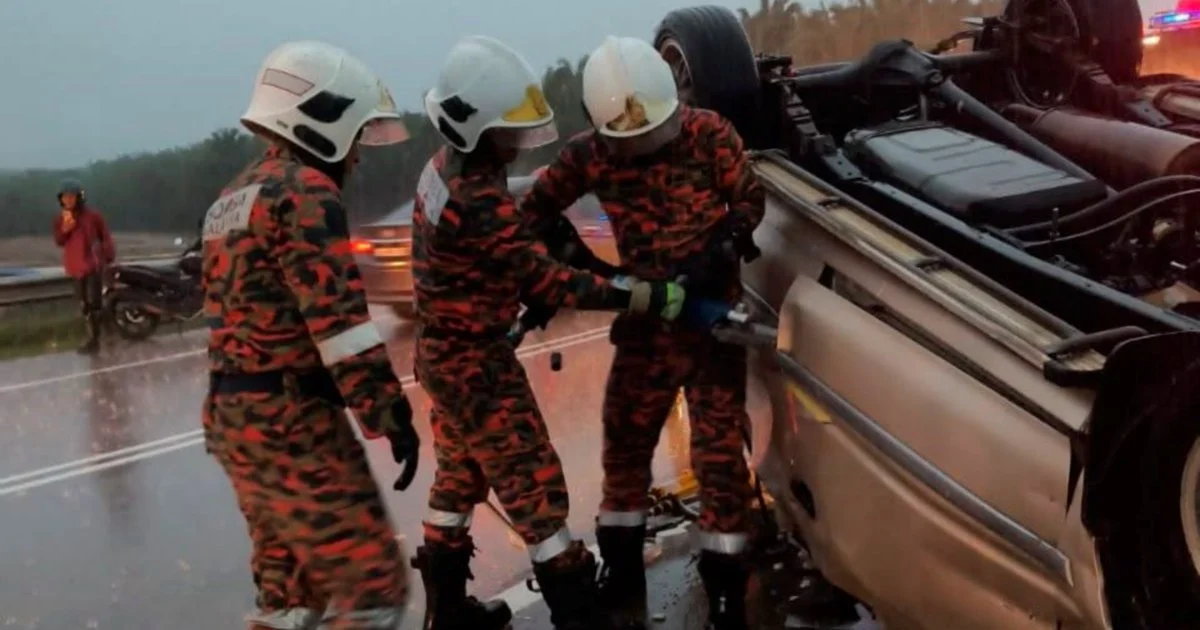
The Pahang state police confirmed today that four fatalities resulted from two separate vehicular collisions that struck the east coast state within less than 60 minutes. Among the deceased were two sisters, a detail that deepens the human tragedy of what has emerged as one of the more devastating traffic incidents in the region this year. The accidents took place across two distinct locations—Maran and Pekan—underscoring how quickly road conditions or driver error can cascade into multiple catastrophes across different areas of the same district.
The proximity of these incidents in both time and geography has prompted preliminary inquiries into whether common factors might have contributed to both accidents. Investigators are examining traffic flow, weather patterns, and visibility conditions during the period to determine if external circumstances played a role in the rapid succession of collisions. Such clustering of serious accidents within condensed timeframes occasionally reveals systemic issues with particular stretches of highway or intersection design that authorities can then address through targeted safety interventions.
Road fatality statistics across Malaysia, and particularly in states like Pahang with extensive highway networks connecting urban centers and rural communities, continue to reflect concerning trends. The east coast corridor in particular experiences significant traffic volumes, particularly during peak travel periods when accidents tend to compound into secondary collisions as subsequent drivers encounter debris or congestion. Today's incidents occur against a backdrop of ongoing national road safety campaigns that have struggled to reverse the upward trajectory of serious accidents despite increased enforcement and public awareness initiatives.
The loss of two sisters in a single morning underscores the indiscriminate nature of traffic accidents and their capacity to devastate families across multiple generations simultaneously. Such incidents often reverberate through extended family networks and the broader communities of affected individuals, creating psychological and emotional impacts that extend far beyond the immediate loss of life. The trauma experienced by witnesses and emergency responders to these scenes also warrants consideration in discussions around road safety and mental health support systems.
Maran, where one of the accidents occurred, sits along key transport corridors connecting the east coast to the interior regions of Pahang. The district has historically recorded notable traffic incidents due to the volume of commercial vehicles, intercity coaches, and private vehicles that traverse its main roads. Pekan, the royal town situated downstream, similarly experiences substantial vehicular traffic as a gateway for travelers moving between different zones of the state. The dual strikes within this region represent a significant safety concern for authorities responsible for monitoring these critical transport arteries.
Emergency response procedures would have been activated immediately upon notification of the first incident, with ambulance services, fire and rescue teams, and police units deploying to secure the scene and provide medical assistance. The near-simultaneous occurrence of the second accident would have placed substantial strain on already-stretched emergency resources, potentially delaying response times to either location. This cascading pressure on emergency services during multiple simultaneous incidents is a critical vulnerability in Malaysia's roadside support infrastructure, particularly in states where distances between major medical facilities can be considerable.
Investigators typically conduct comprehensive scene reconstruction at each accident location, examining vehicle damage patterns, skid marks, and witness testimonies to establish probable causation. Such investigations are particularly complex when multiple vehicles are involved, as determining sequence of events and apportioning responsibility requires meticulous documentation. The preliminary findings from both crash sites will inform understanding of whether driver behavior, mechanical failure, or environmental factors predominated in each instance.
For Malaysian road users and policymakers, these incidents renew focus on the persistent gap between road safety aspirations and on-the-ground reality. Despite technological advances in vehicle safety systems and substantial investment in highway infrastructure improvements, human factors—including driver fatigue, inattention, and speed violations—continue to generate the majority of serious accidents. The two sisters' deaths, occurring on an ordinary day on familiar highways in their own state, illustrate how rapidly ordinary journeys can transform into tragedy through circumstances often preventable through adherence to safer driving practices.
The Pahang accidents also highlight the disproportionate impact of road trauma on provincial and rural areas where families often depend on personal vehicles for essential transportation. Unlike urban residents who may utilize public transit alternatives, residents across the east coast corridor have limited options beyond private driving for accessing employment, healthcare, and commerce. This dependency places them at higher statistical risk and underscores why road safety initiatives targeting provincial areas warrant particular policy attention and resource allocation. Authorities in Pahang have indicated they will review the circumstances surrounding both collisions and consider whether additional signage, speed monitoring, or infrastructure modifications might prevent similar tragedies.

