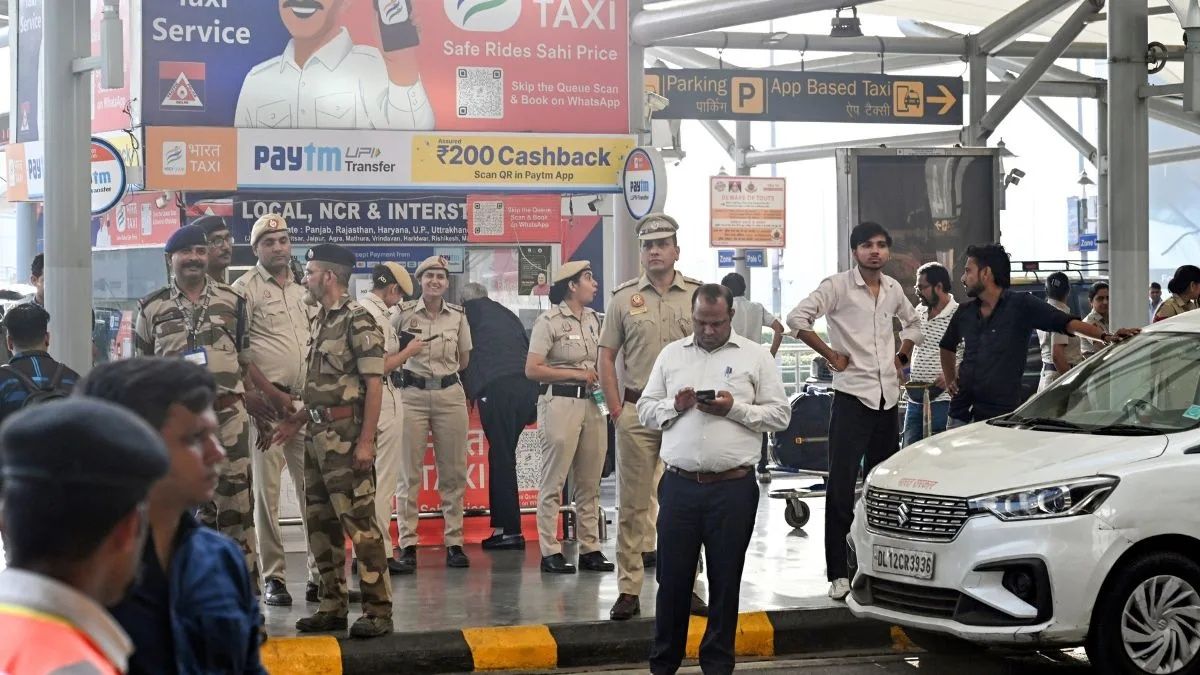
Punjab Police has successfully apprehended two suspected operatives of the banned Khalistan Zindabad Force after their deportation from Malaysia, marking a significant breakthrough in an international counter-terrorism investigation. The arrests, made upon arrival at Delhi's Indira Gandhi International Airport, represent coordinated action between Indian federal security agencies and the Royal Malaysia Police, underscoring the transnational nature of terror financing networks operating across South and Southeast Asia.
Gurvinder Singh from Ambala and Manjit Singh from Patiala were detained following what police describe as an intelligence-driven operation targeting overseas support structures for extremist groups. According to Punjab Director General of Police Gaurav Yadav, the two men allegedly orchestrated financing and coordination activities for KZF-affiliated modules from their base in Malaysia, playing crucial roles in sustaining terror operations within Punjab's borders. The investigation represents a methodical dismantling of cells responsible for channelling resources and operational support across international boundaries.
The deportations stem from a broader probe into coordinated attacks targeting Punjab's critical infrastructure. Investigators initially zeroed in on a terror module following an improvised explosive device blast near Sirhind in Fatehgarh Sahib district on January 23, 2024, with a subsequent attempted explosion detected near Shambhu in Patiala district four months later. These incidents prompted intensive investigations that revealed attempts to damage the Dedicated Freight Corridor and other railway assets crucial to India's economic connectivity. Security agencies arrested multiple individuals during this phase and recovered substantial quantities of weapons and explosives, including an RPG launcher, RDX, hand grenades, and sophisticated firearms.
Financial forensics proved pivotal in exposing the international dimension of the conspiracy. As investigators traced the monetary flows funding these terror modules, evidence pointed conclusively to overseas financial channels providing the necessary capital. The money trail ultimately led security agencies to Malaysia, where Gurvinder Singh and Manjit Singh were identified as key intermediaries responsible for organising and disbursing funds to terror operatives within Punjab. This discovery highlighted how banned organisations exploit banking systems and informal money transfer mechanisms to sustain violent activities across borders.
The network uncovered demonstrates the sophisticated operational architecture maintained by terror-support ecosystems. Rather than ad-hoc arrangements, the investigation revealed a coordinated international structure comprising handlers, financiers, and facilitators working in concert from multiple countries. According to police statements, these overseas-based individuals specifically utilised foreign bank accounts and international financial channels to ensure regular flow of resources to KZF-linked elements. The compartmentalised structure—with operatives in Malaysia coordinating with ground-level modules in Punjab—reflects lessons learned from previous counter-terrorism operations targeting similar organisations.
For Malaysia and Southeast Asia more broadly, this case underscores vulnerabilities within the region's financial oversight mechanisms and the risks posed by terror financing networks exploiting geographic proximity and porous international boundaries. The swift cooperation between Malaysian law enforcement and Indian agencies demonstrates the value of bilateral intelligence sharing, yet also highlights how terror groups continue adapting their methods to evade detection. Southeast Asian countries, increasingly serving as safe havens or staging grounds for extremist financing operations, face mounting pressure to strengthen banking compliance and cross-border information exchange.
The implications for Punjab's security situation remain significant. Authorities now recognise that domestic terror threats cannot be addressed purely through ground-level counterinsurgency operations; tackling the financial infrastructure sustaining violence requires coordinated international action. The investigation exposed weaknesses in how terrorist organisations access and distribute resources, enabling them to maintain dormant modules and periodically activate coordinated strikes. By severing these financial arteries, police hope to degrade the operational capacity of KZF-affiliated networks to mount sophisticated attacks on strategic targets.
Following their arrival in India, both suspects were produced before a Patiala court and remanded to police custody for detailed interrogation. Investigators are now focusing on extracting information regarding additional associates, overseas handlers, and other financiers potentially involved in the broader network. Police statements indicate active efforts to map the entire conspiracy, identifying not only direct participants but also secondary networks providing logistical support, safe houses, and communication infrastructure. This comprehensive approach reflects recognition that successfully dismantling terror ecosystems requires tracing complete operational networks rather than targeting individual incidents.
Punjab Police have reiterated their commitment to pursuing every lead emerging from the investigation, with ongoing operations aimed at disrupting remaining terror-support structures. Officials emphasise that the cases against Gurvinder Singh and Manjit Singh represent only one dimension of broader counter-terrorism efforts. Additional individuals may be identified through interrogations, and international agencies are likely coordinating further action against suspected facilitators operating from other countries. The investigation's trajectory suggests that authorities expect to uncover additional overseas networks requiring targeted enforcement action.
The deportation operation also reflects shifting dynamics in how India's security establishment handles overseas terror networks. Rather than purely seeking extradition through formal legal channels, cooperation with friendly nations like Malaysia enables expedited removal of suspects to face trial in India. This pragmatic approach accelerates accountability while reducing delays inherent in lengthy legal proceedings. For Malaysia, facilitating the deportation demonstrates its commitment to addressing transnational organised crime and terror financing, though questions remain regarding how such networks initially established operations within Malaysian territory.
Broader geopolitical considerations underscore this case's significance. The Khalistan Zindabad Force operates within a complex diaspora landscape spanning North America, Europe, and increasingly Southeast Asia. As intelligence agencies improve their operational capabilities, terror organisations deliberately establish overseas sanctuaries where they hope law enforcement presence remains limited. Malaysia's strategic location, diverse population, and relatively open financial systems have made it attractive for various extremist networks seeking operational space. This reality demands sustained international cooperation and enhanced regulatory oversight of the financial sector.
The investigation also highlights how terror financing networks deliberately exploit differences in regulatory standards and enforcement capabilities across jurisdictions. By channelling funds through multiple countries with varying levels of banking oversight, these organisations create deliberate obfuscation that frustrates law enforcement efforts. International Financial Action Task Force recommendations regarding combating terror financing continue gaining relevance, particularly for countries in Asia where implementation remains inconsistent. Malaysia's cooperation in this case suggests willingness to strengthen such mechanisms, though broader systemic changes require comprehensive legislative and institutional reforms.
As Punjab Police pursue further leads, the case serves as reminder that sustained internal peace requires vigilant international engagement and coordinated action against terror-support networks. The successful apprehension of Gurvinder Singh and Manjit Singh demonstrates that geographical distance provides no sanctuary for those financing extremist violence. Yet the very existence of such networks operating from Malaysia for extended periods before detection also signals persistent challenges in identifying and neutralising overseas facilitation structures before they orchestrate major attacks. Ongoing investigations will likely reveal whether additional plots remain under active development and whether other Southeast Asian countries harbour similar terror-financing operations.

