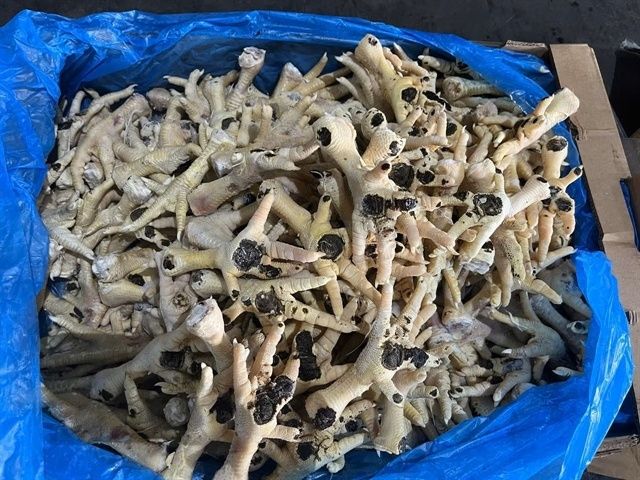
Hanoi police have charged two Vietnamese businesswomen with smuggling after uncovering an operation that brought in frozen chicken feet from countries battling poultry diseases and illicitly distributed them throughout Vietnam's domestic market, circumventing strict biosecurity regulations. The investigation, concluded on Friday, June 19, has exposed a scheme spanning three years that generated approximately US$13 million in proceeds while evading import duties entirely.
The suspects are Nguyen Thi To Loan, 47, who operated ABF Food Import-Export JSC based in Ninh Binh Province, and Trang Tuyet Ngoc, 45, who held a senior position at An Binh Group. Both have reportedly confessed to all charges levelled against them by investigators. The case underscores vulnerabilities within Vietnam's food import system and raises serious questions about consumer safety protocols in the Southeast Asian nation, where food-borne illness outbreaks remain a persistent public health concern.
Between 2023 and 2026, ABF imported 339 containers of frozen chicken feet, with official customs documentation falsely claiming these shipments were intended solely for industrial processing and subsequent re-export. Vietnamese law strictly prohibits the domestic sale of poultry products sourced from nations experiencing active avian influenza or other poultry disease outbreaks. Such imports may only enter Vietnamese territory under the explicit condition that they be processed and shipped out again, protecting the country's food supply from potential contamination and disease transmission. This regulatory framework exists precisely because poultry diseases pose significant risks to both animal and human health across the region.
Instead of adhering to these legal requirements, Loan allegedly directed Ngoc to divert the entire shipment into Vietnam's domestic supply chain. The operation distributed more than 10,000 metric tonnes of frozen chicken feet to food-service establishments, restaurants, and potentially retailers across multiple provinces including Hanoi, Cao Bang, Ninh Binh, Quang Ninh, and several others. The scale of distribution suggests widespread exposure among Vietnamese consumers who may have unknowingly purchased products from poultry-disease-endemic regions without the additional safety protocols that legal processing would have entailed.
The total declared value of imported goods exceeded VNĐ347 billion, translating to approximately US$13 million. Throughout the operation, the suspects paid zero import duties, representing a substantial loss to the state treasury in addition to the serious breach of biosecurity protocols. During police raids on facilities associated with the scheme, officers discovered more than 2,000 metric tonnes of frozen chicken feet still in cold storage, indicating that the operation had likely expanded beyond the quantities already distributed to the market.
A raid at the An Viet 2 freezer facility located in Hanoi's Quang Minh Industrial Zone revealed over 1,000 metric tonnes stored in the warehouse. Among this stockpile, investigators identified approximately 260 metric tonnes that had already passed their expiration dates and exhibited visible signs of mold, discoloration, and decomposition characterised by foul odours. Most troubling was the evidence that this spoiled inventory appeared to be prepared for further distribution, suggesting the operation would have continued moving degraded product to consumers had the investigation not intervened.
A subsequent search of the THL cold-storage facility in Lang Son Province in northern Vietnam uncovered an additional 1,030-plus metric tonnes of frozen chicken feet. The sheer volume of product seized at multiple locations suggests a sophisticated distribution network with substantial infrastructure and likely involvement from numerous downstream businesses and individuals still under investigation. Hanoi police have formally charged both suspects under Article 188 of Vietnam's 2015 Penal Code, which covers smuggling offences carrying potentially significant penalties.
For Malaysian and Southeast Asian readers, this case illustrates the persistent challenges that plague regional food trade and import enforcement. Similar contraband operations have been detected in other ASEAN nations, where porous borders, inadequate inspection capacity, and corruption create opportunities for unscrupulous operators to bypass health and safety regulations. The case highlights why consumers across Southeast Asia must remain vigilant about food sourcing transparency and why governments must invest in stronger traceability systems and customs enforcement.
The investigation remains active, with police working to identify other individuals, companies, and potentially corrupt officials who may have facilitated or benefited from the scheme. The involvement of An Binh Group, a larger organisation, suggests this may not have been an isolated criminal operation but rather part of a more entrenched network. Authorities are expected to expand the inquiry to trace the full supply chain, identify where chicken feet were sold, and determine whether other similar smuggling operations remain undetected within Vietnam's food import infrastructure.

