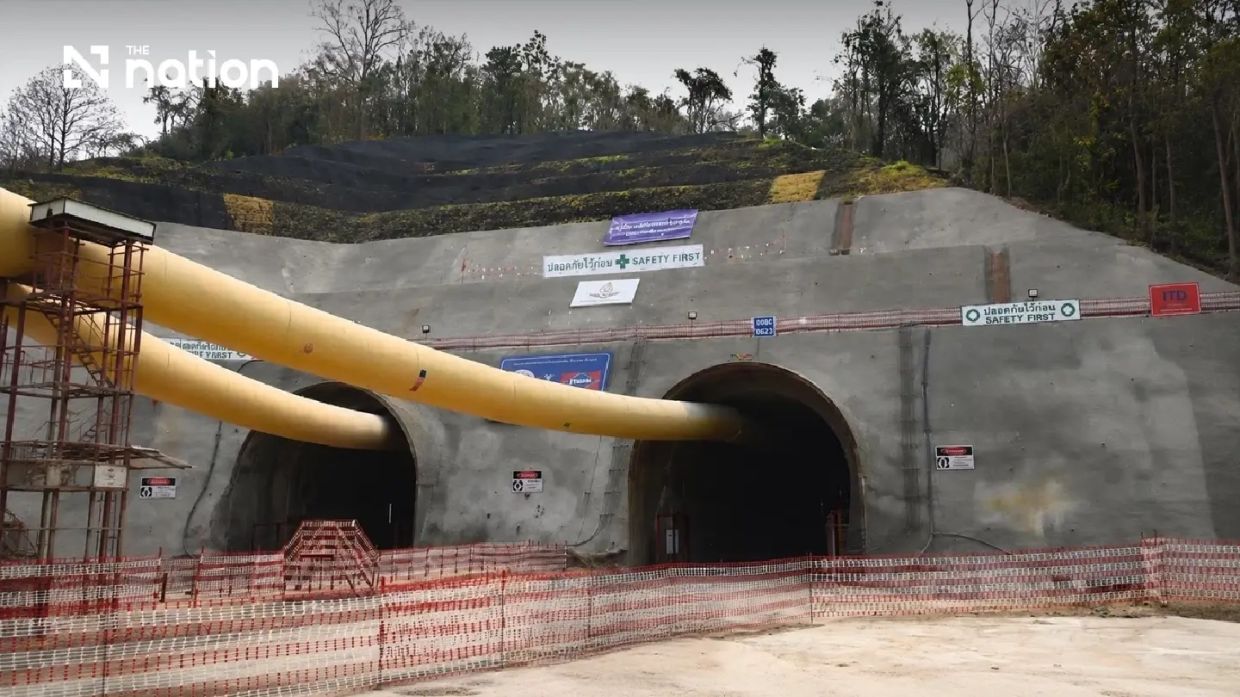
A tragic accident in Chiang Rai's Doi Luang railway tunnel claimed the lives of two construction workers on Saturday evening, marking a significant setback for Thailand's ongoing rail infrastructure development. The incident, which occurred around 8:35pm on June 20, left seven additional workers injured as they carried out critical waterproofing operations inside the tunnel. The fatalities underscore the considerable occupational hazards facing workers on Thailand's ambitious high-speed rail expansion projects, particularly those involving complex underground construction work in mountainous regions.
Deputy Transport Minister Siripong Angkasakulkiat released preliminary findings shortly after emergency response teams secured the accident site. Initial investigations pointed to rockfall from the tunnel walls as the likely trigger for the scaffolding failure, occurring during the installation of waterproofing systems—a routine but essential phase of tunnel construction. Earlier reports had referenced complications within the shotcrete application area, suggesting the collapse may have involved multiple structural components. However, officials emphasised that comprehensive forensic analysis remained underway, with the full sequence of events still being reconstructed by safety engineers.
The damage assessment documented three workers suffering serious injuries alongside four others with minor injuries, bringing the total casualty count to nine personnel. All affected workers were promptly transported to medical facilities for treatment and observation. The incident response protocols, which included immediate area evacuation and site lockdown, prevented further casualties and allowed rescue teams to access injured workers efficiently. Officials confirmed that the situation had stabilised by the time public statements were issued, with the project's safety unit assuming direct control of operations and establishing enhanced monitoring protocols.
The Doi Luang tunnel represents a critical component of the Den Chai-Chiang Rai-Chiang Khong railway expansion, one of several infrastructure megaprojects intended to strengthen Thailand's regional connectivity and economic integration with northern neighbours. Stretching 3.4 kilometres through the Chiang Saen district, the tunnel has already been completely bored through, placing construction at the finishing stage where interior systems installation occurs. This particular phase typically involves installation of utilities, safety systems, and protective membranes—work that demands precision and creates unique workplace risks when conducted underground in confined spaces.
The affected section forms part of Contract 3 of the Chiang Rai-Chiang Khong segment, a substantial THB19.385 billion undertaking managed by the CKST-DC3 Joint Venture. This partnership brings together three significant construction firms: CH. Karnchang Public Company Limited, Sino-Thai Engineering & Construction Public Company Limited, and Chiangmai Construction Co., Ltd. The contract scope encompasses approximately 87 kilometres of track construction—combining both ground-level and elevated sections—plus three major stations, three railway halts, comprehensive signalling infrastructure, telecommunications systems, and associated civil works. Such large-scale contracts inevitably involve extended operations in challenging terrain and environmental conditions.
The rail expansion programme connecting Den Chai to Chiang Khong represents Thailand's strategic push to enhance transportation networks throughout the northern region, facilitating both passenger and freight movement while promoting economic development in less densely populated areas. The project alignment reflects broader Southeast Asian priorities to improve cross-border connectivity, particularly strengthening links with Laos and broader regional markets. However, this accident highlights the critical importance of maintaining rigorous safety standards when executing complex engineering work in remote mountainous terrain where rescue response times can extend considerably.
Deputy Minister Siripong indicated that the State Railway of Thailand's Special Projects and Construction Department had mobilised immediately following the incident, conducting urgent on-site inspections and coordinating with safety investigators. The ministry committed to releasing detailed findings as investigations progress, suggesting that root cause analysis would determine whether the collapse resulted from design inadequacies, material defects, installation errors, or geological conditions. Such comprehensive investigation protocols remain essential for implementing corrective measures across the broader project portfolio and ensuring similar incidents do not recur.
The tragedy carries implications extending beyond the immediate project timeline and costs. Worker safety incidents on large infrastructure projects typically trigger enhanced regulatory scrutiny, potentially leading to temporary work stoppages, revised construction methodologies, or accelerated safety audits across comparable projects. For the joint venture consortium, the incident may necessitate revised risk management frameworks and increased investment in worker training and protective equipment. Insurance implications and potential liability determinations could also influence project economics and contractor profitability.
Regionally, this accident underscores persistent challenges facing Southeast Asian infrastructure development, where rapid expansion ambitions must be balanced against worker protection imperatives and construction quality standards. Malaysia's own rail expansion initiatives, including the ongoing MRT and monorail projects, operate within comparable technical and logistical environments, making learning from Thai experiences particularly relevant. International construction standards and best practices dissemination become increasingly valuable as the region undertakes simultaneous large-scale projects involving underground work, elevated structures, and complex systems integration.

