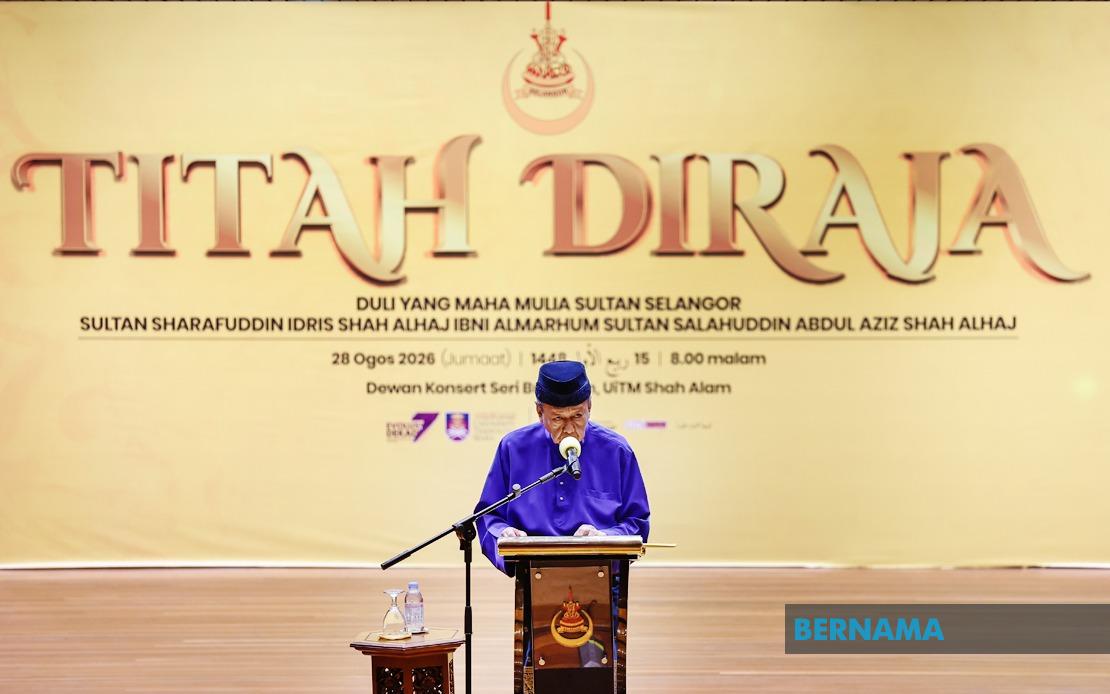
The Sultan of Selangor, Sultan Sharafuddin Idris Shah, has reiterated his commitment to preserving Universiti Teknologi MARA's foundational purpose as a transformative institution for economically disadvantaged Malay and Bumiputera youth. Speaking at the university's 2026 Royal Address ceremony in Shah Alam, His Royal Highness emphasised that as the institution expands and modernises, it must not lose sight of its original constituency: young people from rural communities, farming families, fishing villages, and low-income urban backgrounds who possess the aptitude and determination to advance through higher education.
This appeal carries particular weight coming from the Selangor monarch, who serves as a custodian of institutional values across the state. Sultan Sharafuddin articulated a vision where UiTM continues to function as a pathway to social mobility, ensuring that children of labourers, factory workers, and farmers can realistically access quality tertiary education and subsequently reshape their life trajectories. The message reflects growing concern among Malaysia's traditional leadership about whether flagship institutions designed to serve specific demographic groups remain true to their original mandates as they scale and compete in global rankings.
The university's growth trajectory presents both opportunity and challenge. Founded in 1965 with merely 219 students and 11 lecturers, UiTM has expanded into one of Southeast Asia's largest tertiary institutions, now enrolling tens of thousands of students annually and producing approximately 40,000 graduates yearly. The alumni network has surpassed one million individuals spread across virtually every professional sector and industry vertical in Malaysia. Yet this expansion raises fundamental questions about accessibility and whether economic pressures, rising fees, and competition for places have gradually disadvantaged the very communities the institution was designed to serve.
Crucially, Sultan Sharafuddin introduced a practical mechanism to sustain UiTM's accessibility mission: a voluntary alumni contribution system targeting a modest RM10 monthly or RM100 annual donation. The proposal reflects sophisticated thinking about financing models that do not rely solely on government budgets. If adopted universally across the one-million-strong alumni base, such a scheme could theoretically generate approximately RM100 million annually, a substantial sum that could significantly expand financial aid programmes and institutional development initiatives without burdening individual contributors or creating unsustainable debt burdens on current students.
The modest scale of the proposed contribution—approximately USD 2.50 monthly—reveals the Sultan's understanding of alumni economic diversity. Not all UiTM graduates occupy high-income positions; many work in middle-income professions or have experienced career fluctuations. By setting the bar low, the scheme acknowledges this reality whilst appealing to alumni gratitude and institutional solidarity. The framing as "a sacrifice to ensure continuity" rather than a mandatory fee or tax signals a voluntary covenant between graduates and their alma mater, anchoring the appeal in emotional and moral bonds rather than contractual obligation.
What emerges from the royal address is a broader philosophy about measuring institutional success. Sultan Sharafuddin explicitly rejected a purely quantitative definition of achievement focused on student numbers, graduation rates, or alumni statistics. Instead, he articulated success through qualitative impact: the genuine transformation of individual lives, the diversification of professional opportunities across previously inaccessible sectors, and the institution's contribution to national economic and social development. This framework legitimises greater scrutiny of who benefits from UiTM's expansion and whether gains have been distributed equitably across social strata.
The reference to the "UiTM Dihatiku" motto—literally "UiTM in My Heart"—provides a cultural and emotional anchor for the proposed contribution system. Rather than positioning alumni giving as extractive fundraising, the Sultan reframed it as an expression of ongoing belonging and gratitude, transforming a financial transaction into a renewal of community bonds. This approach reflects traditional leadership communication styles that emphasise moral duty and institutional loyalty, resonating differently than purely transactional appeals common in contemporary fundraising.
For Malaysian policymakers and higher education administrators, the address signals that questions about access and equity in tertiary education remain politically salient and carry royal attention. With the higher education minister present at the event, the implicit pressure is substantial. UiTM's leadership cannot simply pursue prestige metrics and international rankings without demonstrating sustained commitment to its original social mission. The sultan's intervention suggests that Malaysia's traditional rulers continue viewing custodianship of institutional integrity as part of their constitutional role, particularly regarding institutions historically linked to Bumiputera advancement.
The timing of this emphasis also matters for Southeast Asian context. Across the region, public universities originally established to serve specific communities—whether ethnic minorities, rural populations, or lower-income groups—face mounting pressure to commercialise operations and compete globally. Malaysia's experience with UiTM provides a regional case study in maintaining inclusive missions whilst modernising institutional capacity. The sultan's address implicitly challenges the notion that excellence and accessibility are necessarily incompatible objectives.
Looking forward, the success of both the sultan's accessibility message and the proposed alumni contribution scheme depends on institutional implementation and cultural uptake. Universities must develop systems enabling small-value regular giving, marketing these contributions as meaningful participation rather than charitable obligation. Simultaneously, UiTM leadership should communicate transparently about how such funds are deployed in supporting disadvantaged students, creating documented impact that validates alumni investment and reinforces the institution's commitment to its founding mission.
The broader implication extends beyond UiTM itself. Sultan Sharafuddin's intervention demonstrates that Malaysia's federal and state leadership remains invested in the social contract underlying affirmative action institutions. As these universities navigate pressures toward commercialisation and internationalisation, maintaining equitable access for marginalised communities requires deliberate policy choices, adequate funding, and institutional culture that privileges inclusion. The sultan's proposal and rhetoric suggest that such commitments, whilst resource-intensive, remain non-negotiable for institutions claiming to serve the nation's development rather than merely its elite segments.

