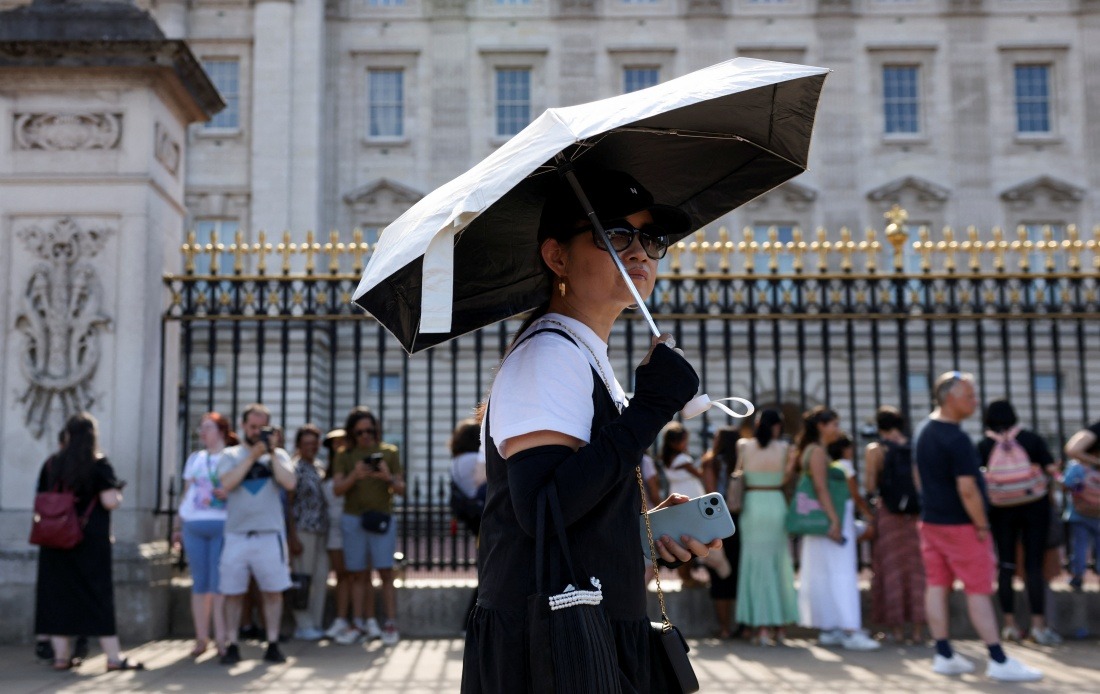
The United Kingdom's Household Division has taken the unprecedented step of cancelling all ceremonial guard changes scheduled for Windsor and London this week, citing dangerous heat conditions as the primary concern. The suspension, announced on Tuesday, affects some of the nation's most iconic ceremonial events, including the famous Buckingham Palace guard change that typically draws crowds of tourists and well-wishers daily. The decision underscores the severity of the meteorological conditions currently bearing down on southern Britain, where forecasters are predicting temperatures to reach 39 degrees Celsius—potentially breaking the UK's June heat record.
The Met Office, Britain's national weather service, issued a rare red weather warning for large portions of the United Kingdom and Wales on Monday, signalling conditions that pose a genuine threat to human health and safety. Such red alerts represent the highest tier of warning in the UK's weather alert system and are seldom deployed. With the most intense conditions expected to peak on Wednesday and Thursday, authorities have moved swiftly to protect both the public and critical infrastructure from heat-related harm.
In their official statement, the Household Division explicitly prioritised the welfare of three vulnerable constituencies: the soldiers who perform the ceremonial duties, the military working horses integral to these traditions, and the large assemblies of members of the public who congregate to witness these spectacles. The phrase "wellbeing of our soldiers, military working horses, and the public" reflects the physical toll that extreme heat exerts on individuals performing in ceremonial dress—which typically includes heavy uniforms, tall bearskin hats, and limited opportunity for shade or hydration—whilst simultaneously managing large horses that are themselves susceptible to heat stress.
The Royal Horse Guards' changing ceremony, originally scheduled for Wednesday, will proceed but in substantially modified form. Rather than following the elaborate ceremonial protocol that characterises the traditional event, the ceremony will commence earlier in the morning when temperatures remain comparatively lower. The pageantry and formal elements that typically accompany this historic routine have been stripped away in favour of operational simplicity. Furthermore, military personnel have been instructed to remain stationed in shaded locations wherever feasible, with rotation schedules accelerated to ensure no individual soldier spends extended periods in direct sunlight whilst bearing the full weight of ceremonial uniform and equipment.
The ramifications of this extreme weather event extend well beyond the ceremonial grounds of central London. Educational institutions across southern England have shuttered en masse, with local authorities reporting closures affecting hundreds of schools. Somerset County Council announced that approximately 100 schools within its jurisdiction would remain closed during the peak heat period. Buckinghamshire experienced similar disruptions, with a comparable number of school closures, whilst Gloucestershire reported more than 80 schools suspending in-person instruction. These affected counties fall squarely within the red weather warning zone, a geographical band that encompasses much of southern and central England, including Greater London itself, where nearly a dozen major educational establishments cancelled in-person lessons.
The decision to close schools reflects broader concerns about the capacity of educational facilities to maintain safe indoor temperatures and the risks posed to vulnerable populations—particularly children—when exposed to extreme heat without adequate cooling infrastructure. Many British schools, designed for a climate considerably cooler than current conditions, lack modern air conditioning systems, making them potentially dangerous environments during heat extremes. The scale of closures indicates that local authorities have concluded that the risk to pupil welfare outweighs the educational disruption caused by temporary suspension of classes.
For Malaysian readers and observers across Southeast Asia, this episode offers instructive contrasts regarding climate adaptation and infrastructure resilience. While Southeast Asian nations contend regularly with equatorial and tropical heat that frequently surpasses British summer extremes, the disruption caused by a comparatively modest temperature spike in the UK highlights how populations and infrastructure designed for cooler climates can struggle dramatically when confronted with atypical conditions. Britain's struggles with 39-degree heat underscore that climate vulnerability is not solely a matter of absolute temperature, but rather the mismatch between environmental conditions and built infrastructure.
The ceremonial suspensions also illuminate how even deeply entrenched traditions must yield to practical safety considerations. The Buckingham Palace guard change has been performed with remarkable consistency for centuries, yet contemporary authorities recognise that preserving heritage ceremonies cannot come at the cost of soldier safety or public health. This reflects an evolution in institutional thinking about risk management and duty of care that transcends national boundaries.
From a regional perspective, the incident provides context for ongoing discussions within Southeast Asia about infrastructure adequacy in the face of climate variability. Nations in the region have invested substantially in cooling systems, urban planning strategies, and emergency protocols specifically designed to manage heat stress. The British example—where a developed, wealthy nation experiences significant social disruption from temperatures that are merely elevated by regional standards—suggests that effective heat management requires comprehensive planning and infrastructure investment rather than merely accepting high temperatures as routine.
The heatwave affecting Britain also demonstrates how climate-related extremes can cascade through multiple sectors simultaneously. Educational disruption, military operations, public gatherings, and infrastructure stress all compound as temperatures escalate. This interconnection suggests that policymakers globally must adopt integrated approaches to climate resilience rather than addressing heat management solely within individual sectors.
As the UK navigates this extreme weather episode, the broader lesson concerns the importance of forward-thinking infrastructure design and contingency planning. The Household Division's decision to modify rather than entirely abandon the Royal Horse Guards ceremony reflects pragmatism—acknowledging real constraints whilst maintaining essential functions. Such flexibility will likely become increasingly necessary as climate variability grows more pronounced across the Northern Hemisphere in coming years.

