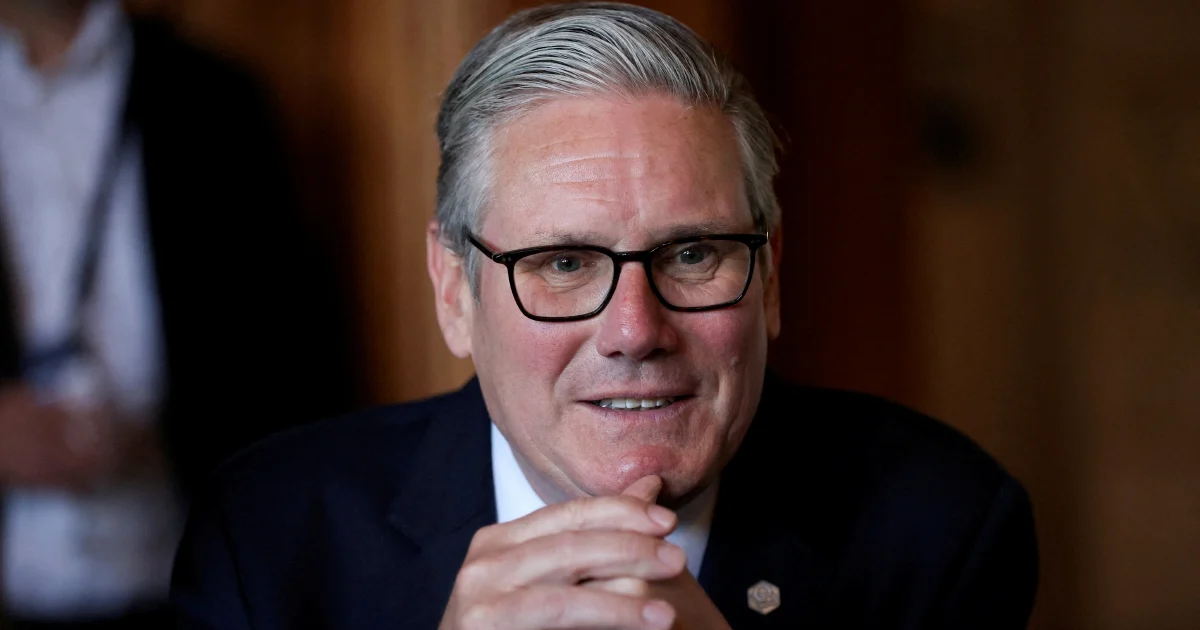
Prime Minister Keir Starmer faces intensifying pressure after the Observer newspaper reported he intended to step down on Monday and announce a schedule for his exit, claims that a government spokesperson flatly rejected by reaffirming the leader's determination to continue his work. The divergence between media reporting and official statements underscores the volatile political atmosphere surrounding Britain's government, where speculation about leadership transitions has become increasingly pronounced in recent weeks.
Such reports, whether accurately sourced or not, reflect broader concerns within British political circles about Starmer's durability as Prime Minister. The timing of these allegations coincides with a period when the government has faced considerable public criticism over various policy decisions and implementation challenges. For observers tracking UK politics, the episode illustrates how quickly narratives can shift in Westminster, where whispers about leadership instability can rapidly cascade into headline-dominating stories that demand immediate denial.
From a Malaysian perspective, the situation highlights the different cultural and institutional frameworks governing political stability in democracies. While British Prime Ministers may face open speculation about resignation in the press, the mechanisms of parliamentary democracy allow for relatively orderly transitions when they do occur. The contrast with Southeast Asian political systems, where leadership changes often involve more opaque processes or institutional constraints, demonstrates the transparency—sometimes uncomfortable—that characterises Western democratic media ecosystems.
Government sources close to Starmer emphasized that he remains entirely focused on executing his agenda and steering the nation through its current challenges. This standard form of denial, while necessary for maintaining morale within government ranks, also reveals how difficult it has become for any modern leader to completely control the narrative around their own tenure. In the age of constant news cycles and multiple reporting outlets, even categorical denials can struggle against the momentum of speculation.
The Observer's claim that a resignation announcement would include a timetable for departure suggests the report was not based on vague rumor but rather pointed allegations about specific planning. Whether such plans genuinely exist or whether the newspaper was responding to broader perceptions of instability remains unclear. What is certain is that the publication of such a report forces the Prime Minister's office into a reactive posture, consuming political oxygen that might otherwise be directed toward policy communication.
For businesses and investors monitoring British political stability—a concern shared across Commonwealth nations including Malaysia—such reports introduce an element of uncertainty that affects market confidence and long-term planning. Multinational corporations with UK operations and regional headquarters in Southeast Asia pay close attention to shifts in British political leadership, as they can signal changes in trade relationships, regulatory approaches, and economic policy direction. The period of uncertainty following leadership speculation, regardless of its accuracy, can therefore have tangible economic consequences.
The government's insistence that Starmer remains committed to his responsibilities serves an important stabilizing function, despite the reactive nature of such statements. By publicly reiterating his focus on governance, officials attempt to restore confidence in continuity and competence. However, the very fact that such reassurances are necessary indicates that underlying doubts about leadership stability have taken root among observers, journalists, and potentially within Parliament itself.
Historically, British Prime Ministers who face persistent resignation speculation have sometimes found that denying the reports becomes increasingly difficult as time passes. If Starmer is forced to issue multiple such denials over coming weeks or months, the cumulative effect may paradoxically strengthen rather than weaken perceptions of vulnerability. This dynamic—where repeated denials of a false claim can eventually undermine credibility—represents a particular hazard for contemporary political leaders operating in media-saturated environments.
The wider context matters considerably here. Starmer inherited a Labour government in a Britain navigating post-Brexit economic adjustments, elevated inflation, and significant public service challenges. The inherited difficulties of governance, combined with inevitable unpopularity that accompanies difficult policy decisions, create the conditions under which resignation speculation tends to flourish. Whether the Observer's reporting reflects genuine intelligence from government insiders or a broader journalistic interpretation of political atmospherics remains contested.
Regional implications for Southeast Asia are subtle but real. Malaysia, as part of a Commonwealth framework and a nation with significant business ties to the United Kingdom, has an interest in British political stability. Leadership uncertainty in London can ripple through trade negotiations, educational partnerships, and the broader bilateral relationship. Malaysian officials tracking these developments will be closely monitoring how Starmer navigates the coming period, using his response to leadership speculation as a barometer of his political durability and capacity to govern effectively.
Moving forward, Starmer's challenge will be demonstrating through action rather than mere assertion that he possesses the political strength to lead. The repeated appearance of resignation reports, whether credible or not, suggests that confidence in his leadership requires reinforcement through successful governance outcomes. Media narratives about leadership stability are notoriously difficult to shift through verbal denials alone; only substantive political achievements and improved public perception can definitively dispel such speculation. The coming weeks will be critical in determining whether this episode represents a temporary media storm or a more serious indicator of underlying political instability.

