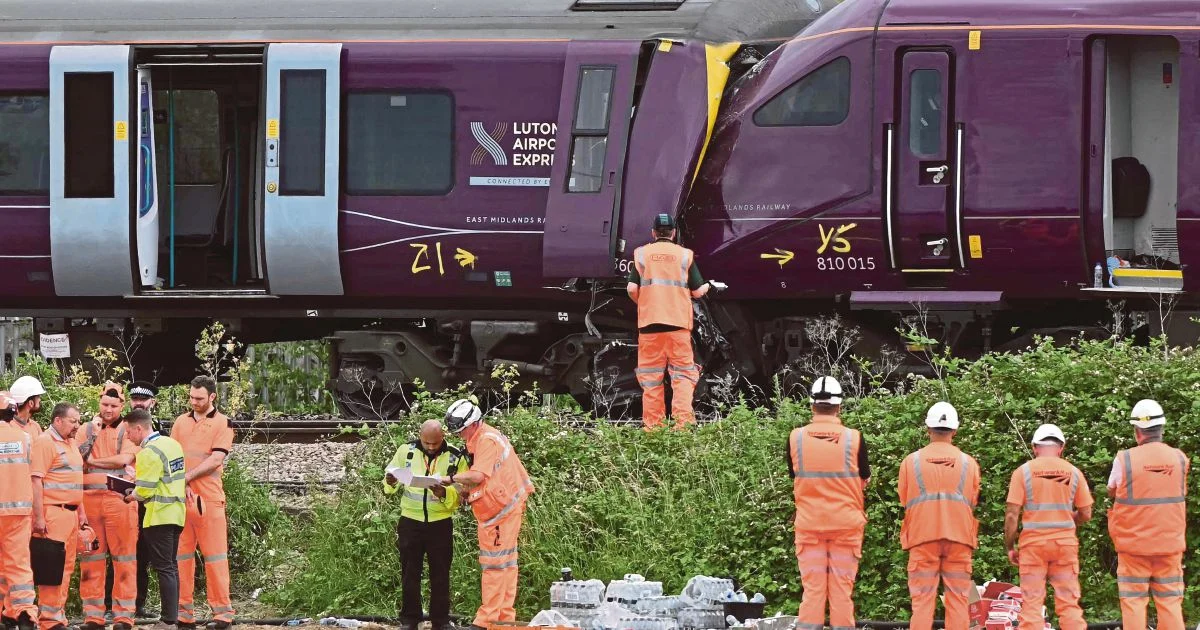
A fatal train collision has struck the rail network north of London, claiming the life of a driver and leaving dozens injured. The incident, which unfolded near Bedford, prompted immediate investigation by UK accident authorities who descended on the scene on Saturday to determine what led to the catastrophic impact between two trains. Among the 28 people taken to hospitals across the region, nine sustained injuries severe enough to warrant critical care treatment, underscoring the force of the collision.
The tragedy marks another serious railway incident in the United Kingdom, where passenger safety has remained a contentious issue amid ongoing debates about rail infrastructure investment and maintenance. Investigators from the UK's accident investigation division will examine multiple factors in coming days and weeks, including signalling systems, driver communication protocols, track conditions, and weather circumstances that may have contributed to the collision. Initial reports suggest the incident occurred during daylight hours on a Saturday, potentially affecting a significant number of weekend travellers utilising the rail corridor.
Bedford, located approximately 50 kilometres north of central London, sits along a major rail corridor connecting the capital to the Midlands and northern England. The collision's location on this important transportation artery raises questions about the safety protocols governing one of Britain's busiest rail networks. Train operators and Network Rail, the infrastructure manager, will face scrutiny regarding whether adequate spacing, signalling alerts, and emergency braking systems functioned as designed during the incident.
The loss of the driver represents a particular tragedy within the broader incident, as rail workers fulfil critical roles ensuring passenger safety and operational reliability. The driver's death will prompt considerations about occupational hazards faced by railway staff, whose working conditions during emergencies demand split-second decision-making under extreme pressure. Colleagues and unions representing rail workers have often highlighted risks inherent to the profession, particularly when equipment malfunctions or communication breakdowns occur.
For Malaysian and Southeast Asian readers familiar with regional rail networks, this incident offers perspective on how developed economies grapple with safety challenges despite substantial regulatory frameworks and technological infrastructure. Malaysia's rail sector, including Kereta Api Tanah Air and various monorail systems, continues expanding capacity while managing safety standards. The Bedford collision underscores that even mature railway systems with decades of operational history require constant vigilance and investment in maintenance and staff training.
The hospitalisation of 28 individuals reflects not only direct casualties but also the cascading medical demands following major transport incidents. Emergency services across Bedfordshire and neighbouring regions mobilised rapidly, with hospitals receiving and triaging casualties according to injury severity. The critical condition of nine patients indicates that several individuals sustained trauma potentially involving internal injuries, fractures, or complications requiring intensive monitoring and specialist medical intervention.
UK rail incidents generate immediate political and regulatory attention, with Transport Ministers typically commissioning rapid reviews and issuing public statements reassuring the travelling public. Media coverage will intensify as investigators release preliminary findings, and discussions about rail safety investment will resurface in Parliament. The incident occurs against a backdrop of rail strikes and ongoing disputes between operators, unions, and government over funding, staffing levels, and working conditions—all factors that indirectly influence operational safety and staff alertness.
As investigations proceed, the accident inquiry board will reconstruct events using multiple data sources: driver testimony from survivors, black box recordings from both trains, witness statements from passengers and railway staff, CCTV footage, and physical evidence from the collision site itself. This methodical process typically requires months of analysis before preliminary conclusions emerge, and years before final accident reports receive publication. International railway authorities and operators worldwide monitor such inquiries for learnings applicable to their own networks.
The Bedford collision serves as a sobering reminder that despite technological advances in train control systems and safety protocols, human and mechanical failures can still occur with tragic consequences. Railway authorities across Europe and beyond will examine the investigation's findings once released, seeking to implement enhanced preventative measures within their own systems. For passengers and workers alike, such incidents reinforce the importance of robust safety cultures, comprehensive training, rigorous maintenance schedules, and transparent communication between all stakeholders within the railway industry.

