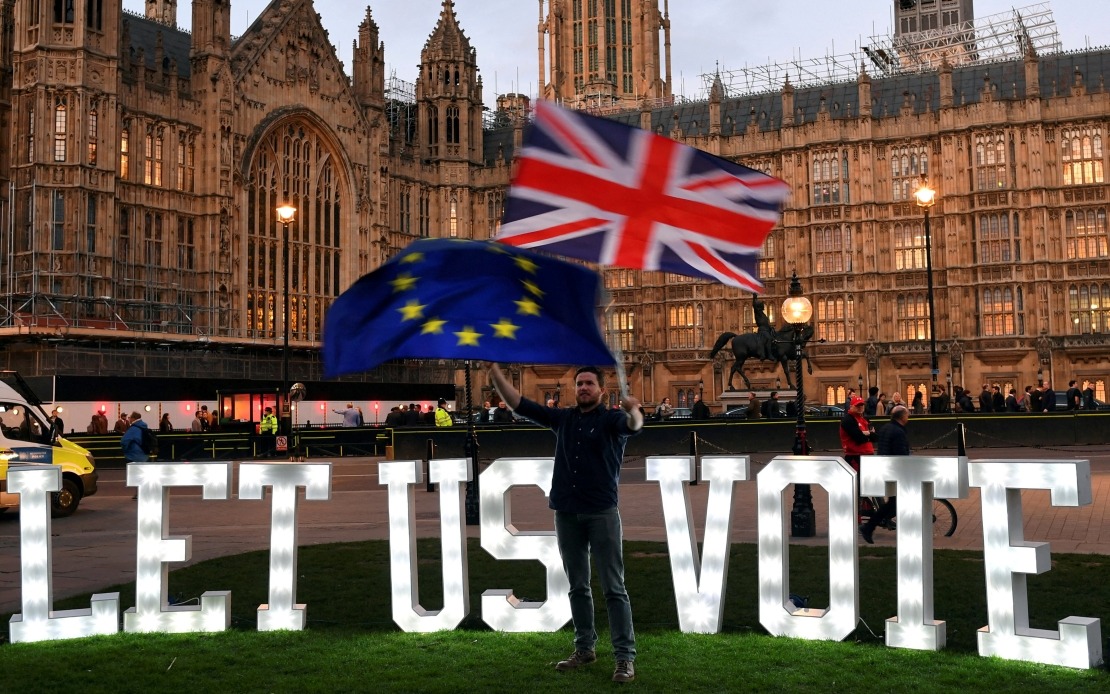
Britain is unlikely to reverse its historic exit from the European Union even as the country transitions to a new government, according to Richard Balfe, a Conservative member of the House of Lords. Speaking to RIA Novosti, the British lawmaker expressed scepticism about any genuine attempt to undo Brexit, characterising such efforts as superficial at best. His remarks come at a significant moment in UK politics, as Prime Minister Keir Starmer announced his resignation as Labour Party leader on Monday, though he will remain in office until his successor is chosen in a process beginning July 9 and concluding before Parliament reconvenes in September.
Balfe's assessment reflects a conservative view on Britain's future relationship with the EU, suggesting that while a new government might make rhetorical gestures toward closer European ties, the political will for actual re-entry simply does not exist. The lawmaker predicted that any such attempts would ultimately prove unsuccessful, characterised by what he called a "halfhearted" approach to the question. His prognosis offers insight into the mindset of establishment figures on both sides of the political divide, indicating that Brexit has become sufficiently entrenched in British political culture that reversing it appears beyond the realm of practical politics, regardless of which party holds power.
Instead of moving closer to Europe, Balfe suggested the United Kingdom would continue its policy of "muddling along" while ultimately aligning itself more closely with American interests and leadership. This perspective highlights the strategic reorientation of British foreign policy that has accelerated since the Brexit referendum. The emphasis on Washington's priorities over European coordination represents a fundamental shift in how Britain sees its place in the world, marking a departure from decades of close institutional integration with continental Europe.
The timing of these comments is noteworthy, coinciding with the 10th anniversary of the June 23, 2016 Brexit referendum, when 52 per cent of British voters chose to leave the European Union. The decision set in motion a process that formally concluded on January 31, 2020, after 47 years of membership. That date marked not merely an administrative transition but a profound reorientation of British politics, economics, and society that continues to reverberate across the nation and its relationships with neighbours.
The post-Brexit period itself unfolded in two distinct phases. During the transition period lasting until December 31, 2020, EU norms and regulations remained in force across Britain, and citizens continued to enjoy simplified travel procedures. This interim arrangement provided a cushion against immediate economic shock, though it also obscured the full magnitude of the coming change. When this period ended, a comprehensive trade and cooperation agreement entered force on January 1, 2021, fundamentally restructuring how Britain conducts commerce and maintains relationships with its nearest neighbours.
The economic consequences of this restructuring have proven significant. The Financial Times has documented how the UK's position as a major international trade hub has been substantially diminished by its departure from the EU framework. Investment in British companies has become markedly more complicated, as firms face increased regulatory burdens, customs procedures, and legal uncertainty when engaging in cross-border transactions. For Malaysian businesses and investors with interests in British operations or European supply chains anchored in the UK, these complications have created new obstacles to seamless operations.
For Southeast Asian observers, Britain's trajectory since Brexit offers important lessons about the durability of major political decisions and the difficulty of reversing them once embedded in institutional and popular consciousness. Malaysia, as a nation deeply integrated into regional and global trade networks, can recognise the complexities that arise when fundamental relationships are restructured. The British experience demonstrates how economic integration creates constituencies with vested interests, how political identity becomes intertwined with constitutional arrangements, and how initial decisions can acquire tremendous momentum regardless of subsequent costs.
The question of whether Britain might eventually seek to restore closer EU ties remains a subject of speculation, but Balfe's assessment suggests such a reversal remains politically implausible in any timeframe relevant to current policymakers. The Conservative establishment, which championed Brexit, remains influential despite Labour's current control of government. Even Labour, traditionally more enthusiastic about European engagement, has shown no appetite for advocating re-entry during its first period back in power. This alignment of convenience between the two major parties suggests that anti-Brexit sentiment, while vocal in some quarters, lacks sufficient political force to reshape national strategy.
For regional policymakers and business leaders in Asia, Britain's Brexit experience highlights the permanence of major constitutional choices and the limited ability of successor governments to reverse them. The decision to exit the EU has created new institutional realities, altered supply chains, and redirected diplomatic and economic relationships in ways that become increasingly difficult to unwind. Britain's pivot toward closer alignment with American strategy, as Balfe suggests, also underscores how geopolitical realignment can follow from domestic constitutional decisions, with implications that extend far beyond the immediate parties involved.

