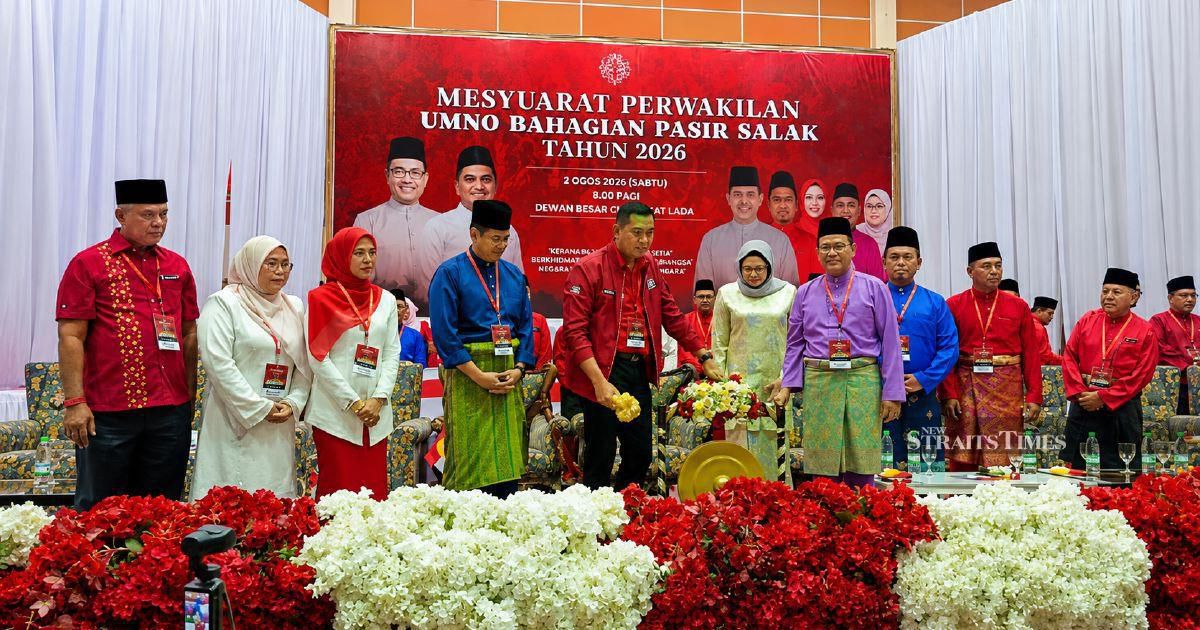
Umno Youth chief Datuk Dr Muhamad Akmal Saleh has stressed that the perspectives of Umno division leaders warrant serious consideration as the party navigates seat allocation arrangements stemming from its political understanding with Perikatan Nasional. Speaking in Pasir Salak, Akmal underscored the importance of ensuring that grassroots voices are not sidelined in negotiations that will shape the coalition's electoral strategy for future contests. His remarks come at a critical juncture as the Barisan Nasional and Perikatan Nasional formalise the terms of their partnership, with seat distribution emerging as a particularly sensitive issue across both coalitions.
The emphasis on grassroots consultation reflects broader concerns within Umno about maintaining party unity and cohesion during a period of significant political repositioning. Division chiefs, who command substantial influence over party machinery and grassroots mobilisation, hold considerable sway in determining the success of any coalition strategy at the local level. By advocating for their voices to be heard, Akmal is essentially warning party leadership that ignoring divisional concerns risks fracturing internal support for whatever electoral pact emerges from talks with Perikatan Nasional.
The BN-PN political understanding represents a notable shift in Malaysia's political landscape, bringing together formerly antagonistic coalitions in response to evolving electoral dynamics. For Umno, which has traditionally dominated the BN framework, any power-sharing arrangement requires delicate balance between central negotiating positions and the legitimate interests of party divisions scattered across the peninsula. Division leaders often represent specific geographic constituencies and possess unique insights into local political conditions, electoral viability, and community expectations that may not always align with centralised decision-making.
Seat allocation disputes have historically proven among the most contentious issues within coalition arrangements, capable of igniting internal party conflict and potentially weakening overall electoral performance. When grassroots leaders feel marginalised in these discussions, disaffection can spread quickly through party ranks, translating into reduced enthusiasm for campaign efforts and potentially dampening voter turnout among party supporters. Akmal's intervention thus carries practical implications beyond mere rhetoric about democratic participation within Umno's internal structures.
The call for respecting division leaders' stances also carries implications for how the broader BN-PN partnership will function operationally. If Umno's divisions are not satisfied with seat allocations determined through negotiations with Perikatan Nasional, this discontent could undermine the coalition's ability to present a united front during election campaigns. Regional variations in party strength mean that what works numerically at the national level may prove problematic when translated into specific state and parliamentary constituencies where local power dynamics differ substantially.
Umno has faced recurring challenges maintaining internal cohesion in recent years, including leadership transitions and factional tensions. Against this backdrop, Akmal's emphasis on respecting division leaders represents an attempt to reconstruct consensus-building mechanisms that can accommodate the interests of various party constituencies. By framing seat allocation discussions as requiring grassroots buy-in, he is essentially proposing a consultative approach that differs from top-down imposition of electoral arrangements.
The Pasir Salak statement also signals that Umno Youth, an influential bloc within the party, intends to monitor how seat allocation negotiations unfold. As the party's youth wing, Umno Youth commands substantial mobilisation capacity and maintains direct engagement with younger party members and voters. Akmal's public positioning ensures that this constituency remains aware of ongoing discussions and maintains expectations that their interests will be considered as final arrangements crystallise.
Perikatan Nasional partners will likely note Akmal's emphasis on internal Umno consultation, recognising that divisional approval could prove essential for the success of any agreed seat allocation formula. If Perikatan Nasional negotiators must ultimately satisfy multiple layers of Umno decision-making beyond formal party leadership, this could complicate negotiations but ultimately produce more durable agreements less vulnerable to internal challenges post-election.
The political understanding between BN and PN reflects recognition among Malaysia's major political players that evolving electoral mathematics and voter preferences necessitate revised coalition architectures. However, translating national-level agreements into functional electoral strategies requires addressing the complex realities of Malaysian politics at divisional, state, and parliamentary constituency levels. Akmal's insistence on respecting division leaders' views acknowledges that successful implementation of any coalition arrangement depends not merely on agreements among national party elites but on cultivating buy-in from party structures closer to actual voters.
Moving forward, how Umno manages the tension between centralised coalition negotiations and divisional consultation will likely establish patterns influencing BN-PN partnership dynamics more broadly. The willingness of Umno leadership to incorporate grassroots perspectives into seat allocation discussions could either strengthen coalition cohesion by ensuring broad internal agreement, or conversely, complicate negotiations if divisional positions prove incompatible with agreements reached at national level. Akmal's carefully calibrated intervention appears designed to ensure that whatever final arrangements emerge reflect genuine consensus within Umno rather than impositions that could generate lasting resentment among party divisions.

