Malaysia's largest Malay-Muslim party UMNO has taken a significant step towards managing its electoral strategy by granting state-level leaders discretionary power to initiate and conduct talks on political cooperation ahead of the next general election. The decision, announced following a late evening Supreme Council gathering, signals the party's recognition that electoral outcomes increasingly depend on sophisticated coalition management at the state rather than purely national level.
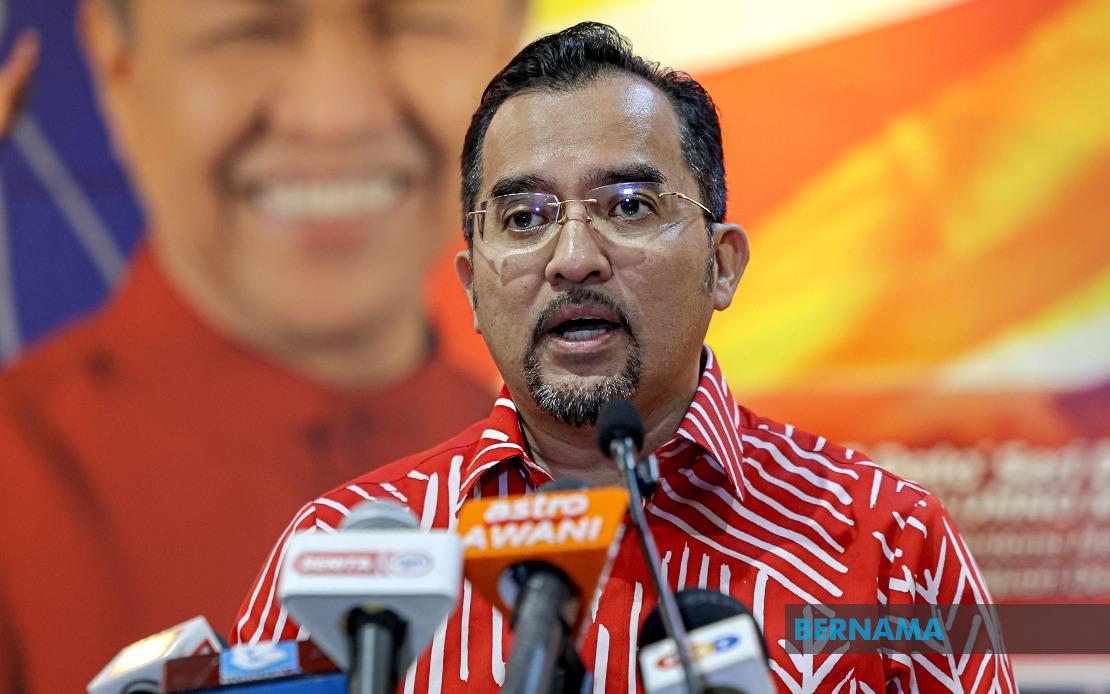
Datuk Dr Asyraf Wajdi Dusuki, the party's secretary-general, outlined the framework governing these negotiations during remarks to journalists at Menara Dato' Onn in downtown Kuala Lumpur. State branches must ground their discussions in what he termed "sincerity and trust," explicitly ruling out coercive tactics or heavy-handed pressure as negotiating tools. This language suggests UMNO leadership is conscious of internal sensitivities around collaboration arrangements, particularly given the party's historical tensions with certain potential partners and lingering disagreements over past coalition experiences.
The timing of this mandate reflects broader calculations within UMNO about electoral positioning. By devolving negotiation authority to state chapters, the party's central leadership maintains strategic flexibility while distributing political risk across the organisation. State leaders understand local political realities—demographic shifts, community concerns, rival party strength—that may differ substantially from national patterns. This decentralised approach also allows UMNO to explore multiple partnership scenarios simultaneously without committing prematurely at the national level, a useful negotiating posture when managing relationships across potential allies with divergent interests.
The Supreme Council meeting, chaired by UMNO president Datuk Seri Dr Ahmad Zahid Hamidi and attended by deputy president Datuk Seri Mohamad Hasan, additionally resolved to extend a formal invitation to PAS leadership to participate in UMNO's 2026 General Assembly, scheduled to convene from September 9 to 12. This gesture carries symbolic weight beyond the assembly itself. UMNO and PAS, though both Muslim-majority parties with overlapping support bases, have competed fiercely for votes and political influence, particularly in northern and east coast states. The invitation signals willingness to engage constructively despite competition, potentially laying groundwork for state-level cooperation discussions authorised by the new mandate.
Parallel to the General Assembly, UMNO has scheduled three significant programmes for September 8. The 2026 Malay Education Convention, the Malaysian Islamic Scholars Convention, and Laman Wanita Kreatif collectively suggest UMNO is deepening engagement with key constituencies—educators, religious intellectuals, and women—whose support proves essential in closely contested elections. These forums provide platforms for communicating party positions and testing policy approaches before formal campaigning begins. They also underscore UMNO's investment in intellectual and ideological positioning rather than relying solely on transactional coalition arrangements.
Dr Asyraf Wajdi used the press conference to reinforce UMNO's stated commitment to the rule of law and due process. He emphasised that no individual merits condemnation until formally charged, tried, and convicted in court—comments that resonate differently depending on observer perspective. Some view such statements as proper reaffirmation of legal principles; others interpret them through the lens of ongoing legal proceedings involving senior party figures. The statement's placement in the formal announcement suggests UMNO leadership wanted to foreclose any suggestion that party expediency might override judicial independence or that coalition politics could shield members from accountability.
For Malaysian political observers, this development illustrates how coalition management has evolved from simple seat-sharing arrangements to complex negotiations spanning multiple governance levels. State branches increasingly function as semi-autonomous political actors, negotiating directly with regional counterparts rather than waiting for national party directives. This shift reflects Malaysia's federal structure and the reality that state governments control substantial resources and policy domains.
The implications for Southeast Asian politics extend beyond Malaysia's borders. Coalition management at sub-national levels has become increasingly sophisticated across the region. Thailand, Indonesia, and the Philippines all grapple with similar challenges of managing multi-party systems where national coalitions must accommodate diverse state or provincial interests. UMNO's approach of empowering state leadership while maintaining principle-based negotiating frameworks offers a potential model for how traditionally centralised parties adapt to more plural electoral environments.
For potential coalition partners, the new UMNO mandate creates both opportunity and uncertainty. State leaders now possess clear authority to explore cooperation, potentially accelerating negotiations that might otherwise require protracted national-level approvals. However, partners must identify which UMNO state branches offer genuinely independent negotiating power and which remain constrained by factional dynamics or personal rivalries within the party. Negotiations could proceed more smoothly with some branches than others, requiring partners to invest in understanding UMNO's internal landscape.
The emphasis on sincerity rather than coercion suggests UMNO leadership recognises that sustainable coalitions rest on genuine alignment rather than forced arrangements. Malaysian political history demonstrates that coalitions forged primarily through pressure or threats frequently fracture, particularly when electoral outcomes disappoint or internal power struggles surface. By establishing sincerity as a negotiating principle, UMNO implicitly acknowledges that coalition partners must perceive mutual benefit to maintain stability throughout an electoral cycle.
Moving forward, attention should focus on how state branches actually exercise the mandate they have received. Will certain states move quickly into substantive negotiations whilst others remain cautious? Will existing UMNO-PAS cooperation in states like Kedah or Terengganu become templates for expansion elsewhere? Will UMNO's coalition flexibility extend to non-Islamic parties or remain confined to Muslim-oriented partners? The answers will shape not just UMNO's electoral prospects but the broader architecture of Malaysian coalition politics as the nation approaches its next general election.

