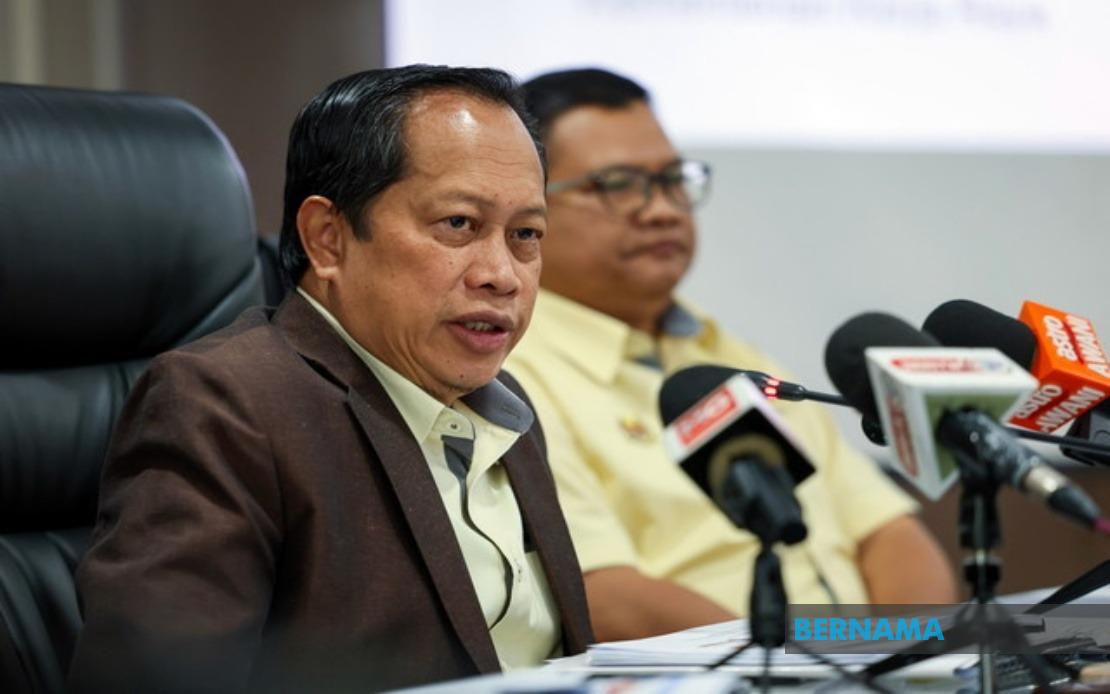
UMNO's leadership is preparing for a crucial strategic decision on how the party should approach the impending Melaka state election, with the party's Supreme Council scheduled to gather on August 28 to deliberate the matter. Datuk Seri Dr Ahmad Maslan, a member of UMNO's highest decision-making body, confirmed that the full council meeting chaired by party president Datuk Seri Dr Ahmad Zahid Hamidi will evaluate competing political options and determine Barisan Nasional's optimal route to victory in the state. The timing of this meeting is significant, as it provides UMNO with a defined window to settle internal divisions and present a unified front before campaigning intensifies.
Currently, no definitive position has been adopted by UMNO or its broader Barisan Nasional coalition regarding the most advantageous political configuration for Melaka, according to Dr Ahmad Maslan's assessment. The Deputy Works Minister acknowledged that various stakeholders, including senior UMNO figures based in Melaka itself, have aired public positions favouring different alliance scenarios. Some have advocated collaboration with Pakatan Harapan, the national opposition coalition, whilst others have explored potential partnerships with Perikatan Nasional, the rival conservative grouping that commands significant support in several East Malaysian states. This lack of consensus reflects genuine uncertainties about which coalition partner, if any, would deliver the strongest electoral performance in the state.
The Supreme Council's August 28 deliberation will therefore serve as the decisive forum where UMNO can consolidate competing strategic visions into a single organizational mandate. Dr Ahmad Maslan emphasised that all party members and affiliated bodies must respect and implement whatever direction emerges from this top-level meeting, underscoring the hierarchical nature of UMNO's decision-making structure. This requirement for party discipline is particularly important given the visibility of internal disagreements in media coverage and public statements, which could undermine UMNO's negotiating position if left unresolved heading into formal campaign preparation.
The broader context shaping this decision involves fundamental questions about coalition architecture in Malaysia's post-2022 political landscape. Since the formation of the federal Unity Government between Barisan Nasional and Pakatan Harapan following the 2022 general election, state-level politics have not necessarily followed the same cooperative pattern. Each state faces distinct electoral mathematics, demographic compositions, and local power dynamics that may argue for different strategic approaches. Melaka's situation exemplifies this complexity: the state government currently operates under shared leadership between BN and PH at the state executive council level, mirroring the federal arrangement, yet neither the incoming election result nor the optimal pre-election positioning is predetermined.
Historical performance in Melaka provides context for this decision-making process. In the most recent state election—the 15th Melaka state election—Barisan Nasional secured a commanding majority by winning 21 of the 28 state assembly seats, substantially outpacing Pakatan Harapan's five seats and Perikatan Nasional's two seats. This electoral victory established BN's dominance in the state and understandably creates confidence within UMNO that the coalition can either retain power independently or leverage its strength in coalition negotiations. However, the intervening years have witnessed shifts in Malaysian politics that may alter these baseline assumptions, including the rise of Perikatan Nasional as a significant electoral force in certain regions and evolving public sentiment regarding coalition governance.
The expiration of the state government's mandate on December 31 establishes a hard deadline that concentrates strategic minds within UMNO's hierarchy. The party must communicate its chosen political direction to potential coalition partners with sufficient advance notice to negotiate detailed arrangements, whether those arrangements involve formal pre-election alliances or informal post-election understandings. Delayed decision-making risks disadvantaging UMNO in negotiations or creating organisational confusion among grassroots party members tasked with executing whatever campaign strategy ultimately emerges. The August 28 meeting therefore represents a critical juncture where internal UMNO deliberation must crystallise into actionable political strategy.
For Malaysian observers and regional analysts tracking coalition dynamics in Southeast Asia's largest Muslim-majority democracy, the Melaka decision signals how Malaysia's major political actors are navigating the tension between pragmatic coalition-building at the federal level and state-by-state competitive positioning. The choice UMNO makes will reveal whether the federal Unity Government arrangement represents a broader philosophical commitment to cooperative governance or remains primarily a federal-level expedient that does not constrain traditional competitive behaviour at state level. This distinction carries implications for political stability and predictability in Malaysian governance beyond Melaka itself.
Dr Ahmad Maslan's characterization of the party's approach as contextual and state-specific acknowledges that Barisan Nasional may pursue different strategies in different jurisdictions based on particular circumstances. This flexibility contrasts with more rigid ideological positions and reflects pragmatic Malaysian politics, where electoral calculus often supersedes abstract principles. However, it also creates potential perception challenges regarding consistency and coherence in the coalition's broader political messaging. The Supreme Council must therefore craft a Melaka strategy that withstands public scrutiny and communicates clear rationales to party grassroots and the broader electorate.
Internally, the August 28 meeting will require UMNO leadership to reconcile competing perspectives from Melaka-based figures, federal party hierarchy, and strategists focused on broader national implications. Dr Ahmad Maslan's pre-meeting comments suggesting that no final decision has been made indicates that genuine deliberation will occur rather than a mere rubber-stamping of predetermined outcomes. This openness to substantive debate reflects healthy organisational functioning, though it also carries risks of prolonged factional divisions if consensus remains elusive. The meeting's outcome will therefore signal not only UMNO's political positioning in Melaka but also the current state of cohesion within Malaysia's historically dominant political party.

