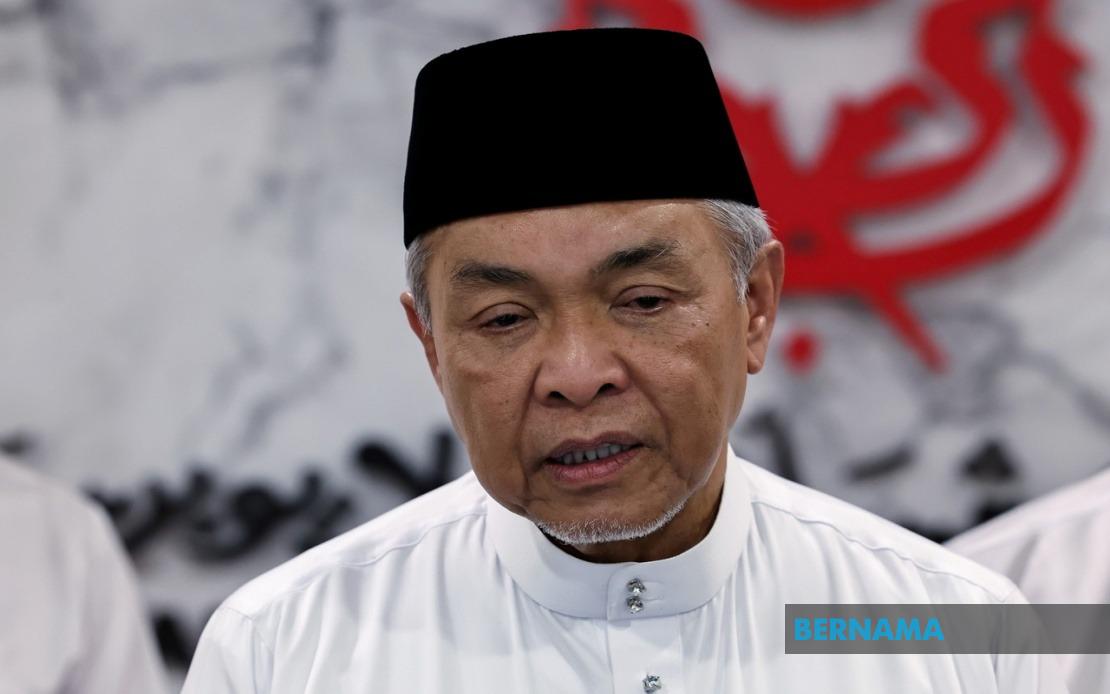
UMNO's leadership has signalled that substantive coalition negotiations for the upcoming Melaka state election will commence only after the state legislative assembly undergoes formal dissolution. Speaking in Kuala Lumpur on August 30, party president Datuk Seri Dr Ahmad Zahid Hamidi indicated that while preliminary conversations may already be occurring behind the scenes, any official discussions regarding partnership arrangements must await the constitutional dissolution process.
The responsibility for steering these negotiations has been placed squarely on the shoulders of Melaka Chief Minister Datuk Seri Ab Rauf Yusoh, a positioning that underscores the state-level autonomy UMNO has granted in managing this politically sensitive matter. Ahmad Zahid's framing of the timeline reflects a strategic approach: maintaining flexibility through informal dialogue while preserving formal options until the official election machinery is triggered. This separation between preliminary soundings and formal engagement is a calculated political manoeuvre, allowing UMNO breathing room to assess multiple partnership scenarios without committing prematurely.
The announcement arrives amid growing speculation about UMNO's potential cooperation with Perikatan Nasional in the Melaka contest. PN has emerged as a significant political force in Malaysia's coalition landscape, and discussions between UMNO and PN at both federal and state levels have become increasingly frequent. By deferring formal talks until after dissolution, UMNO maintains negotiating leverage and avoids the appearance of pre-electoral collusion, which could complicate internal party dynamics and broader national coalition arrangements.
Ahmad Zahid emphasised that UMNO has already conducted substantial internal preparation for the Melaka election campaign. The party's Melaka division has assembled a dedicated war room tasked with gathering and analysing electoral data, intelligence on ground sentiment, and strategic positioning across constituencies. This intelligence infrastructure forms the foundation upon which leadership decisions regarding coalition strategy will ultimately rest. The war room's findings have been presented to both the UMNO Melaka Political Bureau and the party's supreme council, ensuring that any formal negotiating position reflects comprehensive internal consensus rather than isolated decision-making.
The Deputy Prime Minister's emphasis on consultation with the entire UMNO Melaka Political Bureau demonstrates an effort to build broad-based buy-in within the state party structure. In Malaysian political practice, state-level party bodies wield considerable influence over electoral strategy, and securing their endorsement before embarking on formal coalition negotiations helps insulate leadership from accusations of making unilateral decisions that bypass grassroots stakeholder input. This consultative approach, while potentially cumbersome, provides political cover and reinforces party unity heading into a competitive election.
Melaka's electoral significance extends beyond the state itself. As a strategically positioned peninsula state with a mixed urban-rural composition, election results there carry symbolic weight in national politics. The state has been a traditional UMNO stronghold, though recent electoral cycles have demonstrated the volatility of Malaysian voter behaviour and the growing competitiveness of opposition and alternative coalition parties. A successful UMNO performance in Melaka would reinforce the party's narrative of comeback and relevance within the federal government led by Prime Minister Datuk Seri Anwar Ibrahim's Pakatan Harapan-led coalition.
The distinction Ahmad Zahid drew between informal and formal discussions carries procedural significance within Malaysia's constitutional framework. Legislative assembly dissolution triggers specific timelines and regulatory requirements for election administration, campaign spending, and candidate nomination. Operating within these formal parameters is not merely bureaucratic convention but a legal necessity that shapes how political parties must conduct campaign operations. UMNO's deliberate postponement of formal negotiations until this official moment reflects adherence to both political norms and legal requirements.
For observers tracking coalition dynamics in Malaysian politics, UMNO's measured approach reveals the inherent tensions within Pakatan Harapan's governing arrangement. While UMNO is part of the federal government coalition through its participation in earlier negotiations, the party retains strategic autonomy in state-level contests. The potential for UMNO-PN cooperation in Melaka illustrates how even coalition partners at the federal level may pursue divergent paths in state politics, a reality that complicates Malaysia's complex multi-tiered electoral system.
The timing of this announcement also reflects broader political currents. With the next federal election constitutionally due by 2025, state elections like Melaka's serve as testing grounds for coalition strategies and voter sentiment. UMNO's performance in such contests influences its bargaining position within the Pakatan Harapan coalition and its credibility as a national political force capable of delivering electoral results. This context frames Ab Rauf Yusoh's upcoming negotiations as more than mere state-level politics; they represent UMNO's attempt to demonstrate renewed organizational strength and electoral competitiveness.
The emphasis on data-driven decision making through the war room reflects contemporary Malaysian political practice, where sophisticated analytics increasingly inform campaign strategy. UMNO's investment in gathering ground-level intelligence suggests a party attempting to modernise its electoral machinery and move beyond purely traditional patronage-based politics. Whether this analytical sophistication translates into improved electoral performance remains to be seen, but the infrastructure itself signals UMNO's determination to contest Melaka competitively.
As Melaka moves toward its election, the formal negotiations that will commence after assembly dissolution will undoubtedly shape not only state politics but also carry implications for national coalition stability and the broader trajectory of Malaysian electoral competition.

