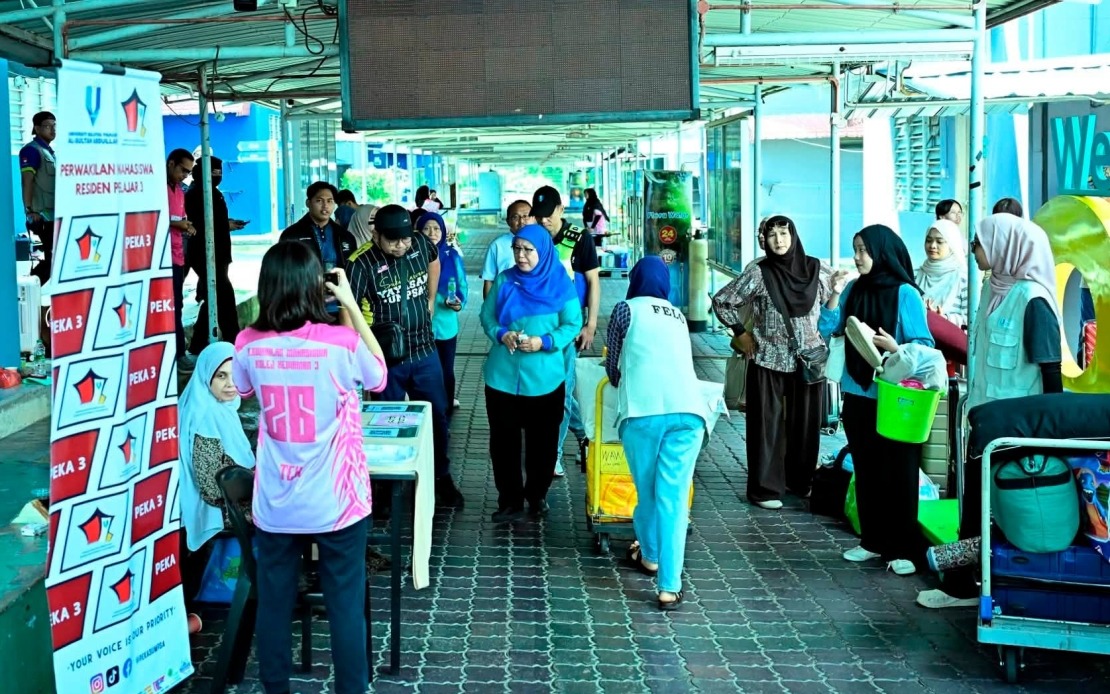
Universiti Malaysia Pahang Al-Sultan Abdullah is doubling down on its commitment to ensure that financial constraints do not prevent capable students from pursuing higher education. Vice-Chancellor Prof Dr Yatimah Alias underscored this dedication during the institution's student registration exercise on July 19 in Kuantan, emphasising that supporting economically disadvantaged students remains central to the university's mission and values.
The university's approach encompasses a multi-faceted strategy designed to remove barriers that typically hinder low-income students from completing their tertiary education. Beyond tuition fee coverage, UMPSA recognises that students require sustained financial support throughout their academic journey to focus on their studies rather than worry about day-to-day living expenses. This holistic understanding of student welfare distinguishes institutional commitment from mere symbolic gestures, positioning UMPSA as a university genuinely invested in democratising access to quality higher education.
During the registration period, UMPSA distributed scholarships to twenty students, with each award encompassing full tuition fee coverage plus monthly allowances. This combination addresses both the upfront cost barrier and the ongoing financial pressures that force many talented but underprivileged students to abandon their studies or pursue education part-time while juggling employment. The scholarship structure reflects a sophisticated grasp of the true cost of higher education for low-income families, where hidden expenses often prove as prohibitive as tuition itself.
Complementing the main scholarship programme, the university established an Early Education Incentive providing RM1,000 to students identified as requiring immediate financial support. Administered through the UMPSA Foundation, this emergency fund mechanism demonstrates proactive rather than reactive welfare provision. By identifying and assisting struggling students early in their academic tenure, the university increases the likelihood of retention and successful completion, ultimately maximising return on its educational investment and ensuring talented individuals reach their potential.
The timing of these welfare initiatives coincides with a significant surge in student enrollment. UMPSA registered 1,045 new diploma students for the 2026/2027 academic session, representing the highest cohort intake since the institution's founding. This expansion carries profound implications for support infrastructure, as proportionally larger numbers of disadvantaged students entering the system require adequately resourced welfare and academic support mechanisms.
Prof Dr Yatimah's personal engagement with registering students, rather than delegating this responsibility to administrative staff, signals institutional prioritisation of direct understanding of student circumstances. By interacting directly with new cohorts during registration, university leadership gains firsthand insight into challenges facing students and can respond with informed policy adjustments. This approach contrasts sharply with institutions where welfare provision becomes disconnected from lived student experiences, resulting in programmes that sound impressive on paper but fail to address actual needs.
The significance of UMPSA's welfare framework extends beyond individual student benefit. In Malaysia's context, where socioeconomic inequality often translates into educational inequality, universities function as critical mobility channels. When institutions like UMPSA actively remove financial obstacles, they serve the broader national interest by ensuring talent distribution rather than talent concentration among privileged strata. This inclusive approach to higher education strengthens the overall intellectual and professional capacity of the nation by enabling capable individuals regardless of family background to develop their potential fully.
For Southeast Asian higher education more broadly, UMPSA's emphasis on student welfare provides instructive contrast to institutions treating undergraduate education as purely market-driven enterprises. While cost-recovery models dominate regional discussions, UMPSA's Foundation-funded initiatives demonstrate that public and quasi-public institutions can maintain social mission alongside operational sustainability. The model proves particularly relevant for Malaysia, where government transformation ambitions depend on inclusive knowledge ecosystems rather than narrowly elite educational access.
Implementing comprehensive welfare support at scale inevitably raises questions about institutional sustainability. UMPSA's reliance on Foundation funding rather than exclusively government appropriations suggests creative resource mobilisation, potentially through industry partnerships, alumni contributions, and philanthropic engagement. Such diversified funding approaches offer templates for other Malaysian universities facing pressure to balance access ambitions against constrained public budgets.
The university's commitment further addresses systemic barriers beyond pure financial assistance. By coupling scholarship provision with explicit academic support offerings, UMPSA acknowledges that low-income students often enter higher education with fewer preliminary advantages in terms of family educational background, prior schooling quality, and subject preparation. Comprehensive support combining financial aid, tutoring, mentorship, and pastoral care creates the ecosystem necessary for disadvantaged students to genuinely succeed rather than merely enrol and struggle.
Looking forward, UMPSA's expansion to accommodate 1,045 new diploma students annually necessitates scaled welfare provision. The current scholarship allocation of twenty students, while substantial, will require proportional growth to maintain equity ratios as overall enrollment increases. Vice-Chancellor Alias's public commitment suggests institutional planning already accounts for expanding disadvantaged student cohorts and corresponding support infrastructure development.

