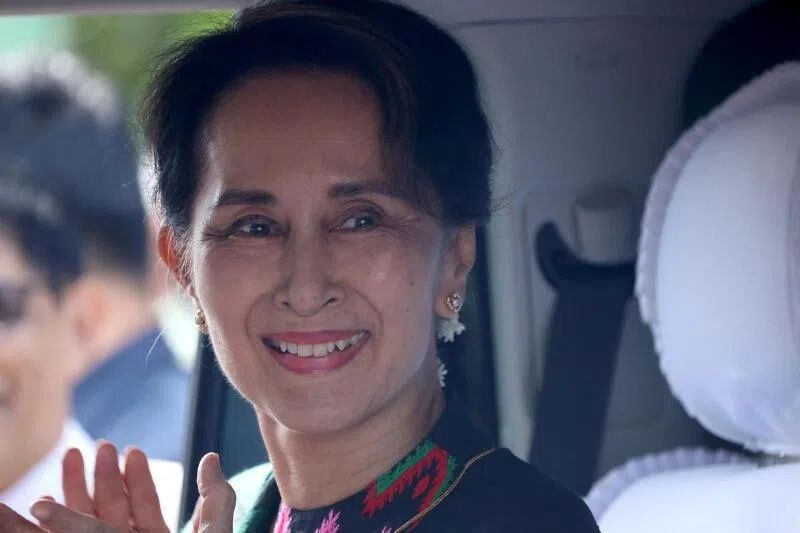
The United Nations' special envoy for Myanmar has intensified diplomatic pressure on the military junta to free Aung San Suu Kyi, the imprisoned opposition leader, as she marked her 81st birthday while held in detention inside the country. Julie Bishop made the appeal to UN member states on Friday, June 19, underscoring the international community's growing concern about the fate of the Nobel laureate, whose circumstances have remained shrouded in secrecy for an extended period.
Bishop's intervention represents a sustained diplomatic effort aimed at Naypyidaw, Myanmar's capital, where she has repeatedly raised Suu Kyi's case with military authorities. The special envoy's remarks carried particular weight given her recent fourth visit to Myanmar, offering her first-hand perspective on conditions within the coup-affected nation. She emphasised that credible information about Suu Kyi's health, location, and treatment has been entirely absent for years, a vacuum that has fuelled international concern about the detained leader's wellbeing.
The context for this appeal stems from the turbulent political events that upended Myanmar's democratic experiment. Suu Kyi's opposition party, the National League for Democracy, achieved an overwhelming electoral victory in November 2020, with voters granting her a fresh mandate to lead the nation. However, this democratic triumph proved short-lived when the military seized power in February 2021, dissolving the government and triggering a nationwide crackdown that would eventually see Suu Kyi convicted and sentenced to more than three decades in prison.
For Malaysian observers and Southeast Asian policymakers, Suu Kyi's detention represents a cautionary tale about democratic fragility in the region. Her imprisonment following a military coup that overturned an election result has resonated with concerns about institutional resilience and the rule of law across ASEAN. The case demonstrates how quickly democratic gains can be reversed and how international pressure, while significant, may prove insufficient to reverse determined military control.
Bishop's framing of the impasse is instructive: she argued that meaningful progress toward peace and reconciliation in Myanmar cannot occur while Suu Kyi remains imprisoned. This perspective reflects a growing consensus among international observers that sustainable stability requires political inclusion rather than the systematic exclusion and detention of opposition figures. The suggestion implicitly critiques the junta's approach and signals that many nations view Suu Kyi's freedom as a prerequisite for broader diplomatic engagement with Myanmar.
The military leadership, under General Min Aung Hlaing, who assumed the presidency following elections notably excluding the democratic opposition, attempted to adjust its detention approach in April by moving Suu Kyi to house arrest rather than prison. This shift, however, represented more of a cosmetic adjustment than substantive change, as the opposition leader remained under strict military control. The announcement also failed to address the fundamental legitimacy questions surrounding the junta's governance structure.
Adding another layer of concern is the mystery surrounding Suu Kyi's current whereabouts and condition. Her son, Kim Aris, has publicly demanded that Myanmar's military authorities provide verifiable proof of his mother's continued survival, a demand that underscores how complete the information blackout has become. The absence of independent verification about a prominent international figure's status is unusual in the modern era and suggests either deliberate information suppression or serious problems with her treatment that authorities wish to conceal.
The diplomatic messaging from the UN special envoy carries particular significance for the broader ASEAN diplomatic framework. Myanmar's status within ASEAN has been complicated by the military takeover and the subsequent crackdown on civilians and political opponents. Bishop's call for Suu Kyi's release effectively signals to other ASEAN nations and international observers that the detention of an elected leader cannot be dismissed as an internal matter, but rather becomes a regional and global concern affecting perceptions of stability and legitimacy.
For Malaysia and other Southeast Asian nations, the situation presents a complex diplomatic challenge. Many ASEAN members have pursued a policy of dialogue and engagement with Myanmar's military authorities rather than confrontational rhetoric. However, sustained international calls for Suu Kyi's release, particularly from influential figures like the UN's Myanmar envoy, increase pressure on these nations to articulate positions on democratic governance and human rights within the region.
The longer Suu Kyi remains detained without credible independent confirmation of her condition, the more the junta's international standing deteriorates. Bishop's reiteration of calls for her release, coupled with acknowledgment of years without verifiable information about her circumstances, paints a picture of systematic opacity that raises questions about the military's confidence in its own political legitimacy. Nations considering their approach to Myanmar must weigh these concerns carefully.

