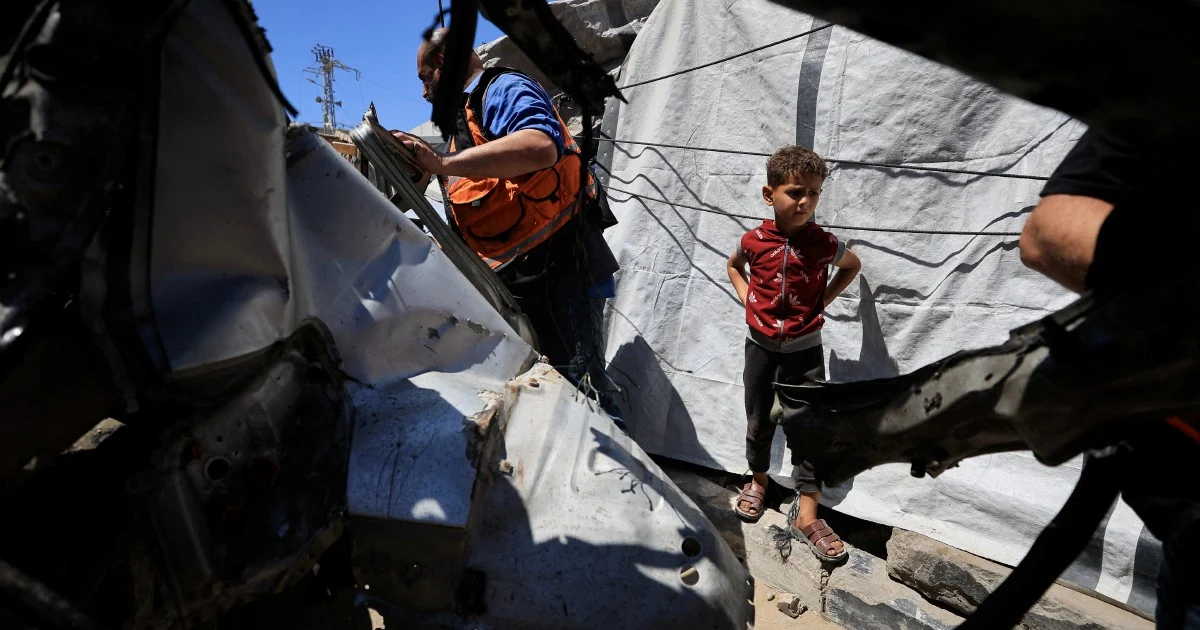
United Nations investigators have levelled serious accusations against Israel, claiming that the deliberate targeting of Palestinian children represents a central component of what they characterise as an ongoing genocide in Gaza. The damning assessment, delivered in Geneva on Tuesday, builds upon months of investigative work examining the humanitarian toll of the conflict and the patterns of military operations within the territory.
The findings from the UN probe represent one of the most formal and comprehensive allegations of systematic harm to children in the region. Investigators detailed their methodology in compiling evidence from multiple sources, including survivor accounts, medical records, and documentation of civilian casualties. The report moves beyond isolated incidents to suggest a coordinated strategy, a characterisation that has profound implications for international accountability frameworks and discussions of collective responsibility.
For Malaysian readers and the broader Southeast Asian community, the UN's formal investigation carries significance beyond the immediate Israel-Palestine context. The allegations underscore the role of international investigative mechanisms in conflict zones and raise questions about how regional bodies might respond to similar accusations elsewhere. The credibility of UN investigations in this region has become increasingly important for countries concerned with applying consistent standards to human rights violations across different theatres of conflict.
The targeting of children holds particular weight within international humanitarian law and genocide conventions. The UN Convention on the Prevention and Punishment of the Crime of Genocide specifically identifies the killing of children as a constitutive act of genocide when undertaken with intent to destroy a group. By foregrounding accusations regarding children, investigators are employing a legal framework that carries maximum gravity within international law, signalling their assessment of severity.
Israel has rejected the investigation's conclusions, contending that such assessments misrepresent military operations and ignore the defensive necessities facing the country. Officials have argued that accusations of deliberate targeting of children contradict their stated operational policies and point to efforts to minimise civilian casualties. The divergence between the UN findings and Israel's position reflects the profound disagreement that has characterised the conflict, with each side presenting fundamentally incompatible narratives of events.
The investigation's emphasis on deliberate targeting, rather than incidental harm, marks a critical distinction. Unintended civilian casualties, including children, occur in warfare, but deliberately directing military fire at a civilian population or specific groups constitutes a war crime under international law. The investigators' conclusion that such deliberation exists suggests evidence of intent beyond collateral damage—a far more serious legal accusation.
The pathway forward from these allegations remains uncertain. International criminal courts, particularly the International Criminal Court, have limited enforcement mechanisms and depend upon cooperation from member states or referrals from the UN Security Council. However, the permanent membership structure of the Security Council has historically prevented action against major powers, creating a enforcement gap that critics argue undermines international accountability.
For countries in Southeast Asia, this situation illustrates broader challenges in the current international system. Many regional states have experienced their own conflicts and harbour sensitivities about external investigations into internal security matters. Yet the principle of accountability for systematic harm to civilians, particularly children, commands broad moral support. This tension between sovereignty and accountability has long animated debates at ASEAN forums and within UN bodies.
The investigation's findings will likely influence ongoing discussions at the International Court of Justice and other bodies examining alleged violations in Gaza. These parallel proceedings create complex interactions between different legal systems, each with distinct standards of proof and procedural rules. The cumulative effect of multiple investigations reaches into international diplomacy and humanitarian policy at numerous points.
Civil society organisations working on humanitarian protection have welcomed the UN investigation's attention to child victims. Beyond legal accountability, the formal documentation of harm to children serves a commemorative function, ensuring systematic harm is not erased from historical record. This documentation becomes particularly important in post-conflict settings where truth commissions and transitional justice mechanisms must grapple with establishing what occurred.
The report's release occurs within a broader context of shifting international dynamics regarding Gaza. Several countries have adjusted diplomatic positions or increased humanitarian assistance based upon assessments of the humanitarian situation. The UN investigation may influence these calculus further, providing authoritative documentation that shapes both public opinion and government policy across multiple nations.
Moving forward, the investigation's impact will depend partly upon whether additional bodies accept its findings and incorporate them into their own assessments. The credibility that international institutions maintain affects their capacity to influence state behaviour and shape humanitarian norms. As these processes continue, countries throughout Southeast Asia and beyond will observe how serious accusations of systematic harm to children are ultimately addressed within existing international legal frameworks.

