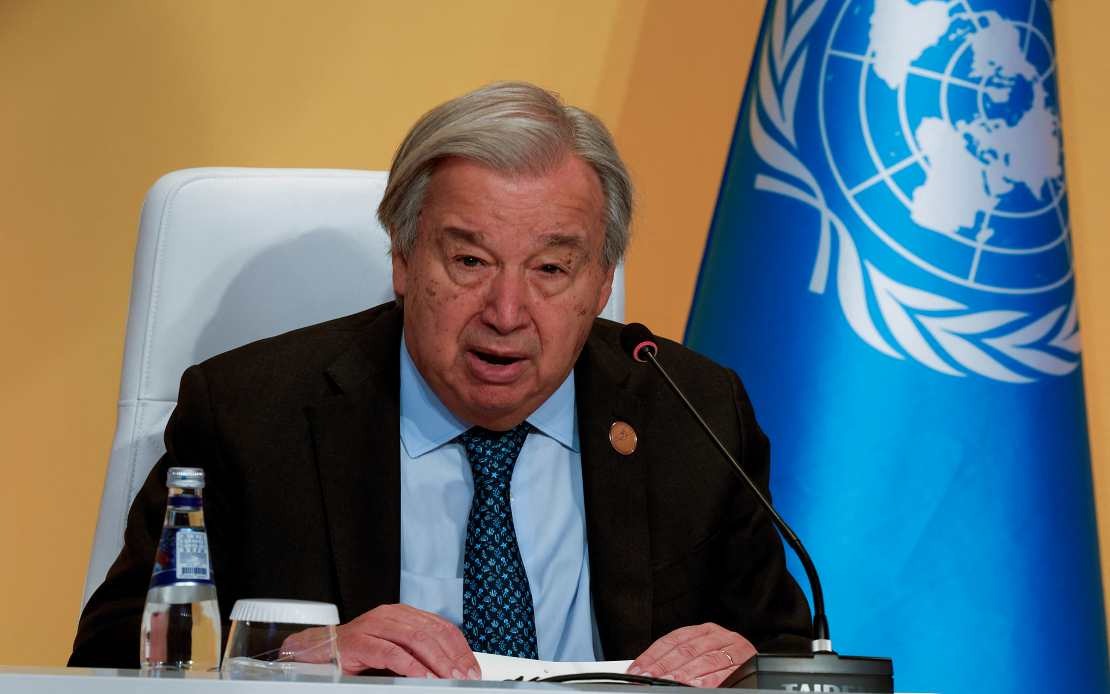
United Nations Secretary-General Antonio Guterres touched down in Damascus on Saturday, embarking on a journey that carries considerable symbolic weight for both the international organization and Syria's evolving diplomatic standing. The arrival at Damascus International Airport, where Foreign Minister Asaad al-Shaibani extended an official reception to Guterres and his delegation, represents a watershed moment in UN-Syria relations that had remained fractured for over a decade.
The last time a sitting UN secretary-general visited the Syrian capital was in 2009, when Ban Ki-moon made the trip during a vastly different geopolitical landscape. That fifteen-year gap underscores the profound isolation Syria experienced following the outbreak of civil conflict and the subsequent international complications that emerged from that prolonged instability. The return of the UN's top official to Damascus signals a fundamental recalibration in how the international body approaches Syrian affairs and reflects the changed circumstances on the ground following the conclusion of the civil war in 2024.
While the UN secretariat has remained circumspect about the precise details of Guterres' itinerary and the full scope of his agenda, official statements confirm his expected engagement with Syria's senior political leadership. President Ahmad Al-Sharaa is anticipated to feature prominently in Guterres' schedule of meetings, indicating that discussions will occur at the highest echelons of Syrian governance. The visit is projected to span several days, providing sufficient time for substantive conversations beyond mere ceremonial courtesy calls.
A critical component of the visit involves an inspection tour of the UN Disengagement Observer Force, the peacekeeping contingent positioned in the occupied Syrian Golan Heights. This particular element underscores the ongoing international mechanisms designed to enforce and monitor the ceasefire arrangements between Syria and Israel. By directly observing UNDOF operations, Guterres will gain firsthand understanding of how commitments under the ceasefire accord are being maintained and what challenges may persist in this sensitive buffer zone.
For readers across Southeast Asia, this development carries implications beyond Syria's borders. The normalization of high-level UN engagement with Damascus reflects broader trends in international relations where even states involved in protracted conflicts eventually return to the fold of mainstream diplomatic discourse. The template established through Syria's reintegration into formal international structures may influence how the global community manages other lingering regional disputes and humanitarian crises across Asia and beyond.
Guterres' mission represents a decisive departure from the approach adopted during Syria's most turbulent years, when the UN's primary mechanism for Syrian engagement relied on specially designated envoys rather than direct engagement by the secretary-general himself. This shift from crisis-management methodology through intermediary representation to high-level personal diplomacy reflects the transformed political reality within Syria and international confidence in the stability of current arrangements.
The visit also crystallizes the broader strategic recalibration underway within Middle Eastern geopolitics. Syria's reentry into normalized international relations, facilitated through this visit, opens pathways for renewed engagement on multiple fronts ranging from humanitarian reconstruction to political rehabilitation. For Malaysia and other ASEAN members that maintain diverse relationships throughout the region, Syria's changing status affects calculations regarding multilateral engagement and regional balance.
The invitation to Guterres, extended by the Syrian government itself, demonstrates Damascus' interest in rehabilitation and international legitimacy following years of being treated as a pariah state by significant portions of the international community. This self-directed engagement contrasts sharply with the defensive postures adopted during the height of the civil conflict, suggesting a government confident enough to welcome scrutiny and international dialogue at the highest levels.
The visit also acknowledges the substantial humanitarian and reconstruction challenges that Syria continues to face. The UN's engagement through its secretary-general provides opportunity to assess needs, coordinate assistance mechanisms, and establish frameworks for international support in rebuilding critical infrastructure and governance institutions. These dimensions assume particular importance given the scale of displacement, economic damage, and institutional disruption resulting from over a decade of armed conflict.
Moreover, this visit establishes an important precedent for how the UN organization itself views Syria's future role within the international system. By according the Syrian leadership a visit from the UN's highest official, the organization implicitly extends recognition of Syria's reintegration into the community of nations operating under established international frameworks and norms. This carries consequences for Syria's ability to participate more fully in multilateral institutions and mechanisms.
The diplomatic groundwork for this visit was prepared earlier in the week when UN spokesman Stephane Dujarric publicly announced Guterres' intention to travel to Syria at the government's invitation. This advance notice allowed for appropriate preparation and signalled to the international community the seriousness of the engagement. The transparency of the announcement itself constituted a form of diplomatic messaging, indicating both Syrian and UN commitment to this renewed relationship.

