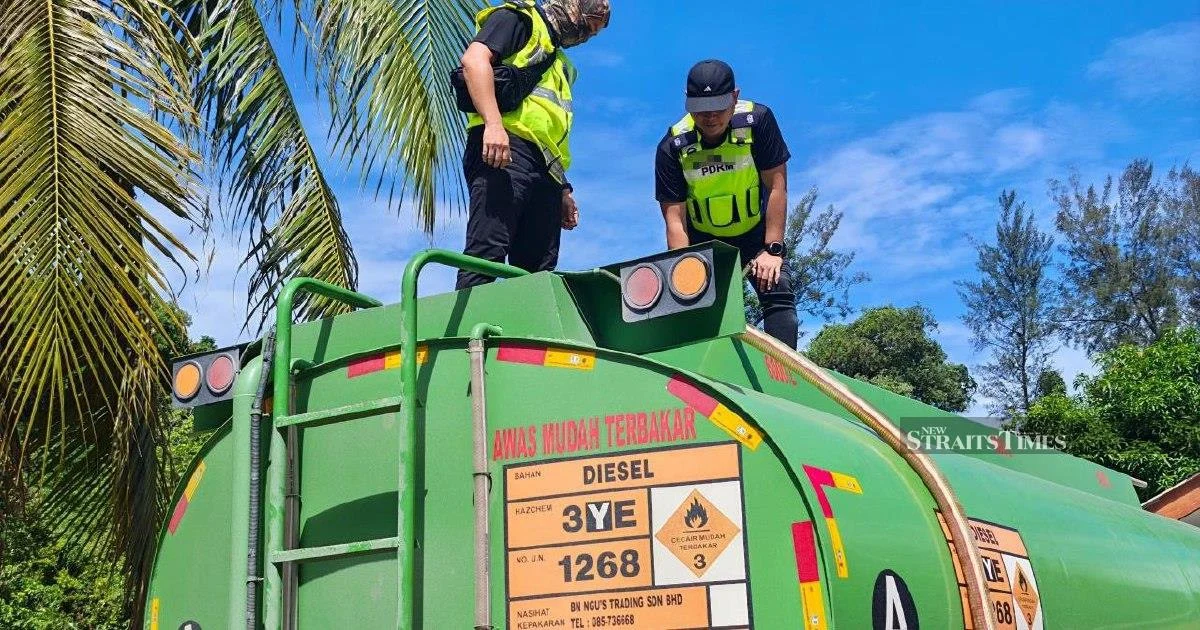
An underground operation siphoning subsidised diesel away from legitimate distribution channels has been uncovered in Miri, marking a significant enforcement action against fuel diversion syndicates that have long plagued Malaysia's eastern states. Authorities conducted a raid in Tanjung Lobang, where they discovered a sophisticated storage and distribution network operating discreetly from a residential bungalow. The operation resulted in the seizure of 15,000 litres of fuel and the arrest of four men connected to the scheme, according to enforcement officials handling the case.
The discovery highlights the persistent vulnerability of Malaysia's subsidised fuel system to organised theft and resale at black-market rates. Diesel subsidies remain a significant government expenditure, particularly in Sarawak where fuel costs directly influence the competitiveness of agricultural and transportation sectors. Criminal networks exploit this subsidy mechanism by diverting fuel meant for legitimate commercial and industrial users, creating shortages that can ripple through supply chains and disadvantage honest businesses attempting to operate within regulated channels.
Tanjung Lobang, a port town in Miri Division, has emerged as a focal point for such illegal operations due to its strategic location and proximity to industrial areas. The residential nature of the bungalow deployment suggests an attempt to evade conventional detection methods that typically focus on commercial or industrial facilities. Authorities appear to have relied on intelligence gathering and surveillance to identify the location, indicating that such networks may be adapting their concealment strategies in response to increased enforcement activity.
The scale of fuel diversion in this particular operation—15,000 litres—represents a substantial economic loss to government coffers and suggests the syndicate had developed a reliable customer base. The volume implies systematic rather than opportunistic smuggling, indicating established supply networks extending beyond Miri itself. Investigators will likely trace distribution channels to identify downstream buyers who may have been purchasing fuel below-market rates without asking questions about its origin.
Fuel subsidy abuse has become increasingly sophisticated across Southeast Asia, with criminal organisations operating across borders to maximise profits. In Malaysia's context, the problem is compounded by the disparity between domestic and international fuel prices, which creates powerful economic incentives for diversion. Neighbouring countries and regional shipping routes offer lucrative markets for stolen subsidised fuel, making cross-border smuggling an attractive option for better-organised syndicates.
The arrest of four individuals will provide investigators with valuable intelligence regarding operational structures, customer relationships, and supply arrangements. Interrogation of suspects may reveal whether this represents an isolated cell or part of a larger regional network. The involvement of multiple persons suggests a division of labour—procurement, storage, distribution, and customer liaison—typical of formalised criminal enterprises rather than ad-hoc theft.
Government enforcement agencies have intensified efforts to combat fuel diversion following recognition of its fiscal impact and destabilising effect on legitimate markets. Miri, as a significant oil and gas hub, maintains elevated awareness of fuel-related crimes given the strategic importance of hydrocarbon resources to the state economy. However, the discovery of such an operation suggests that criminal networks continue adapting to enforcement tactics, necessitating equally adaptive counter-strategies from authorities.
The seizure represents a meaningful recovery of diverted product, though enforcement officials acknowledge that such individual operations likely represent a fraction of total illicit fuel traffic. Prevention requires multi-layered approaches including intelligence cooperation between federal and state agencies, maritime surveillance to intercept cross-border movements, and supplier-side controls ensuring fuel sold in the domestic market matches official distribution records. Consumer education about the risks of purchasing fuel through unauthorised channels may also discourage demand-side participation in black markets.
For Malaysian businesses, particularly those in transport, agriculture, and manufacturing, the persistence of fuel smuggling affects legitimate market dynamics. When large quantities of subsidised fuel leak into black markets, authorised distributors face reduced demand for official products, potentially destabilising their operations and affecting employment. The enforcement action in Miri demonstrates that authorities remain committed to protecting fuel subsidy integrity, though success ultimately depends on sustained operational pressure rather than isolated busts.
The case underscores broader challenges facing Malaysia's commodity subsidy regime. While price controls aim to ensure affordability for ordinary citizens and businesses, they simultaneously create conditions conducive to criminal exploitation. Policymakers continue wrestling with the fundamental tension between maintaining accessible pricing and preventing systematic diversion—a challenge shared across Southeast Asia where fuel subsidies remain politically important despite fiscal pressures.