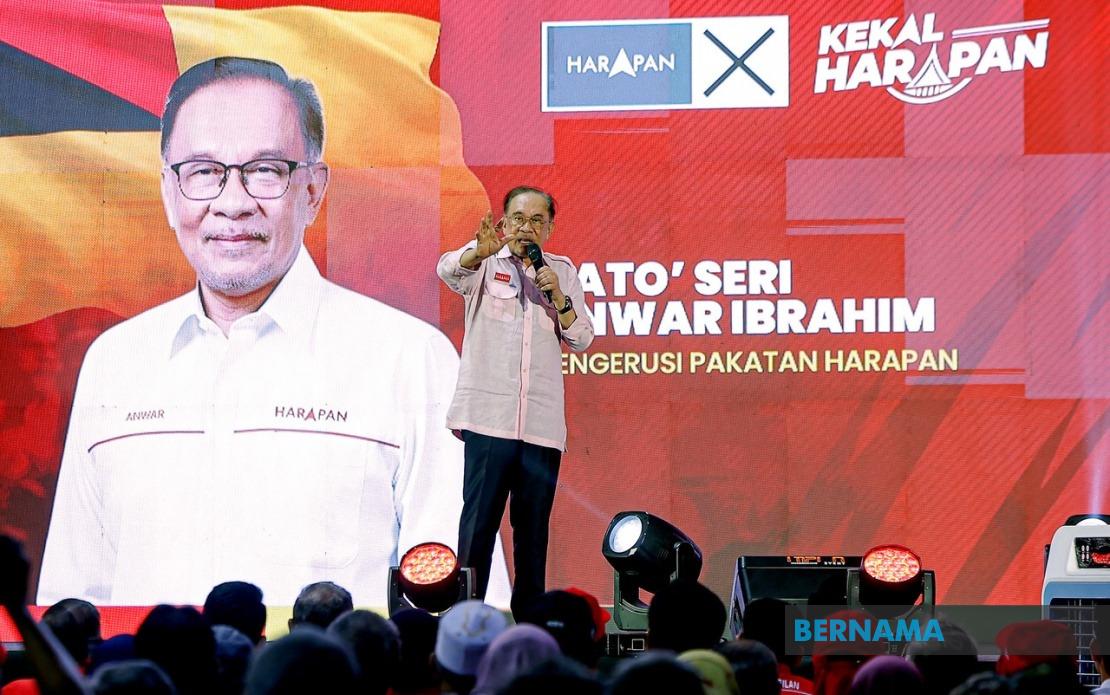
Prime Minister Datuk Seri Anwar Ibrahim has sought to reassure the nation that the Unity Government coalition continues to function effectively at the federal tier, emphasizing that institutional stability has not been jeopardized despite mounting pressures in the political landscape. Speaking in Seremban on July 22, the Prime Minister underscored the importance of maintaining cohesion among coalition partners to safeguard Malaysia's economic trajectory and preserve the country's standing with foreign investors.
Anwar acknowledged a fundamental distinction between the federal and state political spheres, noting that while individual states have witnessed competitive dynamics and occasional friction among coalition members, the national government has sustained a collaborative working relationship. This separation between state-level electoral competition and federal-level policy coordination reflects a pragmatic approach to coalition management that has become increasingly critical as Malaysia navigates a complex political environment characterized by competing interests and loyalties.
The Prime Minister highlighted the operational effectiveness of the Cabinet as concrete evidence of the coalition's cohesion. He pointed to the consistent and smooth conduct of Cabinet meetings as a barometer of institutional health, stressing that regular ministerial convocations have proceeded without significant disruption. These gatherings, which have included key figures such as Deputy Prime Minister Datuk Seri Dr Ahmad Zahid Hamidi, Minister of Agriculture and Food Security Datuk Seri Mohamad Sabu, and Transport Minister Anthony Loke, have functioned according to normal protocols and demonstrated the capacity of coalition partners to work together on matters of national importance.
The timing of Anwar's comments is particularly significant given Malaysia's recent electoral activities at the state level and ongoing discussions about the broader political direction of the country. State-level elections have consistently revealed fissures within the Unity Government coalition, with coalition partners competing against each other in pursuit of local political advantage. This reality has raised questions among observers and stakeholders about whether tensions at the state level could eventually metastasize into federal-level dysfunction, potentially destabilizing the government's ability to execute its economic agenda.
Anwar's assertion that federal stability remains intact carries substantial weight for Malaysia's investment climate and economic performance. International investors and financial institutions carefully monitor political stability as a key variable in their assessment of Malaysia's risk profile. Any perception that the government lacks coherence or faces imminent collapse could trigger capital flight, currency volatility, and a reassessment of Malaysia's credit ratings. By publicly affirming the government's stability, Anwar seeks to maintain investor confidence during a period of political uncertainty.
The emphasis on preserving economic continuity reflects an understanding that the coalition's legitimacy ultimately depends on its capacity to deliver tangible improvements in living standards and economic growth. The various parties within the Unity Government, despite their different ideological orientations and electoral bases, have a shared interest in demonstrating that they can govern effectively when united at the national level. Economic stagnation or recession could swiftly erode the political capital that has sustained the coalition since its formation.
However, Anwar's careful language—noting that the coalition is "not threatened yet" and expressing hope that stability will persist "after the elections"—contains implicit acknowledgment that challenges exist and that future political developments could alter the current equilibrium. The conditional framing suggests that while present arrangements are functioning adequately, future developments, whether electoral outcomes at the state or federal level or shifts in coalition dynamics, could test the government's resilience.
The Coalition's ability to compartmentalize state-level competition from federal-level cooperation represents a deliberate strategic choice by political leaders who recognize that allowing parochial state-level disputes to contaminate national governance would be self-defeating. This compartmentalization requires discipline from coalition members and a commitment to prioritize the stability of the federal government over short-term tactical gains. The success of this arrangement depends substantially on the personal relationships and negotiation skills of senior leaders, including Anwar himself, who must continuously broker compromises and manage competing interests.
For Malaysian stakeholders and observers, the Prime Minister's reassurance provides some measure of comfort regarding the government's stability in the near term. Businesses seeking policy clarity and regulatory consistency require confidence that decision-making processes will not be disrupted by political turmoil. Foreign enterprises contemplating investments in Malaysia have similarly indicated that political stability is a prerequisite for major capital commitments. The coalition's demonstrated capacity to maintain Cabinet-level coherence, even as its constituent parties compete vigorously at state level, suggests that Malaysia's governance structures retain sufficient institutional maturity to weather current political pressures.
Nevertheless, the sustainability of this arrangement remains contingent on factors beyond Anwar's control, including electoral outcomes, the evolving positions of coalition partners, and broader economic developments that might alter the cost-benefit calculation for parties remaining in the alliance. Should economic conditions deteriorate significantly or should electoral setbacks materialize, the incentive structure that currently encourages unity at the federal level could shift dramatically. For now, however, the Prime Minister's assertion reflects the current operational reality of a coalition that, despite obvious tensions, continues to function as an instrument of national governance.

