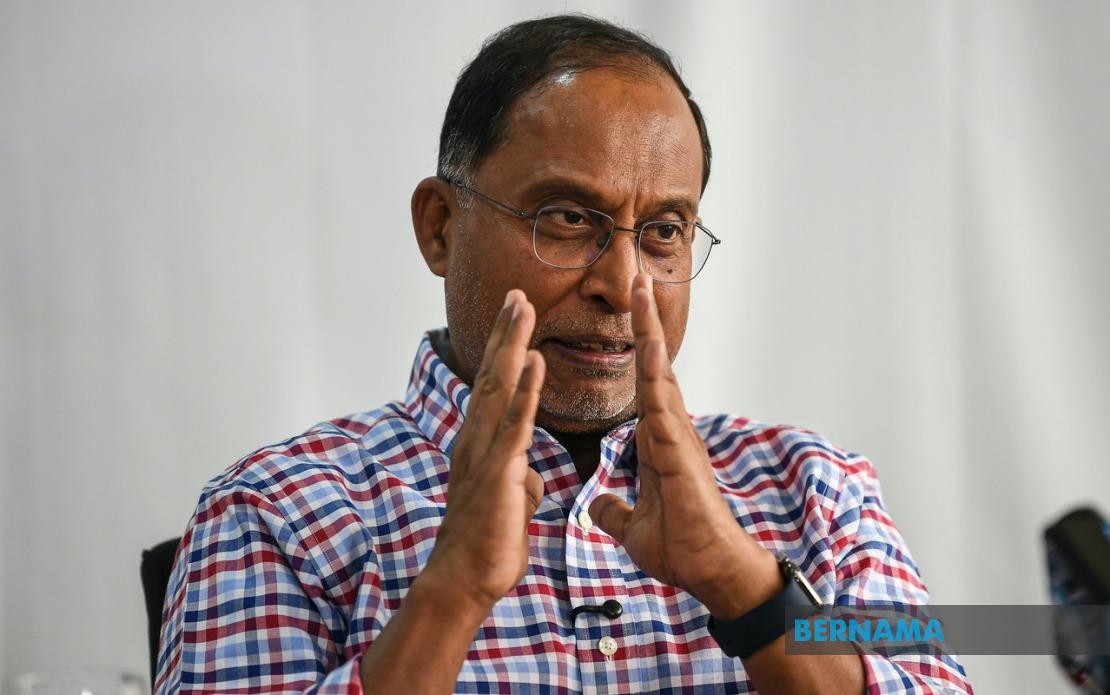
Allegations that between 30,000 and 60,000 students have secured places at Malaysian public universities through irregular channels represent a serious threat to the credibility of the country's higher education sector, according to Higher Education Minister Datuk Seri Dr Zambry Abd Kadir. The minister's statement comes as concerns mount about the integrity of admission processes across the nation's public university system, with claims that merit-based selection criteria may have been circumvented for financial or other improper considerations.
The minister emphasised that such assertions, if left unchallenged, risk creating a damaging perception among the public that legitimately qualified applicants have been denied opportunities due to unofficial back-channel arrangements. This narrative becomes particularly troubling when considered alongside the annual admission cycles affecting hundreds of thousands of prospective students and their families who rely on the integrity of the system when making critical educational decisions. Parents and students entering the university application process naturally expect transparent, merit-based procedures that reward academic achievement and qualification standards.
Dr Zambry underscored the distinction between legitimate criticism of educational systems and unfounded accusations lacking factual foundation. He stressed that Malaysia's public university admission framework operates through clearly defined, transparent mechanisms anchored on merit and prescribed eligibility standards. The system's architecture has been designed to ensure fair treatment across diverse applicant pools and to maintain consistency in how qualifications are assessed and ranked. Any deviation from these standards would represent a fundamental breach of the institutional trust that underpins the relationship between universities and the broader Malaysian society.
The minister called upon those making these serious allegations to substantiate their claims with concrete evidence, verifiable data, and transparent methodologies that can withstand scrutiny. Generic accusations, he argued, fall short of what responsible discourse demands when discussing institutional integrity. If tens of thousands of students had genuinely accessed university places through unauthorised pathways, the evidence trail should be traceable through admissions records, financial documentation, and institutional procedures. The absence of such evidence suggests the allegations may rest on anecdotal reports rather than systematic investigation.
In response to these claims, several public universities have taken the step of lodging formal police reports, initiating official investigations into the allegations. This action represents an attempt to shift the discussion from speculation to fact-based inquiry, allowing law enforcement and institutional authorities to examine the claims through proper legal channels. The decision to involve police reflects the seriousness with which university administrations view potential breaches of their admission procedures and the institutional stakes involved in either confirming or disproving the allegations.
Dr Zambry clarified that police involvement does not constitute an attempt to suppress legitimate criticism or restrict freedom of expression. Rather, the measure aims to ensure that serious allegations undergo proper investigation and adjudication through established legal processes. Freedom of speech, he noted, carries corresponding responsibility and does not extend to making unsubstantiated claims about institutional conduct without supporting evidence. Academic discourse, particularly when addressing sensitive matters affecting public institutions and student welfare, must adhere to standards of evidentiary rigour and factual accuracy.
The minister highlighted the distinction between constructive criticism aimed at systemic improvement and baseless accusations that serve primarily to damage institutional reputation. The Ministry of Higher Education, he indicated, welcomes genuine efforts to identify and address weaknesses in higher education delivery and administration. However, allegations that cannot be backed by solid data or credible methodology cannot simply be presented as fact without consequence. Those advancing such claims bear responsibility for the accuracy and substantiability of their assertions, particularly when the allegations carry implications for institutional integrity and public confidence.
The controversy emerges at a sensitive time for Malaysia's higher education sector, which faces increasing competition from regional neighbours for student enrolment and institutional prestige. International perceptions of the fairness and quality of the country's university system directly influence overseas student applications and the global reputation of Malaysian institutions. Should doubts about admission integrity gain traction internationally, they could impact foreign student recruitment and the competitiveness of Malaysian universities in the global marketplace. This dimension adds economic and reputational stakes beyond domestic considerations.
For prospective students and families currently navigating the university application cycle, the allegations and subsequent ministerial response create an atmosphere of uncertainty at a critical juncture. Parents need assurance that their children's academic records will be evaluated fairly against stated criteria. The controversy surrounding admission integrity, even if ultimately unproven, can nonetheless damage confidence in the system among those preparing applications. Clear communication about how admission decisions are made, what safeguards protect against irregularities, and how concerns can be formally raised becomes essential for restoring and maintaining public trust during this period.
The minister's statement indicates that the Ministry of Higher Education will continue prioritising the preservation of institutional integrity and public confidence in Malaysia's university system. This commitment extends beyond merely defending current practices but encompasses demonstrating through action and transparency that the admission process functions as intended. Whether through enhanced oversight mechanisms, greater transparency in reporting admission statistics, or clearer appeals procedures for aggrieved applicants, the higher education sector faces pressure to prove that claims of backdoor admissions lack substance.