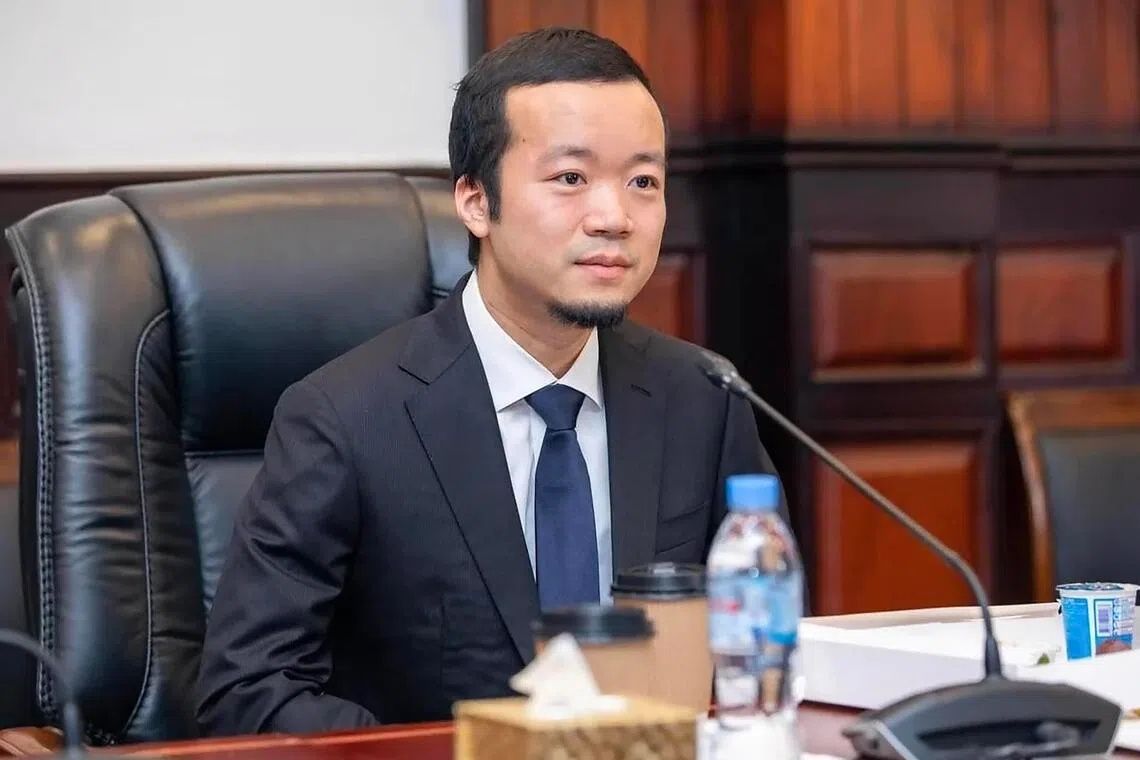
An international investigation has pieced together the hidden empire of Chen Sokly, a central figure in the sprawling Prince Group crime syndicate that has been implicated in billions of dollars in fraud. Sokly, born in Shanghai in 1986 and later granted Cambodian citizenship, leveraged his position as risk controller for the organisation to accumulate substantial wealth across Singapore, the United States, and beyond. His network of identities, corporate shells, and property holdings illustrates the global sophistication with which the syndicate concealed its operations and distributed its illicit proceeds.
The U.S. Department of Justice's October 2025 indictment of Chen Zhi, the syndicate's leader, identified Sokly as a co-conspirator instrumental to the group's structure. Through a six-month collaborative investigation between The Straits Times and the Organised Crime and Corruption Reporting Project, researchers traced Sokly's movements and financial footprint across multiple jurisdictions, establishing the breadth of his involvement. The inquiry drew on hundreds of official records spanning corporate registrations, property deeds, and government documents to construct a portrait of how Sokly operated within the criminal enterprise.
Sokly's primary function within the Prince Group centred on monitoring law enforcement investigations and managing relationships with corrupt officials worldwide. The indictment details how Sokly maintained networks of paid government contacts, most notably in China, who allegedly assisted the syndicate in avoiding legal consequences. In May 2023, prosecutors alleged that Sokly engaged a Chinese government official who promised to shield Prince Group associates from prosecution, with Sokly reciprocating by offering personal favours and even directing the manipulation of local police for extortion purposes. This web of illicit relationships proved so effective that Sokly reportedly expressed confidence the syndicate could weather the Cambodian government's crackdown on scam compounds, demonstrating the depth of official compromise the organisation had achieved.
Documentation uncovered by U.S. authorities revealed Sokly's braggadocio concerning the operation's scale and profitability. He claimed the global syndicate was generating approximately US$30 million daily through its various criminal schemes, a figure that underscores the operation's immense reach and the central importance of Sokly's role in protecting it. Beyond administrative functions, Sokly also served as an enforcer, tasked with handling disciplinary matters when insiders threatened the group's cohesion. When a member misappropriated funds in mid-2024, Chen Zhi specifically requested Sokly's involvement, confirming his dual status as trusted confidant and muscle.
Sokly's wealth accumulation revealed through property records demonstrates how proceeds from the scam operation were laundered into tangible assets across multiple countries. In 2019, he purchased a California home from Fang Zhizhen, a figure connected to the Knight Attack Group, a Chinese cybercriminal organisation that preceded the Prince Group. This property transaction later realised approximately US$4.5 million when Sokly sold it in 2024. More significantly, weeks after the U.S. sanctions were announced against the Prince Group in October 2025, Sokly transferred a separate US$4 million property to his wife on November 4, 2025, subsequently placing it into a trust arrangement the following month—a manoeuvre consistent with asset protection strategies employed by individuals anticipating legal exposure.
Singapore became a crucial operational hub for Sokly's financial architecture. In 2017, he announced his arrival with the purchase of a luxury apartment at 10 Leedon Heights for S$11 million, a five-bedroom residence spanning 5,694 square feet in one of the island's most exclusive enclaves. This acquisition preceded his corporate registration by months, marking his transition into Singapore's financial landscape. He then systematically incorporated multiple companies over two years, with M Capital Global Holdings serving as his primary vehicle, into which he invested just over S$5 million alongside his wife. The couple retained their shareholder positions in this entity through the investigation period, indicating the permanence of their Singapore financial structures.
Sokly's corporate footprint in Singapore extended far beyond M Capital Global Holdings. The indictment materials and corporate records reveal that he served as director for at least 16 companies operating from a shared address on Shenton Way in the central business district. Most remarkably, he systematically removed his name from the majority of these directorships between 2020 and 2023, a pattern suggestive of deliberate distancing as the syndicate's operations drew increased scrutiny. Visiting journalists found that the office space nominally housing these entities displayed no visible connection to Sokly, with only two companies occupying a twelfth-floor unit, hinting at the shell-company architecture deliberately obscuring beneficial ownership and operational control.
Despite his sporadic presence in Singapore, Sokly maintained a lifestyle befitting his criminal wealth. Former employees who worked in proximity to his operations indicated that Sokly typically spent between two and three months annually in Singapore, concentrating his time on socialising with associates, including frequent evening gatherings involving alcohol and conversation with syndicate leadership. His personal transportation reflected his substantial resources—he maintained a collection of vehicles at his Leedon Heights residence, including a Bentley and a luxury seven-seater sport-utility vehicle, vehicles consistent with the conspicuous consumption patterns of high-ranking members within organised crime networks.
The discovery of Sokly's elaborate multi-jurisdictional presence carries significant implications for regional financial crime regulation. His ability to establish legitimacy in Singapore's financial system whilst simultaneously maintaining secret connections to criminal operations in Cambodia and the United States underscores vulnerabilities in cross-border compliance mechanisms. The sophistication with which the syndicate created plausible corporate structures, acquired multiple citizenship identities, and cultivated official relationships demonstrates the challenges facing Southeast Asian authorities in combating transnational organised crime. For Malaysia and other regional nations, Sokly's operational model serves as a cautionary example of how criminal networks exploit jurisdictional gaps and the complex corporate secrecy provisions available in regional financial centres to hide illicit wealth.
The U.S. government's subsequent forfeiture of 127,271 bitcoins valued at approximately US$15 billion marked an unprecedented financial recovery. Sokly's role in facilitating these transactions—through his management of officials, enforcement of group discipline, and oversight of risk management—rendered him essential to the operation's function. The syndicate's collapse following the October 2025 indictment and the November 2025 sanctions designation by the U.S. Office of Foreign Assets Control demonstrated that even the most intricate networks of corruption and concealment ultimately face dismantling when international enforcement bodies coordinate effectively. Sokly's transformation from wealthy Malaysian businessman Chen Sokly to the focus of a major international money laundering investigation illustrates how criminals leverage regional anonymity and shifting identities to construct elaborate financial facades, a pattern that regional regulators and law enforcement agencies must continue to study and counteract.

