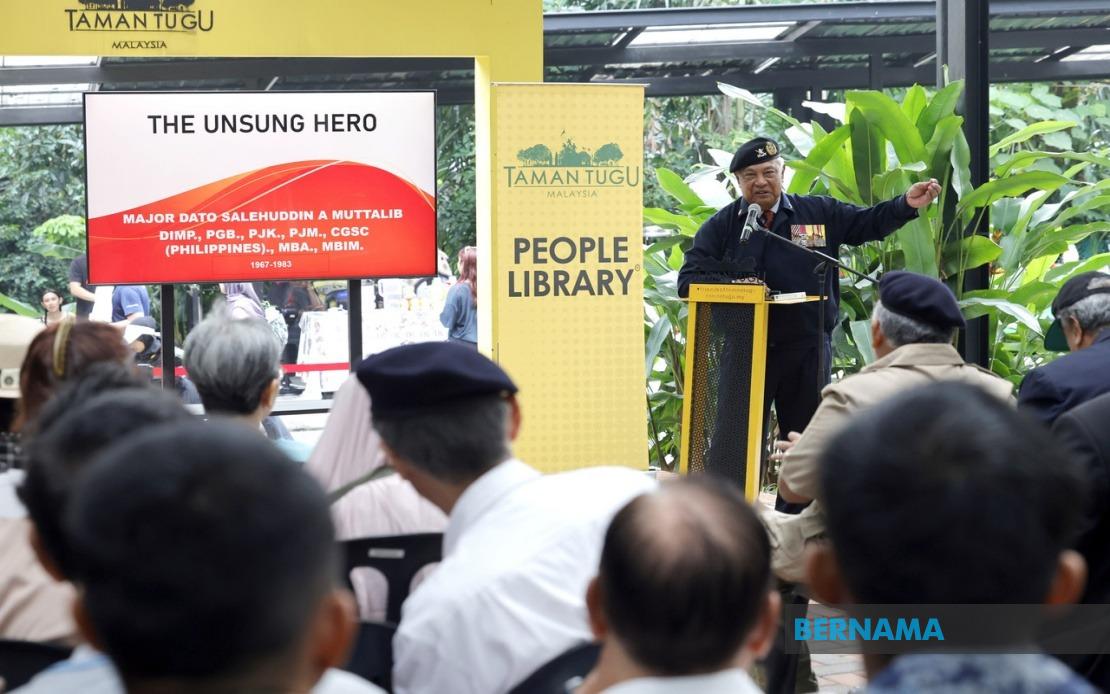
In a poignant gathering marking Warriors' Day, retired Malaysian security personnel have opened up about the spine-chilling operations they conducted during the heights of the anti-communist struggle, offering younger Malaysians a window into a turbulent chapter of the nation's modern history. The testimonies underscore the extraordinary personal sacrifice and moral complexity embedded within covert security operations that shaped post-independence Malaysia's political trajectory and institutional development.
Supertintendent (Retired) Paul Kiong Sing Chu, now 82, transported three communist members through a police roadblock near Chemor in Ipoh during the early 1980s—a mission that exemplified the razor-thin margin separating success from catastrophe in undercover work. His account reveals the psychological pressures inherent in such assignments, where the operative must maintain composure whilst simultaneously managing multiple competing loyalties and safety protocols. When Kiong spotted the security checkpoint materialising ahead, he recognised the potential for lethal confrontation should the communist passengers attempt to breach the cordon. His rapid decision to divert through a side lane proved decisive, averting what could have escalated into armed conflict and preserving lives on both sides of the engagement.
Kiong's career spanning three decades culminated in recognition through the Seri Pahlawan Gagah Perkasa medal, a decoration acknowledging his uncommon bravery in circumstances where discovery would have meant certain death. The award represents not merely official commendation but symbolic acknowledgment that Malaysia's internal security apparatus depended upon individuals willing to operate in profound isolation and jeopardy. The veteran expressed hope that documentation of these experiences would illuminate for younger Malaysians the nature of the struggles undertaken by their predecessors in preserving the nation's stability and territorial integrity during Cold War pressures.
Major (Retired) Datuk Salehuddin Abd Muttalib's narrative ventures into the moral and psychological dimensions of counter-insurgency operations, particularly those conducted across Malaysian borders in Sarawak against elements of the Indonesian Communist Party. During one covert operation, Salehuddin found himself in a confrontation resulting in the death of a PKI member, an incident that would reverberate through the following decade and beyond. The encounter forced Salehuddin to confront difficult questions regarding the human cost of national security operations, especially when the adversary represented a fellow Muslim, introducing religious and ethical dimensions to military action that extended beyond conventional warfare justifications.
The weight of this operation intensified dramatically ten years later when a visitor appeared at Salehuddin's home and disclosed that the deceased combatant had been his uncle. The revelation transformed an abstract military operation into a deeply personal tragedy, forcing the retired major to acknowledge the familial grief his actions had inflicted. This encounter remained profoundly unsettling, illustrating how security operations, whilst strategically justified within national frameworks, carry profound human consequences that military personnel must internalize and carry throughout their lives. Such experiences highlight the psychological toll extracted from those engaged in direct counter-insurgency work, burdens that remain largely unexamined in formal historical narratives.
The testimonies emerged at a programme organised jointly by the Malaysia Military History Tourism Association and Taman Tugu, drawing approximately 200 participants for discussions specifically timed to coincide with Warriors' Day, an annual observance on July 31 dedicated to honouring Malaysia's military heritage and sacrifice. Five speakers representing police and Armed Forces backgrounds shared experiences that collectively painted a portrait of institutional commitment to national security objectives during a period when Malaysia confronted genuine internal and external communist threats. The venue selection and timing underscored deliberate efforts to position security heritage within the broader framework of national historical consciousness and public memory.
The programme served multiple functions beyond simple historical recounting. By creating a platform for direct veteran testimony, organisers attempted to foster intergenerational understanding of the concrete sacrifices embedded within Malaysia's transition from colonial dependence to secured nationhood. Younger visitors encountered living witnesses to historical events frequently reduced to textbook abstractions or political rhetoric, enabling more nuanced comprehension of the human dimension underlying security operations. Such initiatives prove particularly significant in contemporary Malaysia, where the Cold War context and communist threat have receded sufficiently from lived experience that they risk becoming historically abstracted from younger populations.
The anti-communist struggle represents a defining historical episode for Malaysia, fundamentally shaping institutional development, security architecture, and national identity formation during the early post-independence decades. The Emergency period and subsequent counter-insurgency campaigns required unprecedented security force mobilization, leading to the establishment of intelligence networks and surveillance capabilities that persisted long after immediate threats subsided. Veterans' accounts provide essential documentation of operational realities that informed these institutional developments, demonstrating how security bureaucracies evolved through practical confrontation with actual insurgent movements rather than purely theoretical frameworks.
These narratives also illuminate the psychological and moral complexities embedded within security operations that contemporary policy discussions frequently overlook. The individuals who executed counter-insurgency campaigns operated within competing imperatives: national security obligations, personal preservation instincts, and ethical considerations regarding the use of lethal force against ideological adversaries. The experiences recounted by Kiong and Salehuddin suggest that operational success frequently depended upon individual initiative, rapid decision-making capabilities, and willingness to assume extraordinary personal risk—qualities that institutional frameworks attempt to cultivate but cannot guarantee across all operatives or situations.
For Malaysian readers, particularly those lacking direct experience of the Cold War period, these veteran testimonies offer crucial perspective on the strategic and institutional foundations underlying contemporary security arrangements. Understanding how security forces navigated communist insurgency in Peninsular Malaysia, Sarawak, and Sabah provides context for appreciating ongoing institutional priorities and operational doctrines. The international dimensions—including Indonesian communist movements and broader Soviet-aligned strategies in Southeast Asia—situate Malaysian experiences within regional geopolitical competition that extended beyond domestic political struggle, reminding Malaysians of the nation's vulnerability to external ideological and military pressures during that historical moment.
The decision to publicly amplify these narratives through organised programmes and broader documentation initiatives reflects contemporary recognition that institutional memory risks dissipating as veteran cohorts advance in age. By creating forums for systematic recounting and public engagement, Malaysian heritage organisations acknowledge that security history depends upon deliberate preservation efforts rather than organic intergenerational transmission. This imperative becomes increasingly urgent as the generation that directly experienced Cold War security challenges approaches the end of their lifespans, making systematic documentation of their experiences and perspectives essential for sustaining informed historical consciousness regarding Malaysia's twentieth-century development.
Looking forward, the continued sharing of veteran experiences serves multiple functions within Malaysia's evolving national narrative. These accounts validate the institutional sacrifices that underpin contemporary security arrangements whilst simultaneously acknowledging the human costs borne by individual operatives and their families. They provide younger Malaysians with concrete examples of service commitment extending beyond abstract patriotic rhetoric, illustrating genuine personal jeopardy and moral complexity. As Malaysia continues navigating contemporary security challenges ranging from transnational terrorism to cyber threats, understanding how predecessors approached earlier security dilemmas remains pedagogically valuable for institutional learning and strategic development. The Warriors' Day programmes and similar initiatives thus represent investments in institutional continuity, historical consciousness, and informed citizenship regarding the foundations of Malaysian security and national sovereignty.

