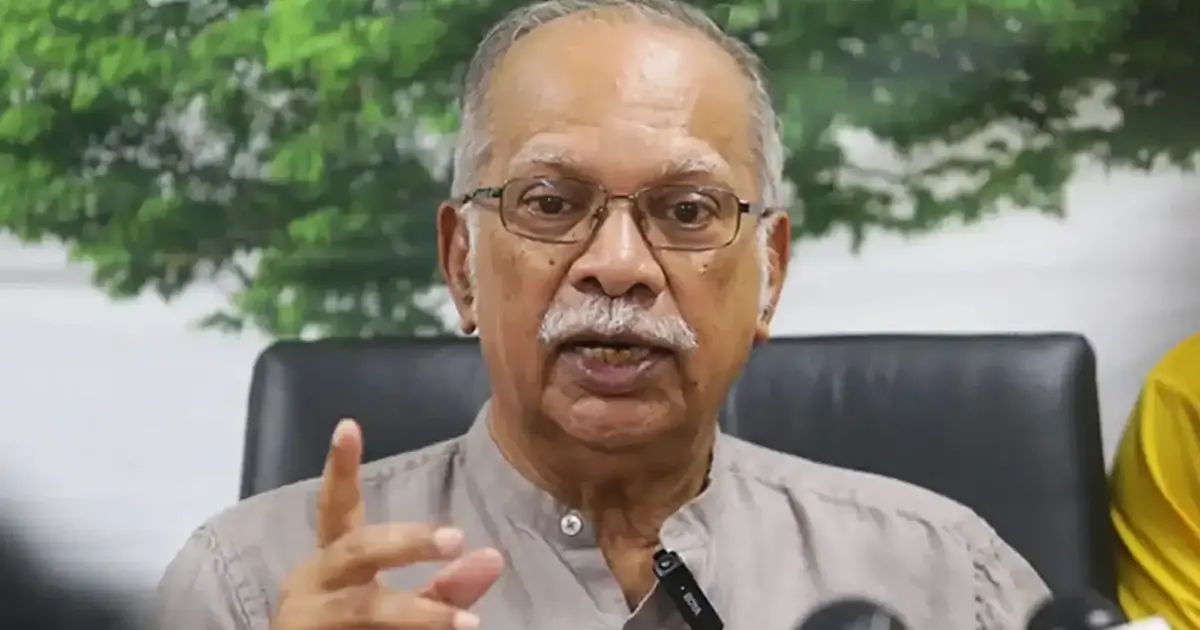
The Perikatan Nasional coalition faces mounting pressure to confront its internal fractures, with Urimai chairman Ramasamy pointing out that yesterday's emergency gathering represented a missed opportunity to chart a coherent path forward for the disputed third pillar of the opposition bloc. The coalition, which has positioned itself as an alternative to the ruling Pakatan Harapan government, risks appearing increasingly dysfunctional if it continues to sidestep the fundamental question of Bersatu's role and standing within the partnership.
Ramasamy's intervention underscores the depth of the crisis within PN, which has already weathered considerable instability since its formation. The three-component structure—comprising Bersatu, PAS, and increasingly fragmented smaller parties—depends on careful equilibrium between its partners. However, the growing chasm separating Bersatu from PAS threatens this delicate balance, creating a situation where avoidance of difficult decisions only compounds uncertainty and undermines coalition cohesion.
The widening rift between Bersatu and PAS reflects fundamental strategic and ideological differences that have accumulated over months of friction. PAS, the dominant Islamic party within PN, has pursued an increasingly assertive political agenda while signalling openness to cooperation with other blocs depending on circumstances. Bersatu, meanwhile, has attempted to position itself as a centrist alternative capable of attracting diverse voter segments. These divergent trajectories have created policy disagreements and tactical disputes that undermine the coalition's ability to function as a unified political force.
What makes Ramasamy's criticism particularly significant is that Urimai, which represents Indian Malaysians' interests within the broader opposition constellation, occupies a position vulnerable to marginalisation when larger parties engage in internal conflict. The failure to address Bersatu's status directly suggests that coalition decision-makers have prioritised avoiding immediate confrontation over resolving underlying structural problems, a strategy that typically prolongs rather than resolves political crises.
The emergency meeting itself appears to have addressed procedural or relatively minor matters while deliberately circumnavigating the substantive question of whether Bersatu retains a viable long-term future within PN or whether the coalition's structure requires fundamental recalibration. Such avoidance reflects the political costs associated with forcing a decisive reckoning—neither PAS nor Bersatu leadership may wish to explicitly articulate positions that could trigger irreversible ruptures, yet the absence of clarity perpetuates paralysis.
For Malaysian voters and political observers, this coalition dysfunction carries direct implications. Effective opposition politics requires clear platforms and demonstrated organisational capacity. When PN expends energy managing internal contradictions rather than advancing coherent alternatives to government policies, it weakens the entire opposition ecosystem. This dynamic particularly affects smaller partners like Urimai, whose constituent communities depend on coalition stability to amplify their political voice.
The Bersatu question touches deeper regional anxieties about Malaysia's political architecture. Bersatu emerged as Mahathir Mohamad's vehicle following his 2020 reconciliation with political rivals, but it has struggled to establish an independent political identity distinct from its leader's shifting priorities. The party's current position within PN appears increasingly untenable if PAS consolidates dominance over coalition messaging and strategic direction, yet no clear alternative pathway exists for Bersatu that would preserve its political relevance.
Ramasamy's public intervention suggests that impatience with PN's management is spreading beyond Bersatu itself to coalition partners observing the deteriorating situation. When parties begin publicly criticising coalition proceedings, it signals that internal pressure valves have begun releasing—a warning sign that informal mechanisms for managing disagreements have broken down or are becoming insufficient. This dynamic typically precedes more dramatic ruptures if underlying tensions remain unaddressed.
The coalition faces a choice between confronting its structural problems directly or accepting that PN's current configuration may be untenable in its present form. Direct confrontation requires Bersatu and PAS to articulate their respective visions for the coalition's future, negotiate power-sharing arrangements that reflect new realities, or acknowledge that fundamental incompatibility may require separation. Continued avoidance essentially freezes PN in a holding pattern where it can neither function effectively as a unified opposition nor cleanly dissolve to permit constituent parties to pursue independent strategies.
For Southeast Asian observers watching Malaysian politics, the PN crisis exemplifies broader challenges facing opposition coalitions across the region. Temporary alignments based on opposition to incumbent governments often obscure underlying differences in ideology, organisational capacity, and long-term strategic objectives. When those differences finally surface—as they inevitably do—coalitions must possess institutional mechanisms for managing conflict productively. PN's apparent inability to address Bersatu's status through its emergency processes suggests such mechanisms remain underdeveloped.
The longer the coalition postpones substantive discussion of Bersatu's future, the more likely that market forces will resolve the question through defection or collapse. Political parties operate under time constraints and reputational pressures that eventually demand clarity. If PN cannot provide such clarity from within its own structures, individual parties will increasingly be forced to seek clarity through external means—either through direct negotiation with other political blocs or through public positions that de facto answer questions the coalition formally avoids.
Ramasamy's criticism thus functions as an important signal from within the opposition itself that PN's current trajectory toward continued evasion of critical decisions is politically unsustainable. Whether PN's leadership recognises this warning signal and adjusts its approach remains to be seen, but the window for managing these tensions through constructive internal dialogue appears to be narrowing considerably.

