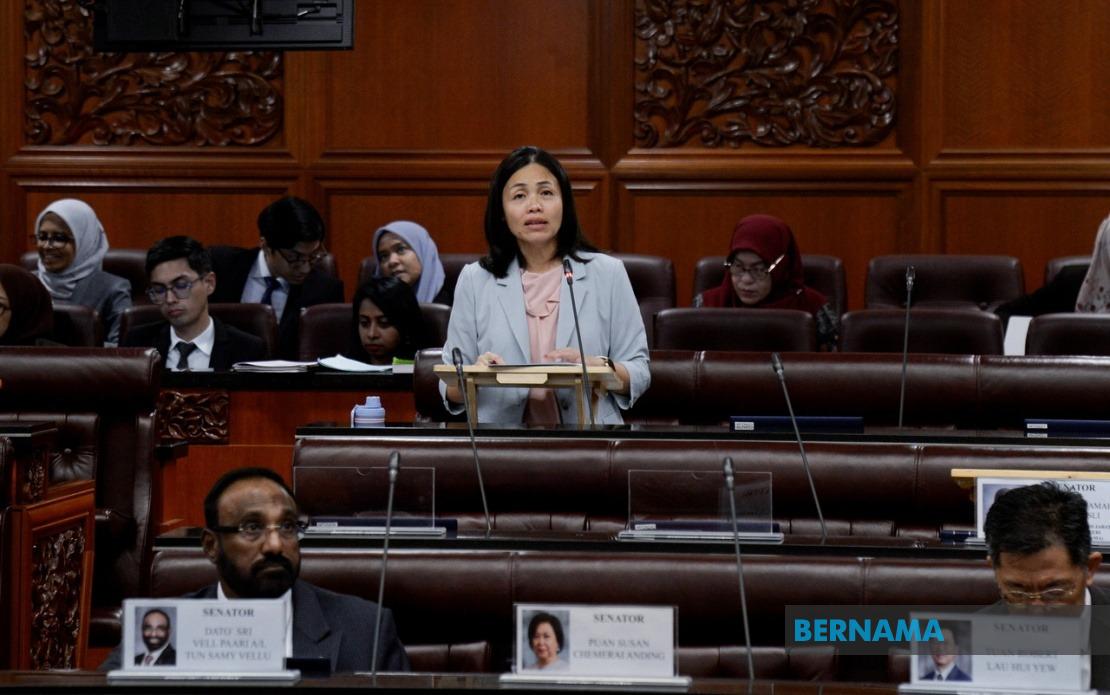
The Malaysian upper house has given its approval to sweeping reforms of the Communications and Multimedia Commission through passage of the Communications and Multimedia Commission (Amendment) Bill 2026, marking a significant moment in efforts to shield the nation's digital regulator from political influence. The measure cleared the Dewan Negara following a debate involving 11 senators and will reshape how Malaysia oversees its rapidly expanding communications sector, which extends far beyond traditional broadcast media into the infrastructure underlying the entire digital economy.
The amendment represents a watershed for institutional independence in Malaysia's regulatory framework. Among its most consequential provisions is a restriction barring members of the legislative branch—whether at federal or state level—from serving as MCMC chairman. Deputy Minister of Communications Teo Nie Ching explained that this change is designed to ensure appointed leadership meets genuine competency thresholds rather than satisfying political patronage networks. The modification limits ministerial discretion in selecting commission heads, establishing qualification requirements that theoretically insulate the regulator from cycles of electoral politics that might otherwise compromise its mandate.
This structural reform carries particular weight given Malaysia's experience with regulatory capture and politically motivated appointments across various government agencies. By establishing statutory barriers to legislative participation in MCMC governance, policymakers are attempting to create institutional space where technical expertise and merit-based selection can theoretically prevail. The change acknowledges that communications regulation requires sustained institutional knowledge and professional independence that political cycles often disrupt. Senator Datuk Abdul Halim Suleiman articulated this rationale during debate, characterizing communications infrastructure as fundamental to national strategic interests rather than mere economic activity, thereby justifying enhanced protective measures around regulatory governance.
The enforcement achievements attributed to MCMC under existing authorities demonstrate tangible outcomes that the expanded powers seek to amplify. During the first seven months of 2026, the commission has facilitated removal of 222,257 pieces of online gambling content—a dramatic acceleration reflecting intensified digital enforcement operations. The growth trajectory itself tells a revealing story: the commission moved from processing only two items in 2022 to 18,814 in 2023, 189,484 in 2024, and 289,486 in 2025. This exponential expansion illustrates how digital enforcement capacity compounds as platforms develop removal capabilities and regulators refine identification techniques, yet it also reveals that previous statutory authority has constrained more aggressive action.
The blocking of 6,982 gambling websites across the period from 2022 through July 2026 represents coordination between MCMC and service providers operating at the infrastructure layer. This enforcement work operates within a jurisdictional framework where gambling investigations themselves remain the responsibility of the Royal Malaysia Police, with MCMC providing technical support including digital forensics and access restrictions triggered by official enforcement agency requests. The amendment's expansion of MCMC's regulatory function appears designed to accelerate and systematize this technical coordination rather than fundamentally alter the division of investigative labor between agencies.
For Malaysian readers concerned about illegal online gambling's proliferation—a phenomenon that has accelerated alongside smartphone adoption and encrypted messaging platforms—these statistics suggest measurable regulatory momentum. The enforcement pace has intensified precisely as MCMC developed technological capacity and worked through jurisdictional ambiguities with police. However, the absolute numbers also indicate the vastness of the problem: removing a quarter-million items annually from publicly available platforms suggests illegal gambling content operates at remarkable scale, with removal rates potentially lagging production rates across vast networks that extend internationally.
Senator Muhammad Hasbie Muda's intervention during parliamentary debate highlighted concerns that procedural reforms must accompany substantive power expansion. His insistence that expertise and merit receive serious consideration during commission appointments reflects anxiety that legislative restrictions on political involvement could prove meaningless if appointment processes remain opaque or driven by informal patronage. Reform rhetoric demands that transparency, effectiveness, and public accountability accompany any expansion of regulatory authority—conditions that require sustained institutional culture rather than structural amendments alone.
The bill's seventeen clauses include clarifications regarding MCMC's functions in developing and regulating digital infrastructure standards and platform specifications. These amendments acknowledge that modern communications regulation must extend beyond content policing into technical governance of the infrastructure itself. Digital platforms now function as public squares, market mechanisms, and social institutions simultaneously, requiring regulators to engage questions of technical architecture alongside questions of content appropriateness. The amendment reflects international regulatory evolution toward viewing platforms as essential infrastructure requiring governance frameworks analogous to telecommunications networks and utilities.
The passage through Dewan Negara follows earlier approval by the lower house on July 15, completing the legislative journey. This sequential approval process, where the upper chamber reviews measures already adopted by the elected chamber, provides a final opportunity for institutional scrutiny. The involvement of multiple senators in serious debate suggests the upper house functioned as intended—examining policy frameworks rather than rubber-stamping predetermined outcomes.
For Southeast Asian observers, Malaysia's approach to communications regulation offers a regional reference point. Across the region, governments grapple with balancing legitimate regulatory interests against risks of politically motivated regulatory capture. Thailand, Indonesia, and the Philippines have all experienced controversies involving accusations that communications regulators served partisan interests rather than public welfare. Malaysia's statutory prohibition on legislative participation in MCMC governance represents one approach to this structural problem, though implementation will ultimately determine effectiveness.
The amendment arrives amid broader global conversations about platform accountability, content moderation, and the relationship between infrastructure operators and government authority. Malaysia's focus on online gambling reflects specific policy priorities shaped by religious doctrine, public health concerns, and financial crime prevention. The MCMC's technical enforcement role sits at the intersection of these varied concerns, requiring coordination across multiple agencies with different mandates and risk tolerances. The expanded powers presumably help MCMC coordinate more effectively while the governance reforms attempt to ensure such expanded authority serves public interest rather than narrower political objectives. Whether these structural changes prove durable and effective will depend on sustained political commitment to the independence principle and the quality of personnel appointed under reformed processes.

