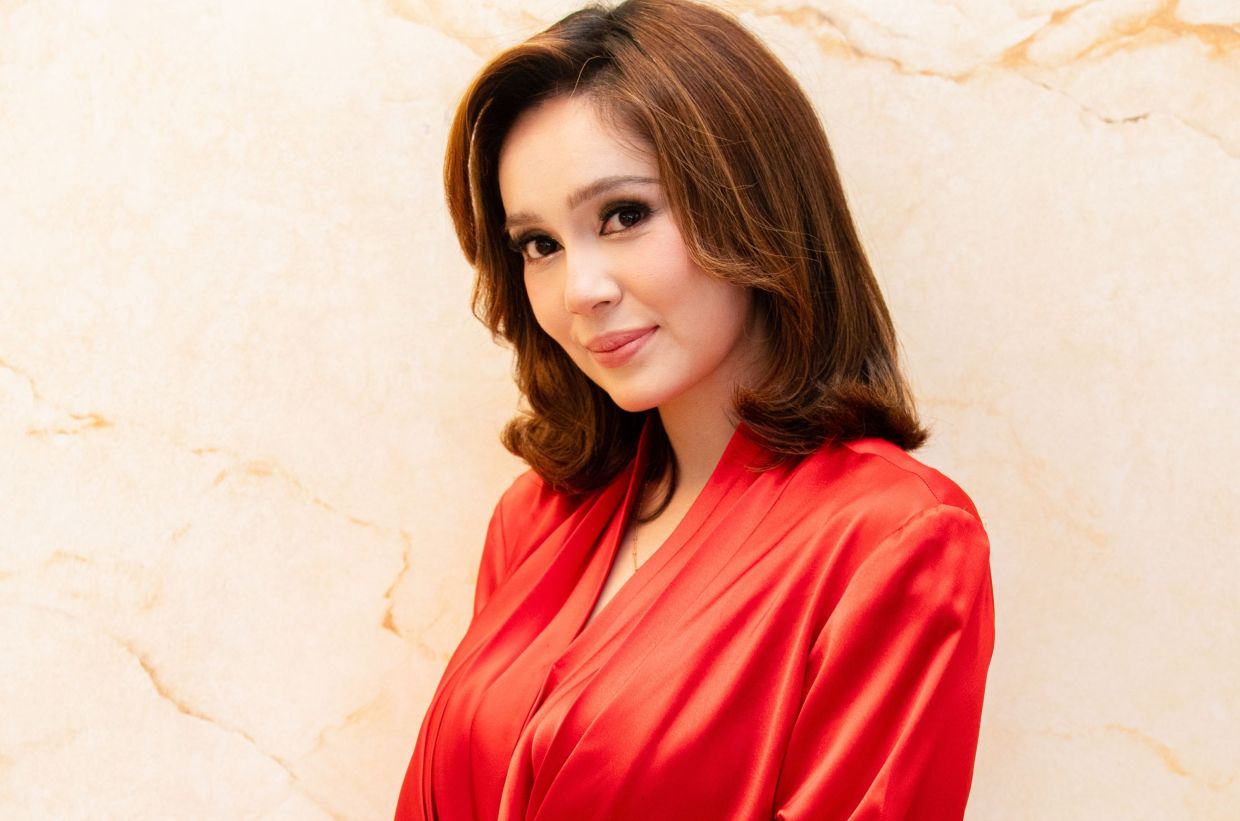
Malaysian actress Uqasha Senrose has moved past the controversy surrounding her co-star Aliff Aziz, focusing instead on their shared commitment to professional conduct during the filming of an ambitious new drama series. The pair's working relationship has drawn attention given Aliff's prominent role in a marriage scandal that erupted in March 2024, yet Uqasha maintains their on-set interactions remained entirely appropriate and productive throughout production.
Aliff's personal difficulties came to light when he became embroiled in a khalwat case that precipitated a highly visible breakdown of his marriage to Malaysian singer-actress Bella Astillah. The dissolution of their union drew considerable media scrutiny, particularly given that the couple shares two children. Despite the turbulent circumstances surrounding her colleague's life, Uqasha has adopted a measured stance, refusing to conflate his private struggles with their professional responsibilities on set.
When discussing her rationale for maintaining their working partnership, Uqasha articulated a philosophy rooted in compassion and non-judgment. She acknowledged her own imperfections, recognising that personal failings are universal rather than the domain of any single individual. This perspective shaped her approach to their collaborative environment, allowing her to separate professional obligations from moral assessments of colleagues' private conduct. Her stance reflects a pragmatic view that cinema and television production necessarily require people from diverse backgrounds and personal circumstances to work together effectively.
The actress emphasised that Aliff demonstrated consistent professionalism throughout filming, arriving punctually and executing his responsibilities with dedication. His comportment on set gave her no reason for concern or discomfort, and she explicitly rejected the notion that she should deny someone their livelihood based on their personal life. For Uqasha, the distinguishing factor between acceptable and problematic workplace behaviour centres on professional demeanour rather than tabloid narratives or private misfortunes.
Notably, Uqasha herself has navigated considerable personal turbulence during this same period. Her own marriage to actor Kamal Adli deteriorated significantly, leading her to initiate divorce proceedings in October 2025. The couple, who share a daughter together, officially dissolved their union in January 2026 following months of legal proceedings. During those contentious proceedings, Uqasha made serious allegations of domestic abuse, claims that Kamal strenuously disputed. Her experience of publicly contested marital breakdown provides additional context for her empathetic approach to Aliff's circumstances.
The drama series in which they collaborate comprises twelve episodes and explores the complexities of polygamous marriage through three principal characters. Aliff portrays Adli, while Uqasha takes on the role of Azura, and Elisya Sandha plays Nikita. The narrative framework allows for nuanced examination of multiple perspectives within a challenging domestic arrangement, moving beyond simplistic moral judgments of the characters' actions and motivations.
Uqasha was deliberately cautious about importing her own recent experiences into her character portrayal. She recognised that drawing directly from her personal trauma and heartbreak would compromise her ability to authentically render Azura's distinct emotional journey. The character exists as a separate entity with her own narrative arc, distinct from the actress's lived experience. This professional compartmentalisation required conscious effort and discipline, particularly given the character's emotional intensity and vulnerability throughout the series.
The physical and emotional demands of the role proved substantial nevertheless. Azura navigates intense emotional landscapes, confronting multiple crises and setbacks across the narrative. The character endures physical altercations, including scenes in which she experiences violence, and Uqasha found herself genuinely moved by the character's accumulated suffering. Moments where Azura believed redemption was within reach, only to encounter fresh trials and disappointments, resonated emotionally with the actress despite her efforts to maintain professional distance.
What distinguishes this series within the landscape of Malaysian television drama is its refusal to present characters as purely virtuous or entirely villainous. The narrative complicates audience expectations by revealing that individuals presenting benevolent facades may harbour darker impulses, whilst those appearing harsh or unkind often possess contextual explanations for their behaviour. This moral complexity demands more sophisticated acting and viewing than conventional melodrama typically requires.
Beyond the professional sphere, Uqasha is consciously recalibrating her personal priorities in the aftermath of her divorce. She emphasises that her current focus resides firmly on her own wellbeing, her professional development, and her responsibilities as a mother to her daughter. The cumulative weight of difficult life experiences has fostered maturity and emotional growth, providing her with clearer perspective on what genuinely matters. Motherhood, in particular, has crystallised her understanding that certain responsibilities transcend personal preferences and ego.
Her trajectory reflects broader patterns within Malaysian entertainment, where personal upheaval and professional resilience frequently coexist. The willingness to continue working with colleagues despite their controversial circumstances speaks to a pragmatic industry ethos, though it also raises ongoing questions about accountability and consequence. Uqasha's measured response avoids both reflexive judgment and moral relativism, instead positioning professional conduct as the appropriate metric for workplace relationships whilst maintaining compassion for human vulnerability and fallibility.

