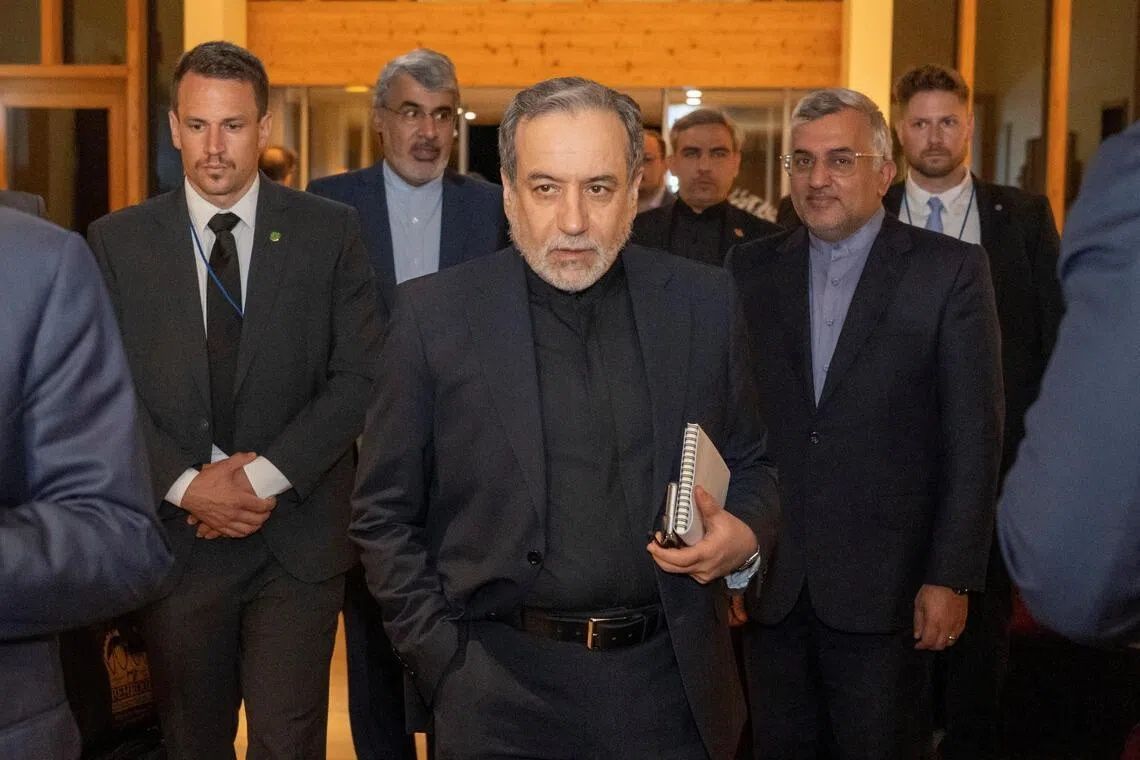
High-level peace negotiations between the United States and Iran got underway on Sunday morning at the Buergenstock resort in Switzerland, marking a significant diplomatic turning point after months of escalating military conflict. Vice President JD Vance and Iranian chief negotiator Mohammad Baqer Qalibaf were leading the discussions, which aim to solidify an interim peace agreement signed earlier in the week by Presidents Donald Trump and Masoud Pezeshkian. The Swiss government confirmed that talks, which include international mediators, were expected to commence during the morning hours at the exclusive mountaintop facility, which is accessed through winding mountain roads and multiple security checkpoints staffed by armed personnel. Accompanying Vance to the scenic location was second lady Usha Vance, signalling the importance the Trump administration places on these negotiations.
The timing of these talks coincides with a 60-day ceasefire agreement that both nations have committed to observe, providing a window for substantive diplomatic engagement on multiple fronts. Before his departure from the United States, Vance indicated optimism about the talks' potential, telling reporters that negotiations would likely span a couple of days and could yield progress on nuclear issues and the Lebanese ceasefire arrangement. However, this optimism is tempered by immediate complications emerging from conflicting interpretations of the ceasefire's implementation and scope, suggesting that the road ahead remains fraught with challenges and potential disagreements.
A critical flashpoint threatening the talks involves competing claims over the status of the Strait of Hormuz, one of the world's most strategically vital maritime passages. On Saturday, Iran's Islamic Revolutionary Guard Corps declared that the strait was closed, citing Israeli military operations in Lebanon as justification for this action. The Iranian position reflects deep frustration with what Tehran views as inadequate American enforcement of ceasefire commitments, particularly regarding Israeli conduct in the Lebanese theatre. Conversely, the United States military has maintained that commercial maritime traffic has continued unimpeded through the waterway, with data showing that 55 merchant vessels transited the strait on Saturday alone, collectively carrying more than 17 million barrels of oil destined for global markets. This fundamental disagreement over whether a closure even exists underscores the fragility of the current ceasefire and the potential for miscalculation.
The geopolitical implications of any Strait of Hormuz disruption extend far beyond the immediate parties involved, carrying significant consequences for regional energy security and global oil markets. Before the current conflict began on February 28, the strait facilitated approximately one-fifth of global petroleum supplies, making its continued operability essential to international economic stability. President Trump has pledged that no tolls would be levied on passage through the waterway during the 60-day ceasefire period or thereafter, unless circumstances warrant such measures. However, Trump also suggested in a social media post that the United States might eventually impose fees as compensation for serving as the region's security guarantor, language that suggests potential future pressure points in negotiations. This characterisation of American military presence as a service demanding payment reveals the transactional approach underpinning current administration policy.
The fragility of the ceasefire became apparent almost immediately, as fighting between Israeli forces and the Iran-backed militant organisation Hezbollah continued on Saturday despite the agreement's supposed activation. Lebanese civil defence officials reported that Israeli strikes killed 20 people on Saturday alone, occurring mere hours after the truce supposedly took effect. Israel's military justified these operations as responses to Hezbollah attacks, while the militant group countered that it would not permit Israeli military freedom of movement throughout Lebanese territory. This cycle of claim and counter-claim reflects the deep mistrust characterising all parties and suggests that implementing the ceasefire on the ground will prove considerably more challenging than negotiating its terms. Israel has further complicated matters by declaring its non-participation in the broader US-Iran agreement while simultaneously insisting it remains committed to ceasefire terms, creating confusion about what obligations actually bind Israeli conduct.
The Iranian delegation arriving at the Buergenstock resort, which is owned by Qatar and has served as a primary mediator throughout this conflict, comprises high-ranking officials spanning multiple sectors of government. Foreign Minister Abbas Araqchi leads the team alongside senior security advisers, central bank officials, and oil ministry representatives, reflecting Iran's determination to address economic, military, and financial dimensions simultaneously. This composition signals that Tehran intends to use these talks to advance broader interests beyond mere ceasefire enforcement, including sanctions relief and economic normalisation. Pakistan's Prime Minister Shehbaz Sharif and military commander Field Marshal Syed Asim Munir have also arrived to participate, underscoring Islamabad's mediating role in brokering the initial accord. The American negotiating team includes envoys Steve Witkoff and Jared Kushner, the president's son-in-law, alongside Vance, suggesting that Trump administration officials with varying expertise and relationships are directly engaged in the process.
A major sticking point emerging during the initial stages of talks concerns Iran's contention that the United States has failed to implement the ceasefire agreement's first provision regarding universal cessation of hostilities across all fronts, particularly in Lebanon. Mohammad Mokhber, an adviser to Iran's supreme leader Ayatollah Mojtaba Khamenei, argued that the continued Israeli military operations in Lebanon constitute a breach of American commitments and that further energy disruptions will persist until such violations cease. His assertion that the agreement remains merely a paper commitment reflects deep scepticism about Western willingness to enforce its provisions impartially. Conversely, Iranian Oil Minister Mohsen Paknejad has suggested that Western stakeholders who genuinely commit to the agreement's spirit will unlock significant economic opportunities, implying that Iran is prepared to normalise energy supplies if trust can be restored. These contradictory messaging streams—one threatening continued disruption, the other offering economic inducement—reflect the internal tensions within Iran's negotiating position.
Public opinion data from Israel reveals substantial dissatisfaction with the military campaign's outcomes and raises questions about whether the initial agreement can translate into a durable long-term peace. A Hebrew University poll conducted for Reuters found that approximately 92 percent of Israelis believe Iran benefited disproportionately from the joint Israeli-American military operations, with only 8 percent viewing Israel as having achieved victory. Even more striking, nearly 90 percent of Israeli respondents stated that declared war objectives were not met, while fewer than 30 percent accept Prime Minister Benjamin Netanyahu's claims of major accomplishments. This profound public scepticism about official narratives suggests that maintaining Israeli domestic political support for extended ceasefire compliance will prove challenging, particularly if negotiations stall or if Hezbollah appears to reconstitute forces in the interim. Netanyahu's government faces substantial pressure to demonstrate concrete security gains justifying the military campaign's costs.
The human toll of the conflict has been severe and unevenly distributed. Lebanon's health ministry has documented 4,057 deaths resulting from Israeli operations since March 2, though this figure does not distinguish between combatants and civilians, making precise casualty analysis impossible. What is clear is that the toll included medical personnel, women, and children, indicating that the conflict involved considerable civilian impact. By contrast, Israeli authorities report 32 soldiers and four civilians killed in fighting with Hezbollah, reflecting vastly asymmetrical casualty rates that often characterise conflicts between state militaries and non-state actors. These disparities in reported losses contribute to the profound mistrust evident in negotiations, as parties struggle to acknowledge differing versions of events and responsibility.
The success or failure of these negotiations will depend substantially on whether the parties can move beyond these fundamental disputes regarding ceasefire implementation and establish mechanisms for ongoing compliance verification and dispute resolution. The 60-day window provides limited time to address not only the immediate ceasefire but also longer-term questions regarding Iran's nuclear programme, regional security architecture, and economic normalisation. Failure could trigger renewed escalation and potentially destabilise energy markets at a moment when global economic pressures already strain international relations. Conversely, successful negotiation of a durable agreement could reshape Middle Eastern geopolitics and establish precedents for resolving future conflicts through diplomatic channels rather than military means. The world's attention will remain fixed on the Buergenstock resort as negotiators grapple with these profound challenges.

