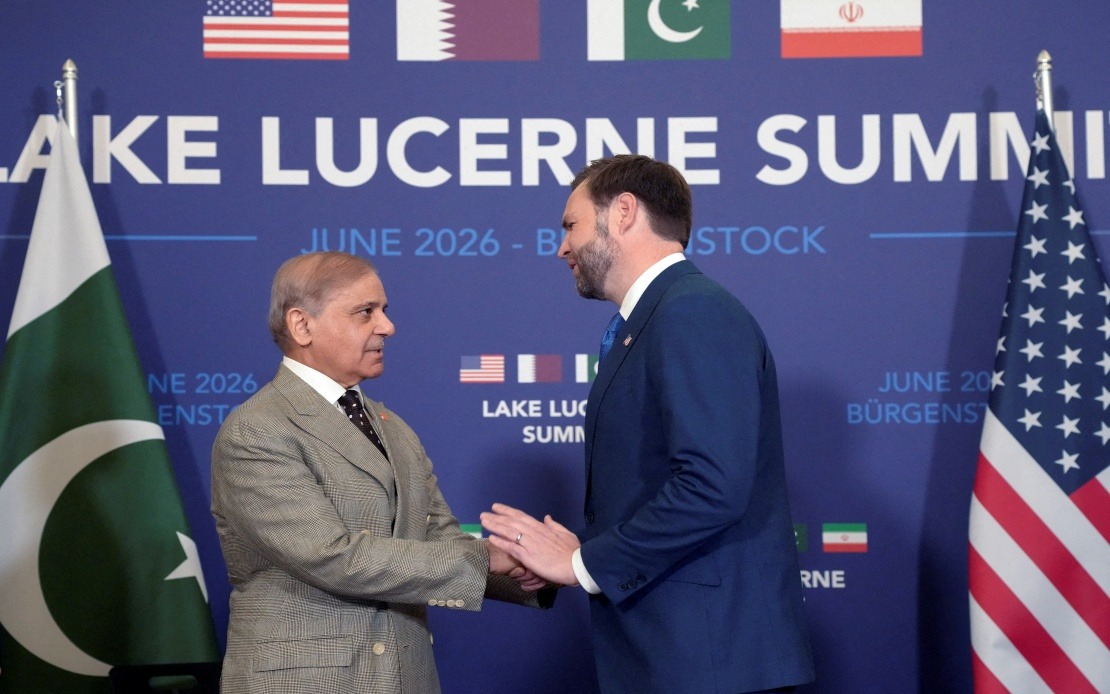
Diplomatic efforts to reshape the regional security landscape gathered momentum in Switzerland on Sunday as the United States and Pakistan convened talks at the Burgenstock resort, marking a significant diplomatic engagement amid broader negotiations aimed at resolving the long-running tensions between Washington and Tehran. The White House confirmed that Vice President JD Vance, alongside special envoys Steve Witkoff and Jared Kushner, opened discussions with Pakistan's Prime Minister Shehbaz Sharif and Pakistan Army Chief Field Marshal Asim Munir in what observers view as a crucial show of unified regional positioning.
The timing of this bilateral engagement underscores the intricate diplomatic dance unfolding across the Middle East and South Asia. Pakistan's presence at the negotiating table alongside the US signals Islamabad's evolving strategic calculus as it balances its complex relationships across the region. For Malaysia and Southeast Asia, this development carries implications for understanding how major powers coordinate on security matters involving shared strategic interests, particularly given the interconnected nature of global geopolitics and trade routes that impact the wider region.
The broader context involves technical-level negotiations scheduled to commence simultaneously at the same Swiss venue, bringing together delegations from Iran, the United States, and mediator countries Pakistan and Qatar. These discussions are expected to proceed behind closed doors, reflecting the sensitive nature of the issues under discussion and the need for confidential diplomatic channels to facilitate progress on contentious matters that have stalled previous attempts at resolution.
At the heart of these negotiations lies a memorandum of understanding signed remotely between Iran and the US overnight into June 18, which represents a foundational agreement to halt the military conflict that erupted on February 28. This document establishes a framework for de-escalation and specifies concrete timelines for mutual actions designed to reduce tensions and restore normalcy to critical shipping lanes. The agreement demonstrates how even adversarial nations can establish mechanisms for managing conflicts when diplomatic channels remain open and both parties recognize mutual benefit in resolution.
Crucial to the accord is the commitment from the United States to lift its naval blockade, a measure that has significantly constrained Iran's economic activities and maritime commerce. Correspondingly, Iran has agreed to restore shipping operations through the Strait of Hormuz, one of the world's most strategically vital waterways through which a substantial percentage of global oil and liquefied natural gas passes annually. For Southeast Asian economies heavily dependent on energy imports and unimpeded passage through critical sea lanes, the restoration of stability in this region holds considerable economic significance.
Nuclear matters remain among the most contentious elements requiring resolution in the coming weeks. Iran has committed not to pursue nuclear weapons acquisition, though the formalization of this commitment and verification mechanisms demand extensive negotiation. The parties have established a 60-day window for concluding a separate, comprehensive agreement addressing Iran's nuclear programme in detail. This timeline reflects both the urgency officials place on achieving results and the complexity of technical issues that require careful scrutiny from international experts and stakeholders concerned about proliferation risks.
For Tehran, the ultimate prize emerging from these negotiations would be the removal of international sanctions that have constrained Iranian economic activity for years. The lifting of these measures would unlock significant commercial opportunities and allow Iran to re-engage more fully with global markets. However, achieving consensus on which sanctions should be lifted and under what conditions remains a significant negotiating hurdle, as the US and its allies retain leverage through the sanctions regime and will likely demand robust verification mechanisms before agreeing to full relief.
The participation of Pakistan in this diplomatic framework deserves particular attention, as Islamabad has traditionally served as an important bridge between Western powers and Iran, despite its own complex historical relationship with both. Pakistan's military leadership attending these talks alongside civilian representatives suggests an institutional commitment to the outcome, indicating that the agreement carries weight within Pakistan's strategic establishment. This involvement also reflects Pakistan's interest in regional stability and its concerns about the implications of prolonged US-Iran tensions for its own security environment.
Similarly, Qatar's role as a mediator underscores the smaller Gulf state's growing influence in regional diplomacy. Qatar has historically maintained channels to various Middle Eastern actors and has demonstrated willingness to facilitate dialogue on sensitive matters. The participation of both Pakistan and Qatar as mediators suggests these nations possess sufficient neutrality or respected standing with both principal parties to help broker compromises that might otherwise prove impossible.
For the broader international community, including Southeast Asian nations dependent on stable energy supplies and unimpeded maritime trade, these negotiations represent an opportunity to reduce a significant geopolitical risk factor. Regional conflicts and sanctions regimes create uncertainty in global commodity markets, affecting prices and supply reliability. The establishment of a framework for managing US-Iran tensions through negotiation rather than military escalation offers prospects for greater stability that benefits trading nations throughout Asia.
The next critical juncture will be whether technical-level discussions can translate the memorandum's general principles into detailed, verifiable agreements. The 60-day timeline for nuclear negotiations will be closely watched, as any slippage or fundamental disagreement on technical issues could undermine the broader understanding. Similarly, the practical implementation of the blockade lift and shipping restoration must proceed smoothly to demonstrate that both sides are committed to genuine de-escalation rather than using negotiations tactically.

