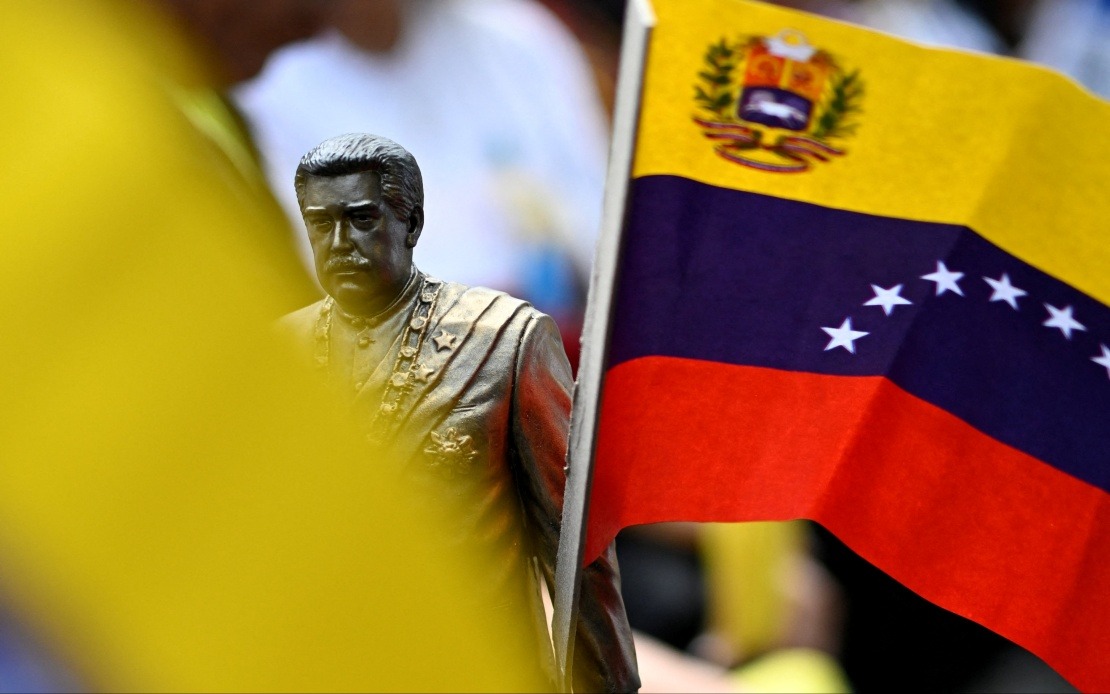
A United States federal judge has scheduled the trial of Venezuelan President Nicolas Maduro and his wife Cilia Flores to begin on June 1, 2027, following a brief hearing in Manhattan on Wednesday. Judge Alvin Hellerstein's decision came after both the prosecution and defence teams jointly requested the trial date during their 15-minute court appearance. The couple, who have maintained their not guilty pleas to charges involving drug trafficking and illegal firearms, made their third court appearance since being forcibly removed from Venezuela in early January by US military personnel.
The case represents an extraordinary escalation in US-Venezuela relations and raises profound questions about international law and state sovereignty that resonate across the region. Maduro and Flores were apprehended during a large-scale military operation on January 3 and subsequently transported to New York, where they have been held at the Metropolitan Detention Centre in Brooklyn since their capture in Caracas. For Southeast Asian observers and policymakers, the incident underscores growing tensions between major powers and their willingness to use military force to achieve political objectives, a dynamic that carries implications for regional stability and the international rules-based order that smaller nations depend upon for protection.
Maduro's defence team, led by attorney Barry Pollack, has signalled its intention to mount a fundamental challenge to the charges based on sovereign immunity grounds. This legal strategy suggests the defence believes that as a sitting head of state, Maduro cannot be prosecuted in foreign courts for actions taken in his official capacity. Should this motion succeed, the entire case could be dismissed without proceeding to trial, making the sovereign immunity argument potentially the most consequential legal battle ahead. The significance of this approach lies in its implications for international jurisprudence—a ruling against sovereign immunity could establish precedent that sitting leaders worldwide might face prosecution in foreign jurisdictions, fundamentally altering diplomatic norms that have governed state relations for centuries.
The detention of a foreign head of state and his spouse on criminal charges represents an unprecedented action in modern times. Since their seizure, Maduro and Flores have been confined to Brooklyn's detention facility, a development that has galvanised opposition from international observers, human rights advocates, and anti-war activists across the United States. On Wednesday, demonstrators gathered outside the Manhattan courthouse to voice their opposition to both the military intervention and the subsequent prosecution. The protesters' presence underscores the significant controversy surrounding the case even within American civil society, where concerns about the legality and propriety of the government's actions have found expression despite the charges levied against the Venezuelan leadership.
Activists and political commentators have framed the case as a violation of international law and an assertion of American power unconstrained by legal frameworks governing state conduct. Tom Burke, a member of the Anti-War Action Network's steering committee, characterised the operation as fundamentally incompatible with international legal norms, describing the military seizure as an abduction and the subsequent detention and trial as violations of established law. Sara Flounders, marking Wednesday as the 200th day since Maduro's capture, drew connections between this intervention and broader US military and political engagement in Venezuela, Iran, and Cuba, suggesting a pattern of American intervention in nations that resist Washington's preferred political outcomes. These critiques highlight the tension between assertions of law and order within the US legal system and the perception that the obtaining of jurisdiction over Maduro may itself have violated international conventions.
The trial timeline established by Judge Hellerstein means that more than three years will elapse between the seizure and the commencement of trial proceedings. This extended period raises questions about pretrial detention, conditions of confinement, and the practical challenges of mounting a defence from a foreign detention facility. For Malaysian and Southeast Asian readers, the case illustrates how the pursuit of criminal justice against foreign leaders can become entangled with geopolitical rivalries and power imbalances. The protracted nature of the proceedings also suggests that the legal arguments surrounding sovereignty and jurisdiction will occupy centre stage, potentially overshadowing the underlying factual allegations that prompted the prosecution.
The international condemnation that followed the January military operation reflects widespread concern about the precedent being set. Beyond the immediate parties involved, the case touches upon fundamental questions about the autonomy of sovereign nations and the limits of external military intervention. For a region like Southeast Asia, where territorial integrity and non-interference remain core principles, the Venezuelan situation demonstrates the vulnerability of smaller and medium-sized nations to unilateral actions by larger powers, even when those actions are framed in legal and prosecutorial terms.
Maduro's initial arraignment on January 5 saw him formally entered a not guilty plea to all charges, including the drug trafficking allegations that form the centrepiece of the government's case. The specific nature of these charges and the evidence supporting them remain less prominent in public discourse than the extraordinary circumstances of his apprehension, suggesting that the legal and procedural questions may ultimately define the case more substantially than the substantive criminal allegations. The decision by the judge to set a trial date three years in the future indicates a recognition by the court that the complex sovereign immunity and jurisdictional questions will require extensive briefing and consideration.
Cilia Flores, Maduro's wife, faces the same charges and the same detention circumstances as her husband. Her inclusion in the prosecution raises additional questions about the scope and intent of the government's case, as spousal prosecutions in circumstances of political conflict often attract particular scrutiny from international observers concerned about the weaponisation of the justice system for political purposes. The parallel treatment of both individuals suggests that the prosecution views the charges against them as substantively equivalent, though legal arguments regarding her sovereign immunity status may differ from those applicable to Maduro as the sitting head of state.
For Malaysian observers monitoring this development, the case serves as a reminder of the fluid and contested nature of international law and the power dynamics that shape its application. The trial date of June 1, 2027, represents not an endpoint but rather the beginning of what promises to be a legally complex and politically sensitive proceeding. The outcome will likely influence how similar cases are approached in the future and may contribute to ongoing debates within international law circles about the boundaries between legitimate prosecution and political persecution, between the rule of law and its selective application, and between justice and hegemonic power.

