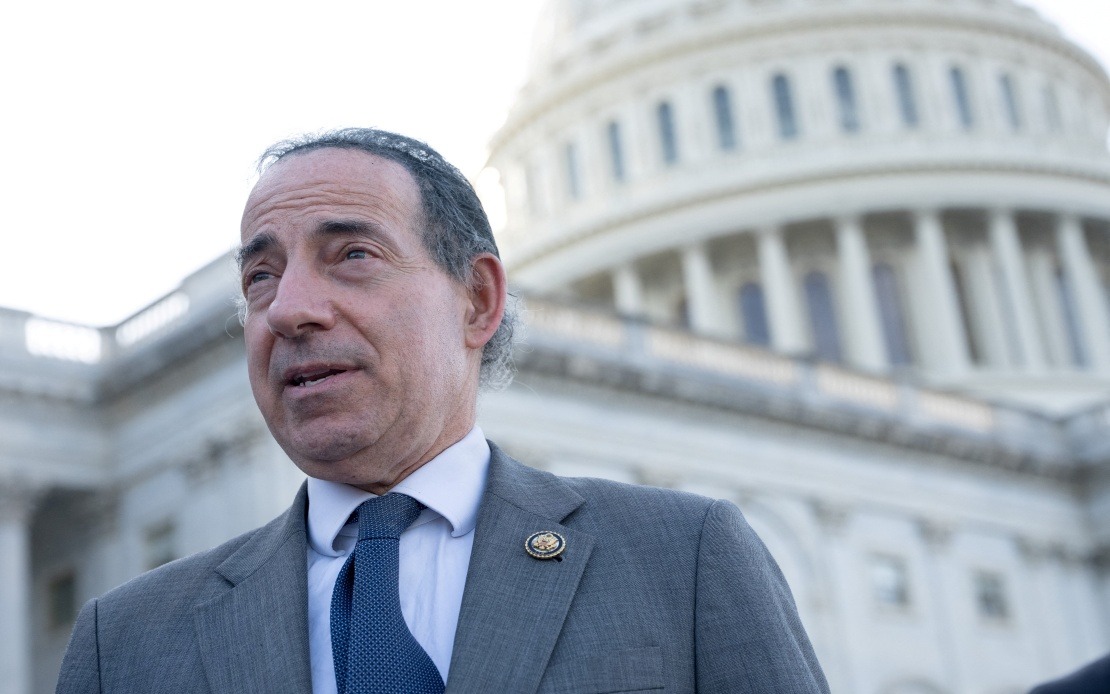
A prominent Democrat in the United States House of Representatives has formally opened an investigation into FIFA, alleging that the international soccer governing body pursued corrupt arrangements with the Trump administration. Rep. Jamie Raskin, the ranking member of the House Judiciary Committee, sent a letter late Sunday to FIFA President Gianni Infantino outlining the investigation's scope, which centres on what Raskin characterizes as a sustained effort by FIFA to secure preferential treatment from Washington in exchange for questionable practices affecting American consumers.
The investigation represents a significant escalation in scrutiny of FIFA's dealings with the Trump administration. Raskin's letter specifically addresses what he describes as a quid pro quo arrangement, arguing that FIFA leveraged its influence to obtain dismissals of prominent corruption cases that the United States Justice Department had pursued against the soccer organisation. According to Raskin, these arrangements have tangible consequences for ordinary people, contradicting any suggestion that such political machinations occur in a vacuum removed from everyday harm.
At the heart of the inquiry lies FIFA's ticketing practices for the World Cup, which Raskin contends were manipulated through what he terms "illegal price gouging and fraudulent sales tactics." The investigation will examine dynamic pricing mechanisms that allowed FIFA to increase ticket costs, along with policies permitting seat downgrades after consumers had completed their purchases. These practices, Raskin suggests, represent how FIFA capitalized on its political relationship with Washington to circumvent consumer protections and extract maximum revenue from global soccer fans.
The probe also encompasses FIFA's governance structure under Infantino's leadership. Raskin alleges that the organisation deliberately weakened its internal ethics safeguards precisely as it was cultivating closer diplomatic and commercial ties with the Trump administration. This combination—simultaneous relaxation of oversight mechanisms coupled with intensified relationship-building with political power—suggests a deliberate strategy to avoid accountability while securing favourable treatment from United States officials.
A critical aspect of Raskin's investigation involves prior anti-corruption efforts by the Justice Department that predate the Trump administration. Earlier prosecutions had uncovered extensive international bribery networks connected to soccer media rights, ultimately revealing more than US$200 million in bribes and kickbacks involving defendants representing over 20 countries. These legal proceedings demonstrated the depth and scope of FIFA's corruption challenges and provided documented evidence of systemic wrongdoing within the organisation.
However, Raskin alleges that following the change in administration, prosecutorial momentum stalled. The Trump administration, according to the congressman, suspended or abandoned several ongoing cases, allowing some previously convicted defendants to avoid serving their sentences. This apparent reversal in enforcement priorities, Raskin contends, correlates directly with FIFA's cultivation of political relationships at the highest levels of government—a pattern he characterises as precisely the type of corruption that undermines rule of law and public trust in institutions.
The investigation demands extensive documentary evidence from FIFA, including all communications, gifts, payments, and other benefits provided to President Trump or his associates. Raskin is also requesting comprehensive records detailing FIFA's communications with United States government officials and documentation regarding its ticketing and pricing structures. Additionally, the House Democrat has requested visitor logs for FIFA's offices located within Trump Tower, seeking to establish patterns of contact between soccer officials and Trump's circle.
Raskin has invited FIFA President Infantino to appear before the House Judiciary Committee for a transcribed interview, though he has framed this as a request rather than a subpoena at this stage. The deadline for scheduling this testimony is set for 5 p.m. on August 9, 2026, providing FIFA with approximately two weeks to respond to the committee's initial request. This procedural approach allows time for negotiation while establishing clear expectations about congressional interest in obtaining firsthand testimony.
For Malaysian and Southeast Asian observers, this investigation carries significance beyond American domestic politics. FIFA's governance structures and corruption patterns directly affect international soccer, including regional competitions and the allocation of hosting rights throughout Asia. Any investigation into FIFA's practices, particularly regarding how the organisation conducts business with powerful national governments, provides relevant context for understanding how international sports bodies balance commercial interests against ethical obligations and governance standards.
The investigation also illuminates broader patterns of how sports organisations navigate relationships with powerful nation-states. FIFA's alleged strategy of leveraging political relationships to obtain immunity from corruption prosecutions raises questions about institutional accountability that extend far beyond soccer. For Southeast Asian countries engaging with international sports bodies or considering bids to host major tournaments, understanding how FIFA manages political relationships and potentially compromises its own oversight mechanisms has practical importance.
Moreover, Raskin's investigation underscores persistent vulnerabilities in international anti-corruption enforcement. The alleged ability of a single change in national administration to derail prosecution momentum suggests that international corruption cases require institutional resilience beyond what individual national governments can provide. This structural weakness has implications for how emerging economies in Southeast Asia should approach their own international investigations and their relationships with foreign authorities pursuing transnational cases.
The timing and scope of this investigation reflect broader American political tensions but also substantive concerns about institutional integrity. The investigation moves beyond partisan rhetoric to focus on concrete allegations regarding consumer harm through ticketing practices and the intersection of political influence with the dismissal of corruption cases. As this investigation unfolds, it will likely generate significant documentation about FIFA's internal decision-making processes and its approach to managing relationships with national governments—information that may inform ongoing governance debates within international sports organisations across all regions.

