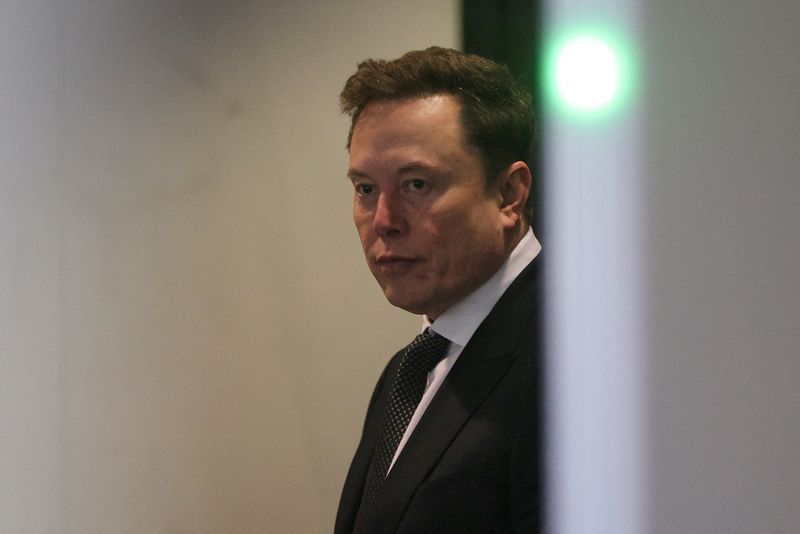
A US federal judge in Washington, D.C., has given her approval to an SEC settlement with Elon Musk regarding his acquisition of Twitter shares, though not without making her scepticism abundantly clear. U.S. District Judge Sparkle Sooknanan signed off on the accord on Wednesday, yet spent considerable effort in her decision documenting the "significant misgivings" she held about the "red flags" embedded in the arrangement, questioning whether it might "make a mockery of judicial power" and whether the Trump administration's regulatory apparatus had been sufficiently stringent with the world's wealthiest individual.
The core issue at stake involves Musk's delayed disclosure of his early Twitter purchases in March and April 2022. The SEC alleged that Musk took eleven days longer than required to announce his accumulating shareholdings, a delay the regulator contends saved him approximately $150 million by allowing him to purchase shares at lower prices before the market absorbed the information. The settlement requires a trust established in Musk's name to pay $1.5 million to resolve these claims. Musk has maintained the delay was unintentional, and he ultimately acquired the entire platform for $44 billion in October 2022, subsequently renaming it to X. The social media company now operates under the umbrella of his SpaceX venture, whilst Musk simultaneously maintains control of Tesla and commands a personal wealth valued at $927.2 billion according to Forbes.
Sooknanan's reluctant approval reveals deep institutional frustration with the settlement's terms and the process through which it was negotiated. The judge emphasised that whilst courts must assess consent judgments to determine whether they meet baseline standards of fairness and reasonableness, she had deliberately limited authority to intervene. She wrote that courts are neither "rubber stamps" nor ombudsmen, effectively suggesting that broader accountability for regulatory decisions ultimately rests with the electorate rather than the bench. The judge's framing here carries particular significance for Southeast Asian observers following American regulatory dynamics, as it highlights how political considerations and separation of powers can constrain judicial oversight of executive branch conduct, even when concerns about differential treatment arise.
Sooknanan's decision to voice her concerns despite approving the settlement stems from several problematic aspects of the negotiated arrangement. She questioned the SEC's decision to abandon its traditional demand that defendants disgorge ill-gotten gains—in this case, the $150 million Musk allegedly saved through delayed disclosure. The agency's justification that it had not historically pursued disgorgement in comparable cases struck the judge as potentially circular reasoning that simply begged the question of whether settling on such terms was appropriate in the first instance. This concern resonates with observers in Malaysia and the region who monitor how financial regulators handle cases involving high-net-worth individuals and corporate titans.
Another significant concern highlighted in Sooknanan's decision involved the structural peculiarity of the settlement arrangement itself. Rather than settling directly with Musk, the SEC chose to settle with a trust in his name, a manoeuvre that allowed Musk to publicly declare himself cleared of any wrongdoing despite the ongoing regulatory action. The judge expressed perplexity about this approach, noting that it appeared to offer the defendant the best of both worlds—regulatory resolution without personal liability or reputational consequences. This distinction matters substantially because it allows Musk to maintain his public standing whilst satisfying regulatory requirements, a privilege that might not be extended to other alleged securities violators.
The judge's most pointed critique centred on whether Musk had received preferential treatment unavailable to other market participants. Sooknanan observed that the settlement had materialised following the May departure of Margaret Ryan, the SEC's enforcement chief who had served for only six months before clashing with agency leadership over enforcement philosophy and direction. She noted that SEC lawyers at prior hearings appeared visibly surprised to learn that settlement discussions had occurred, suggesting a disconnect between the negotiating settlement team and the litigation team—a procedural irregularity that raised questions about whether the deal had been negotiated at appropriate institutional levels. The judge explicitly wondered whether other alleged securities-law violators might expect comparable "solicitude" from the agency, or whether this represented a "one-time deal" uniquely crafted for Musk's circumstances.
The SEC sought to defend its settlement in subsequent court filings, characterising the $1.5 million penalty as the largest civil fine of its type and emphasising that the agreement included an injunction binding Musk when acting through the trust structure. The agency further contended that the settlement did not result from collusion, and that the public benefited from this injunction given that Musk appears to utilise the trust as a primary vehicle for managing his substantial wealth holdings. Notably, the agency did not directly address the judge's concerns about preferential treatment or the departure of its enforcement chief preceding the settlement announcement.
Musk's background as a former adviser to Republican President Donald Trump adds a political dimension to the judge's concerns. Sooknanan herself was appointed to the bench by former Democratic President Joe Biden, a biographical detail that contextualises her willingness to articulate reservations about a settlement approved under a Republican administration. For Malaysian readers observing American institutional dynamics, this dynamic underscores how regulatory decisions can become entangled with partisan considerations, potentially affecting the consistency and fairness of enforcement across different individuals and administrations.
The settlement's approval despite the judge's reservations illustrates a fundamental tension within American regulatory governance. Judges reviewing consent agreements occupy a constrained institutional position—they must defer substantially to agency expertise and negotiating discretion, yet they retain authority to ensure baseline fairness standards. Sooknanan navigated this tension by approving the settlement while creating an extensive record of her doubts, effectively signalling to appellate courts, future litigants, and the public that the arrangement carried questionable dimensions even if it technically satisfied statutory requirements. This approach allows judicial skepticism to enter the record without blocking regulatory resolution, a pragmatic if somewhat unsatisfying outcome.
For observers in Southeast Asia monitoring global regulatory standards and enforcement patterns, the Musk settlement raises important questions about how democracies with independent judiciaries balance executive regulatory authority against principles of equal treatment under law. The fact that a federal judge could express such substantial misgivings whilst still approving an arrangement speaks to the genuine constraints facing courts in policing agency discretion. It also suggests that when regulatory agencies choose to settle with wealthy or politically connected defendants on lenient terms, courts may lack sufficient leverage to prevent such outcomes, however much they may doubt their propriety. The decision thus reveals both the strengths and limitations of judicial oversight in protecting the integrity of financial regulation.

