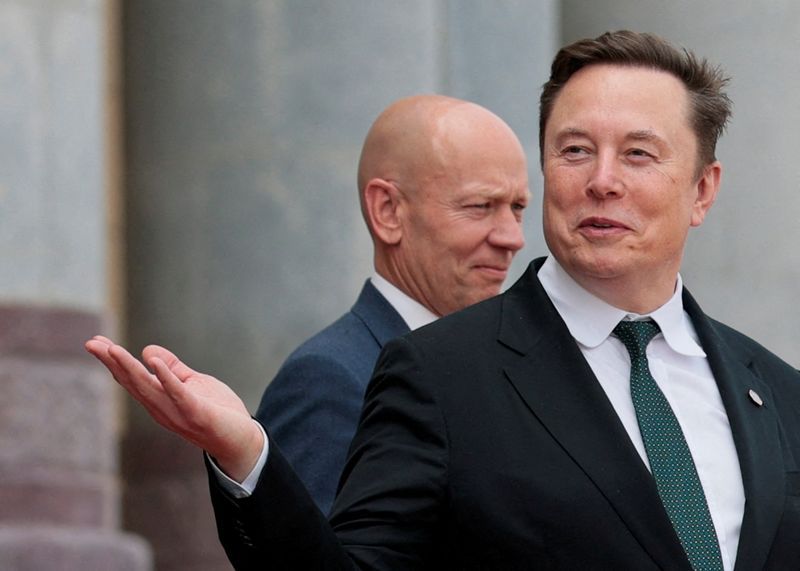
A federal judge in San Francisco has dealt a significant blow to Elon Musk by rejecting his legal challenge to a jury verdict that found him liable for defrauding Twitter investors. The decision, handed down by U.S. District Judge Charles Breyer on Monday, represents a major setback for the world's richest person in his efforts to escape accountability for conduct related to his contentious acquisition of the social media platform for $44 billion.
Judge Breyer's ruling preserved the jury's original findings while also granting the investors' request for prejudgment interest, which could substantially increase the financial exposure Musk faces. The decision came after Musk mounted an aggressive legal strategy to overturn the March verdict, including motions to decertify the class of investors and void the jury's conclusions entirely. The judge found merit in only one of Musk's arguments, determining that he should not be held liable for one specific tweet that the investors had challenged.
The core of the case centres on tweets Musk posted in May 2022, during a period of escalating tension between himself and Twitter's board as he attempted to withdraw from the acquisition agreement. On May 13, Musk tweeted that his purchase was "on hold" pending clarification on whether fake accounts represented less than 5 per cent of the platform's users. Four days later, on May 17, he posted that the deal "cannot move forward" until the company's leadership could verify that bot accounts fell below the same threshold. Investors contended these statements were deliberately false and designed to pressure Twitter into renegotiating or allowing him to exit the transaction entirely.
The financial impact on investors was substantial and immediate. The May 13 tweet triggered a sharp market reaction, causing Twitter's share price to plummet 18 per cent over the course of two trading days. Shareholders who sold their holdings during this period suffered significant losses, providing the basis for the fraud lawsuit. Judge Breyer found "substantial evidence of falsity" in the May 13 posting and noted that the jury could reasonably conclude Musk had manufactured the bot controversy as a pretext to escape a deal he no longer wanted to complete.
While Breyer upheld the verdict on the May 13 tweet, he sided with Musk on the second posting, ruling that because markets did not react meaningfully to the May 17 message, investors could not prove it caused them direct financial harm. This partial concession to Musk's arguments suggests the judge applied a rigorous analytical framework rather than simply rubber-stamping the jury's entire decision. Nevertheless, the preservation of liability on the more damaging May 13 tweet keeps the bulk of investor claims intact.
Attempts by Musk's legal team to challenge the jury's impartiality centred on an unusual complaint regarding how jurors had highlighted the figure "$4.20" in bright blue on their verdict form. Musk's lawyers argued this was evidence of mockery and bias, pointing to the number's association with marijuana culture and Musk's own history of referencing it in business dealings. Judge Breyer firmly rejected this argument, finding it "defied common sense" to suggest deliberation spanning nearly four days and resulting in mixed verdicts reflected juror prejudice. The judge further noted that the jury had sided with Musk on certain claims, undermining any narrative of systematic bias.
Breyer's response to the "420" controversy also offered a notable cultural observation. The judge wrote that the number is indeed associated with cannabis culture and that residents of San Francisco regularly observe celebrations of April 20 as a cultural phenomenon. However, Breyer found no evidence that Musk had negative associations with the number; if anything, the defendant's own enthusiastic adoption of the figure in tweets, interviews, and business transactions suggested otherwise. This aspect of the ruling demonstrates how judges must sometimes grapple with contemporary cultural references that intersect with legal proceedings.
The case carries parallels to previous regulatory action against Musk over similar conduct. In 2018, his tweet claiming he had "funding secured" to take Tesla private at $420 per share prompted the U.S. Securities and Exchange Commission to file a civil fraud lawsuit. That matter was ultimately settled, establishing a pattern of regulatory concern about Musk's communications with markets. The current ruling suggests courts are increasingly willing to hold billionaire entrepreneurs accountable when their public statements materially impact investor behaviour and financial outcomes.
For Malaysian and Southeast Asian investors, this case underscores the importance of understanding how corporate leaders' social media activity can create legal liability and market risk. Many regional markets have seen the rise of founder-led companies where executives wield significant personal influence over their firms' valuations. The Twitter verdict establishes that even powerful figures cannot weaponise their social media platforms to manipulate stock prices without facing legal consequences, a principle relevant to corporate governance across Asia.
The estimated damages of approximately $2.5 billion represent a substantial financial penalty, though Musk has indicated his intention to pursue further appeals. The addition of prejudgment interest increases the total cost of the liability and rewards investors for the time during which they have been denied compensation. This decision likely represents an intermediate stage rather than the final outcome, as appeals processes will continue over coming months or years.
The verdict also carries implications for corporate communications standards in technology and venture capital-dominated industries. Executives may increasingly face scrutiny of social media statements made during periods of corporate distress or transaction negotiations. For Malaysian technology companies and their leaders engaging in cross-border transactions or investor relations, the ruling serves as a cautionary note about the permanence and legal significance of public communications.
Musk's situation has evolved considerably since the Twitter acquisition concluded in October 2022. He renamed the platform X and integrated it with operations at his rocket and satellite company SpaceX, though the company continues to face the investor litigation resulting from his conduct during the tumultuous months of 2022. Additionally, a separate Manhattan lawsuit alleges Musk engaged in fraud by delaying disclosure of his initial investment in Twitter, allowing him to accumulate shares at lower prices while other investors sold at depressed valuations. These parallel legal proceedings suggest Musk's Twitter involvement will generate litigation for years to come.

