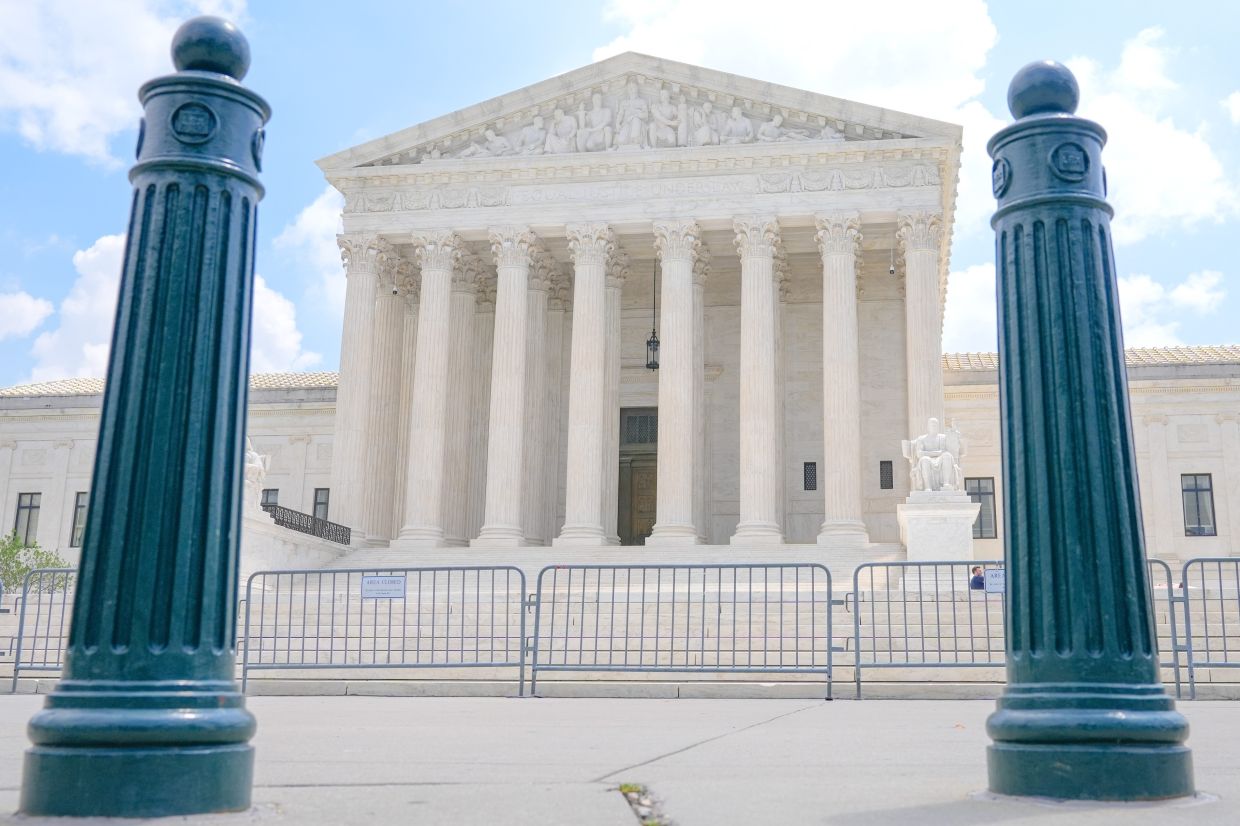
The United States Supreme Court has refused to intervene in a significant legal battle over Texas's App Store Accountability Act, effectively clearing the way for the contentious law to be implemented. Justice Samuel Alito issued brief, one-sentence orders dismissing emergency petitions filed by groups challenging the legislation on constitutional grounds. The decision marks another chapter in an intensifying debate over how governments should regulate digital content and protect young users from potentially harmful material online.
The underlying dispute centres on whether the law unconstitutionally restricts free speech protections, a question that has divided the American court system. A three-judge panel of the 5th US Circuit Court of Appeals sided with Texas in June, reversing a lower court decision that had blocked the measure as unconstitutional. This appellate reversal suspended the district court's previous ruling that had temporarily halted implementation, effectively removing the last major legal obstacle to the law's activation.
Two prominent plaintiff groups have led the challenge against the legislation. The Computer & Communications Industry Association, representing major technology companies, joined forces with Students Engaged in Advancing Texas, a civil liberties coalition, in launching separate but related lawsuits. Both cases list Texas Attorney General Ken Paxton as the defendant, positioning the state's top law enforcement officer as the chief architect defending the legislation's validity.
The constitutional argument advanced by opponents rests on First Amendment protections for speech and information access. Attorneys representing Students Engaged in Advancing Texas contended that the law improperly restricts access to constitutionally protected content categories, including news reporting and educational materials. They emphasised that parental authority to make decisions about children's media consumption should remain a family matter rather than a government-mandated requirement, arguing that such decisions represent a fundamental aspect of parental rights that the First Amendment should shield from excessive state intervention.
In their legal briefs, the civil liberties advocates highlighted the competing interests at stake. They framed the dispute not merely as one involving child protection, but as a broader question about who controls information access and parental autonomy. Their written submissions stressed that protecting constitutional rights takes precedence over speculative concerns about children's safety, particularly when less restrictive alternatives might achieve legitimate government objectives without impairing fundamental freedoms.
The Texas Attorney General's office mounted a vigorous defence of the legislation, reframing the debate around concrete harms to young users. State lawyers emphasised that children with access to mobile devices could download applications containing inappropriate content without parental awareness or permission. They documented concerns about data harvesting, privacy invasions, and exposure to material that developmental research suggests may harm adolescent development. The state's legal team characterised the law as a reasonable protective measure against what they described as inherent dangers in the modern digital ecosystem.
This dispute reflects deeper tensions within American jurisprudence about regulating technology platforms and protecting minors. The law requires digital app stores to implement age verification mechanisms before granting downloads to users under 18, attempting to gatekeep access to certain content. Supporters contend that such technological safeguards represent a reasonable middle ground between unrestricted access and outright prohibition. They argue that age verification systems already operate in various contexts, from tobacco purchases to casino access, making digital implementation a logical extension of established regulatory principles.
For Malaysia and Southeast Asia, this development carries significant implications. Regional governments increasingly examine American legal frameworks when crafting their own digital regulation policies. As countries across Asia contemplate legislation governing app distribution, content access, and child protection online, the American courts' willingness to uphold age verification requirements may embolden similar legislative efforts. The precedent suggests that major democracies view child safety in digital spaces as sufficiently compelling to justify some restrictions on content access, even when free speech concerns arise.
The Supreme Court's inaction effectively endorses the appellate panel's reasoning without requiring the high court to issue a detailed opinion explaining its rationale. This procedural move leaves the door theoretically open for future litigation on narrower grounds while allowing Texas to implement its policy. The practical consequence means technology companies and app platform operators will likely face increasing pressure to develop robust age verification systems, potentially affecting their business models and operational practices across multiple jurisdictions.
The decision also highlights the ongoing challenge democratic societies face in balancing youth protection against constitutional protections for free expression and parental autonomy. Unlike authoritarian approaches that permit unilateral government control over information access, liberal democracies must navigate these tensions through adversarial litigation and constitutional interpretation. As this case demonstrates, courts are gradually tilting toward permitting age verification requirements, suggesting that technological gatekeeping may become an increasingly accepted regulatory tool.
Looking forward, the Texas law's survival at the Supreme Court level will likely spawn similar legislation across other American states and potentially influence Asian governments considering comparable measures. Technology companies must now prepare for a fragmented regulatory landscape where different jurisdictions impose varying age verification standards. This development underscores the broader trend of national governments reasserting control over digital platforms through age-gating mechanisms, potentially reshaping how technology companies design their services and serve young users internationally.

