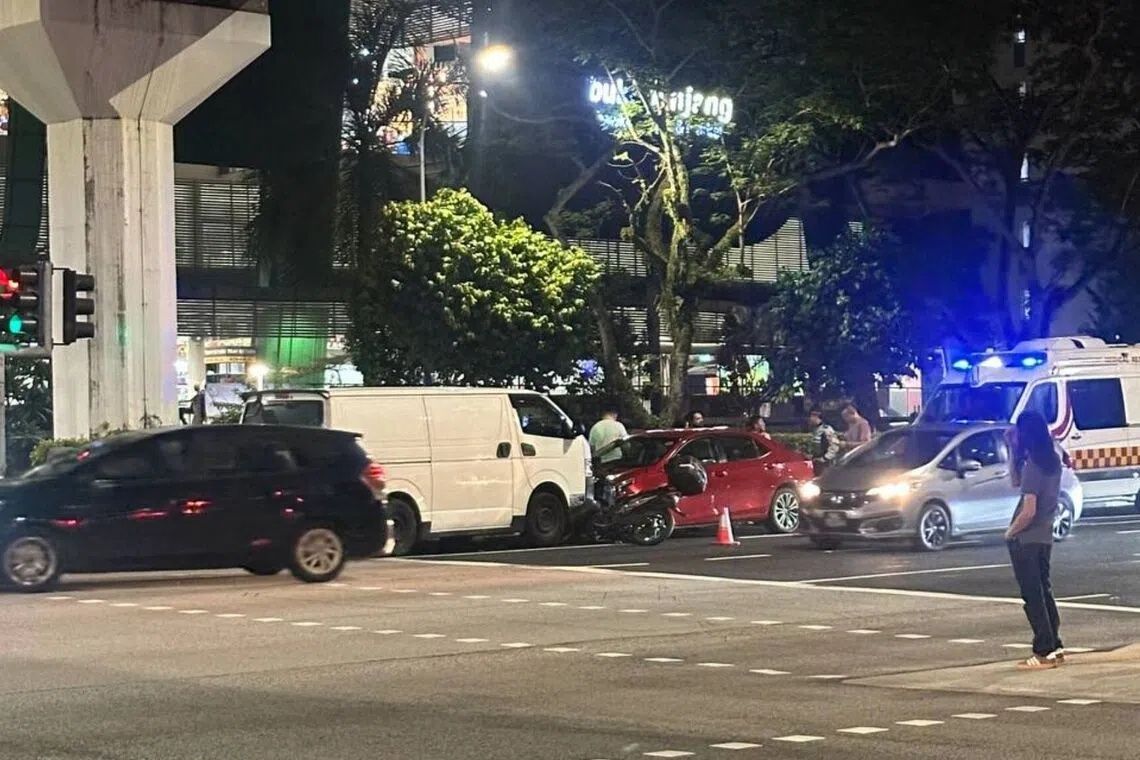
A 27-year-old driver was taken into custody in Singapore following a serious multi-vehicle collision in the Bukit Panjang area on Friday night, with police alleging that drug impairment played a role in the incident. The crash, which involved a van, motorcycle, and two sedans, occurred on Bukit Panjang Road near its intersection with Bukit Panjang Ring Road at approximately 9pm on August 14. Officers from the Singapore Police Force and responders from the Singapore Civil Defence Force arrived at the scene after receiving reports of the accident.
The circumstances surrounding the collision suggest a particularly dangerous scenario, with eyewitness video evidence indicating the van was travelling against the normal direction of traffic before colliding head-on with a red sedan. The motorcycle became trapped between the van and the car, creating a hazardous situation for the rider. A black sedan, positioned metres behind the red vehicle, completed the chain of vehicles involved in what police described as a multi-vehicle accident requiring coordination between law enforcement and emergency services.
Beyond the allegations of impaired driving, authorities discovered vaping devices during their investigation at the accident scene. Police seized two vaporisers and three pods from the van, adding a secondary line of inquiry to an already serious incident. The discovery of these items prompted a referral to the Health Sciences Authority, Singapore's regulatory body for health and consumer protection matters, expanding the scope of the investigation beyond simple traffic violations.
The injury toll from the collision remained relatively modest considering the severity of the impact. Two individuals sustained minor injuries from the crash, though both declined medical transport to hospital, suggesting their injuries were non-critical. However, the psychological impact and potential for more serious harm underscores the dangers of impaired driving, particularly when combined with reckless behaviour such as travelling against traffic flow.
The arrest on drug-impaired driving charges represents a significant development in Singapore's ongoing efforts to combat substance-related road safety violations. Such cases carry substantial legal consequences under Singapore's stringent traffic and drug laws, with courts typically imposing substantial penalties for those convicted of driving under the influence of controlled substances. The charge specifically targets operators who present an elevated risk to other road users, as impaired judgment and diminished reaction times directly correlate with accident severity and fatality rates.
The involvement of vaping devices in the case adds a contemporary dimension to traditional drug-impaired driving investigations. While vaping itself is a regulated but legal activity in many jurisdictions, the presence of these devices during a drug-driving incident suggests they may have contained prohibited substances. The Health Sciences Authority's involvement indicates Singapore authorities are taking a comprehensive approach to understanding what role, if any, the vaping products played in the driver's impairment at the time of the collision.
Investigations remain ongoing as police continue to gather evidence and interview witnesses. The referral to the Health Sciences Authority will likely include laboratory analysis of the seized vaporiser pods to determine their contents and whether any prohibited drugs or controlled substances were present. This scientific component of the investigation is crucial for establishing the precise nature of the impairment and strengthening any prosecution case against the arrested driver.
For Malaysian readers and broader Southeast Asian observers, this incident reflects common road safety challenges across the region. Drug-impaired driving remains an underreported but significant contributor to traffic accidents throughout Asia, often overshadowed by discussions of drink-driving. The case demonstrates how modern consumption methods, including vaping devices, have introduced new complexity to traditional drug enforcement and traffic safety investigations.
The incident also highlights the importance of rapid emergency response coordination between police and civil defence forces. The presence of video documentation from social media accounts allowed authorities and the public to understand the accident's dynamics more clearly, contributing to a comprehensive investigation. As urban areas across Southeast Asia continue expanding, similar incidents are likely to occur, making robust investigative frameworks and inter-agency cooperation essential for public safety.
Singapore's approach to this case—treating it as both a traffic safety matter and a drug-related offence—provides insight into how developed regulatory frameworks can address complex violations. The multi-layered investigation, involving police for the driving aspect and health authorities for the substance question, suggests a sophisticated understanding of how impairment-related offences require comprehensive examination. This model may offer lessons for other jurisdictions seeking to improve their own drug-impaired driving investigations and enforcement mechanisms.

