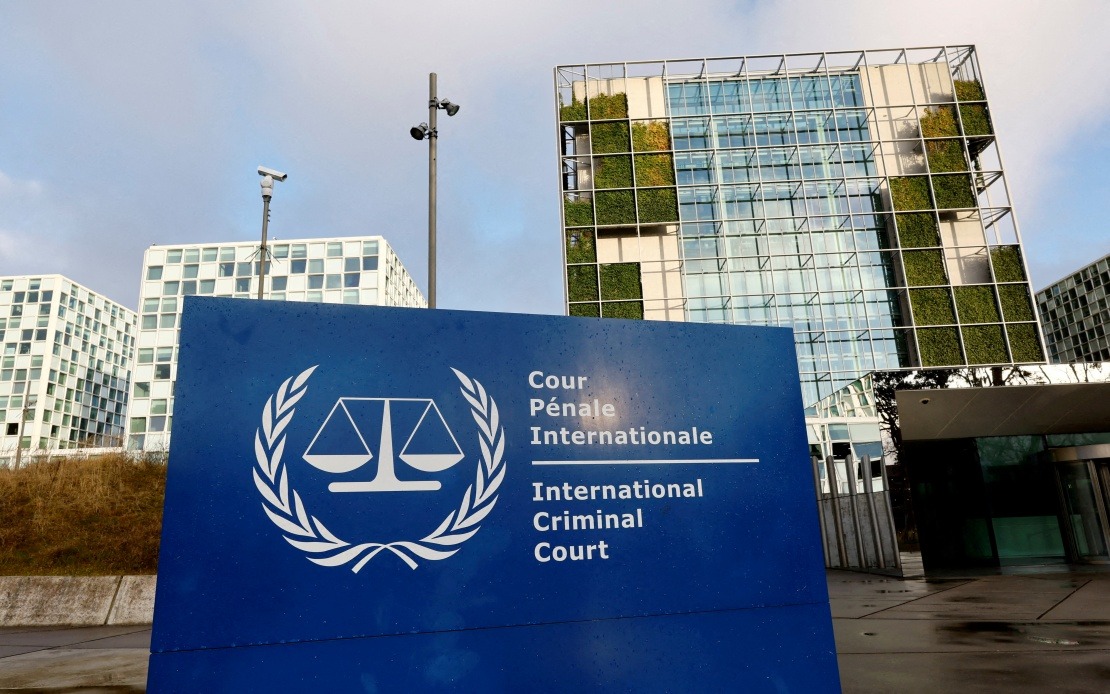
Venezuela has taken the dramatic step of formally withdrawing from the International Criminal Court, announcing its departure to the United Nations on Friday through Foreign Minister Felix Plasencia. The decision, made at the direction of acting President Delcy Rodriguez, represents a significant escalation in tensions between Caracas and the international justice system that has increasingly scrutinised the conduct of the Venezuelan government.
Plasencia articulated the government's position in stark terms, characterising the ICC as an institution fundamentally compromised by systemic bias. According to his statement, Venezuela views the court's operational patterns as revealing a deliberate concentration of investigations and prosecutions within Africa and Latin America—regions representing the Global South—while similar alleged violations elsewhere escape comparable scrutiny. This selective focus, Caracas argues, transforms what should be an equitable mechanism for international justice into a tool for perpetuating power imbalances between developed and developing nations.
The Venezuelan government frames its withdrawal as a principled stand against what it sees as the weaponisation of international law. The Foreign Ministry contends that the ICC's case selection betrays an unequal application of justice, one that reinforces existing hierarchies among nations rather than challenging them. By Venezuela's reasoning, the court's actions undermine national sovereignty and the right of peoples to self-determination, particularly those in the Global South who face disproportionate legal pressure while powerful nations operate with relative impunity.
This withdrawal occurs against the backdrop of an active ICC investigation into Venezuela's government for alleged crimes against humanity. The investigation focuses on the administration of former President Nicolás Maduro, examining claims that security forces and state actors committed systematic human rights abuses against opponents of the regime. The Caracas government categorically rejects these allegations, dismissing them as politically motivated accusations designed to delegitimise its authority.
The timing of Venezuela's departure is strategically significant. By formally leaving the court, the government eliminates a crucial avenue through which international prosecutors can pursue cases against current and former officials. The withdrawal effectively places suspected perpetrators beyond the court's jurisdiction, at least prospectively, though the ICC retains authority over crimes committed while Venezuela remained a member state.
Venezuela's departure reflects broader discontent within the Global South regarding international justice institutions. Many developing nations have expressed similar grievances about the ICC, arguing that its mandate and enforcement mechanisms reflect the interests and values of Western powers rather than genuine universal justice principles. This narrative resonates across Latin America and Africa, where governments have faced or fear ICC investigations into state conduct. Venezuela's explicit withdrawal adds weight to these critiques and may embolden other nations to reconsider their commitments to the court.
The Global South's scepticism toward the ICC has historical roots in colonialism and Cold War dynamics, when international legal institutions were often instruments of external pressure on weaker nations. Contemporary critics argue that this pattern persists, with the court functioning as a mechanism through which developed nations and their allies exert pressure on adversaries and rivals. Venezuela's withdrawal statement directly invokes this interpretation, framing the ICC as an institution that perpetuates rather than corrects global inequalities.
For Southeast Asian observers and policymakers, Venezuela's move carries particular resonance. Several countries in the region have experienced or remain vulnerable to international pressure regarding human rights investigations. The precedent of formal withdrawal demonstrates that nations can exit the ICC system entirely, albeit at diplomatic and reputational costs. However, it also raises questions about whether such exits strengthen or weaken the international legal order and what alternative accountability mechanisms might emerge if more nations follow Venezuela's path.
The investigation into Maduro's government has documented accusations ranging from extrajudicial killings to arbitrary detention and torture carried out by Venezuelan security services against political opponents and activists. Independent human rights organisations have corroborated many of these allegations through testimonies from victims and witnesses. However, the Venezuelan government maintains that such claims misrepresent events and constitute foreign interference in internal affairs, a position that shapes its decision to withdraw from ICC jurisdiction.
Venezuela's departure also reflects broader geopolitical tensions, particularly its alignment with nations that challenge Western-led international institutions. The government's rhetoric about bias and instrumentalisation aligns with similar critiques voiced by other countries seeking to reassert autonomy from international legal oversight. This positioning carries implications for Venezuela's diplomatic standing, potentially deepening its isolation from some quarters while strengthening ties with nations sharing its scepticism toward existing international structures.
The practical implications of Venezuela's withdrawal extend beyond symbolic gestures. Removing itself from the court's jurisdiction provides legal protection to government officials and security force commanders who might otherwise face prosecution. This calculation likely factored heavily into the government's decision, alongside the principled objections to the ICC's alleged bias. The withdrawal essentially places a legal shield between Venezuelan officials and international courts, though it does not protect them from potential prosecution in third countries or alternative judicial venues.
Moving forward, Venezuela's exit from the ICC raises questions about the court's legitimacy and effectiveness. If more nations withdraw citing similar concerns about bias, the institution's universal claims and enforcement capacity would deteriorate significantly. Conversely, the withdrawal might prompt reforms within the ICC aimed at addressing legitimate criticisms about geographical imbalance and ensuring more equitable application of its mandate across regions and geopolitical contexts.

