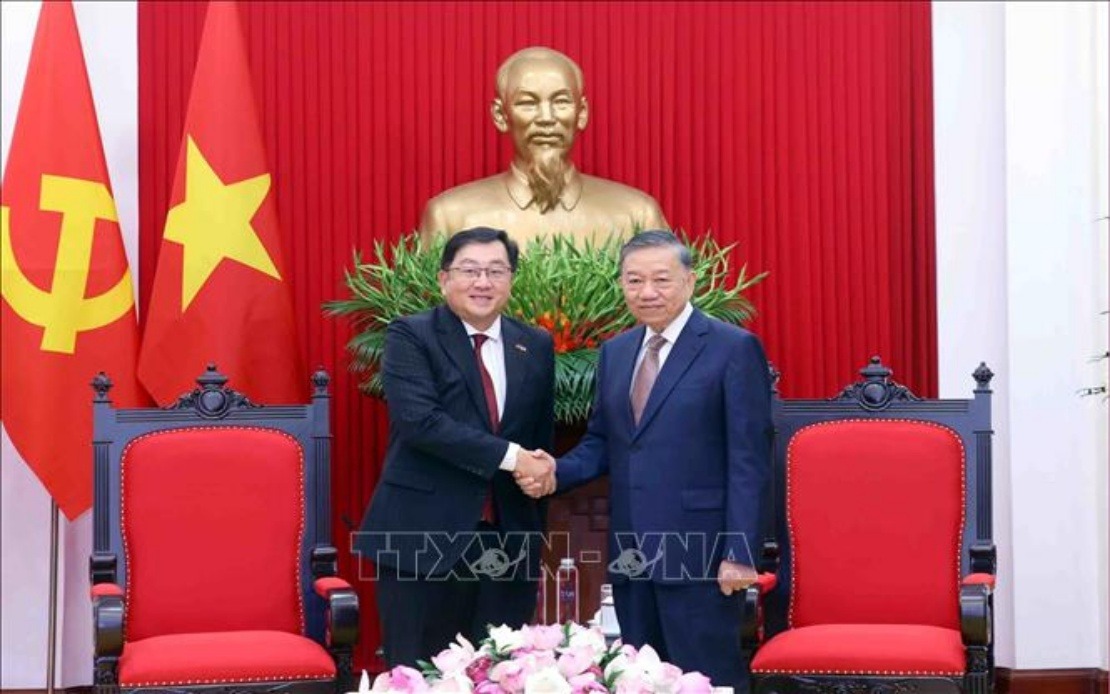
The relationship between Vietnam and Malaysia has entered a notably energetic phase, with Vietnamese President To Lam describing bilateral ties as increasingly dynamic and underpinned by genuine political confidence and expanding economic collaboration. During a meeting with departing Malaysian Ambassador Datuk Tan Yang Thai at the presidential office in Hanoi on Wednesday, Lam underscored Malaysia's strategic importance within Vietnam's broader foreign policy framework and reaffirmed his government's commitment to deepening the existing Comprehensive Strategic Partnership between the two Southeast Asian neighbours.
The Vietnamese leader extended personal regards to His Majesty Sultan Ibrahim, King of Malaysia, and Prime Minister Datuk Seri Anwar Ibrahim, whilst simultaneously extending formal invitations for both officials to visit Vietnam. In honouring the outgoing ambassador, Lam commended Tan's contributions during his tenure and expressed confidence that the diplomat would prove instrumental in Malaysia's future international engagements whilst continuing to nurture the bilateral relationship from his next posting.
The trajectory of political engagement between Hanoi and Kuala Lumpur has been marked by consistent high-level contact across multiple institutional channels. Regular exchanges involving party, state, government, and parliamentary delegations have created a robust framework for dialogue. These mechanisms have facilitated not only official diplomacy but also deepened understanding between decision-makers on both sides, establishing the trust necessary for addressing complex regional issues and coordinating positions within ASEAN forums.
Economic performance has emerged as a defining feature of the modern Vietnam-Malaysia relationship. The two-way merchandise trade reached US$10.8 billion during the first six months of 2026, representing a striking 40 per cent increase compared to the corresponding period in the previous year. This expansion reflects both the increasing integration of manufacturing and supply chains across Southeast Asia and growing consumer demand within both markets. The sustained momentum in bilateral commerce demonstrates resilience despite global economic uncertainties and validates the strategic economic complementarity between the two nations.
Malaysia's investment position in Vietnam remains prominently established. The country ranks as ASEAN's third-largest source of foreign direct investment and holds the tenth position globally among 154 countries and territories channelling capital into Vietnam. This substantial investment presence underscores Malaysian companies' confidence in Vietnam's economic fundamentals and growth trajectory. Malaysian investors have concentrated their activities across diverse sectors including manufacturing, real estate, financial services, and increasingly within the digital economy.
Both nations have identified convergent priorities that promise to shape their cooperation over the coming years. The twin domains of digital and green economic development have emerged as focal points, reflecting broader regional and global trends toward sustainable prosperity. Energy and electricity connectivity represents another area of mutual interest, particularly as Southeast Asia seeks to balance expanding power demands with environmental imperatives. Maritime cooperation carries particular significance given the region's geographic characteristics and the critical importance of sea lanes to regional commerce and security.
President Lam outlined a forward-looking agenda emphasising the consolidation of political trust through enhanced exchanges at all governmental levels and the thorough implementation of agreements already concluded between the two countries. He called for strengthened collaboration in defence and security matters, areas where Vietnam and Malaysia share common concerns about regional stability and maritime safety. The President also advocated for more balanced approaches to trade and investment facilitation, recognising that commercial relationships thrive when regulatory frameworks support genuine reciprocity and transparent rules-based engagement.
The technological and environmental sectors received particular emphasis in Lam's remarks regarding future cooperation. He advocated for deepened collaboration in digital economy development, green economic initiatives, scientific research, and technological innovation. These domains align with both nations' development strategies and the broader Asian imperative to create knowledge-intensive, sustainable economic models that generate employment whilst addressing climate change challenges.
Ambassador Tan's final official remarks reflected optimism tempered by realistic assessment of the bilateral relationship's potential. He expressed genuine admiration for Vietnam's developmental achievements in recent years and articulated Malaysia's conviction that both countries would prove instrumental in maintaining ASEAN's cohesion and resilience amid regional and international complexities. Tan emphasised Malaysia's commitment to expanding cooperation, particularly within the digital and green economy sectors alongside renewable energy development, domains where complementary capabilities could generate mutual benefit.
The diplomat highlighted his personal commitment to advancing Vietnam-Malaysia ties, drawing upon professional expertise accumulated throughout his career whilst acknowledging his deep affection for Vietnam developed during his ambassadorial tenure. By conveying the Malaysian King's formal invitation to President Lam for a state visit, Tan demonstrated the continuation of high-level engagement that characterises the relationship. Such reciprocal invitations signal mutual respect and commitment to maintaining the personalised dimension of statecraft that remains crucial to regional diplomacy despite the proliferation of digital communication channels.
For Malaysia and Vietnam, the strengthening partnership holds implications extending beyond bilateral interests into the broader Southeast Asian context. As ASEAN navigates complex geopolitical currents and economic transitions, the deepening cooperation between these two significant regional players provides ballast for collective initiatives. The emphasis on digital transformation, green development, and maritime cooperation reflects how both nations are positioning themselves within emerging regional architecture focused on sustainable and inclusive growth.
The trajectory outlined in the presidential meeting suggests Vietnam and Malaysia view their relationship not as a settled achievement but as an ongoing process requiring continuous investment and adaptation. The ambitious targets outlined—particularly regarding digital economy collaboration and renewable energy partnership—indicate both governments recognise substantial unrealised potential. As outgoing Ambassador Tan concludes his mission and bilateral mechanisms continue their work, the momentum generated through robust trade growth and expanding cooperation frameworks appears positioned to sustain the dynamism that President Lam characterised as increasingly evident in Vietnam-Malaysia relations.

