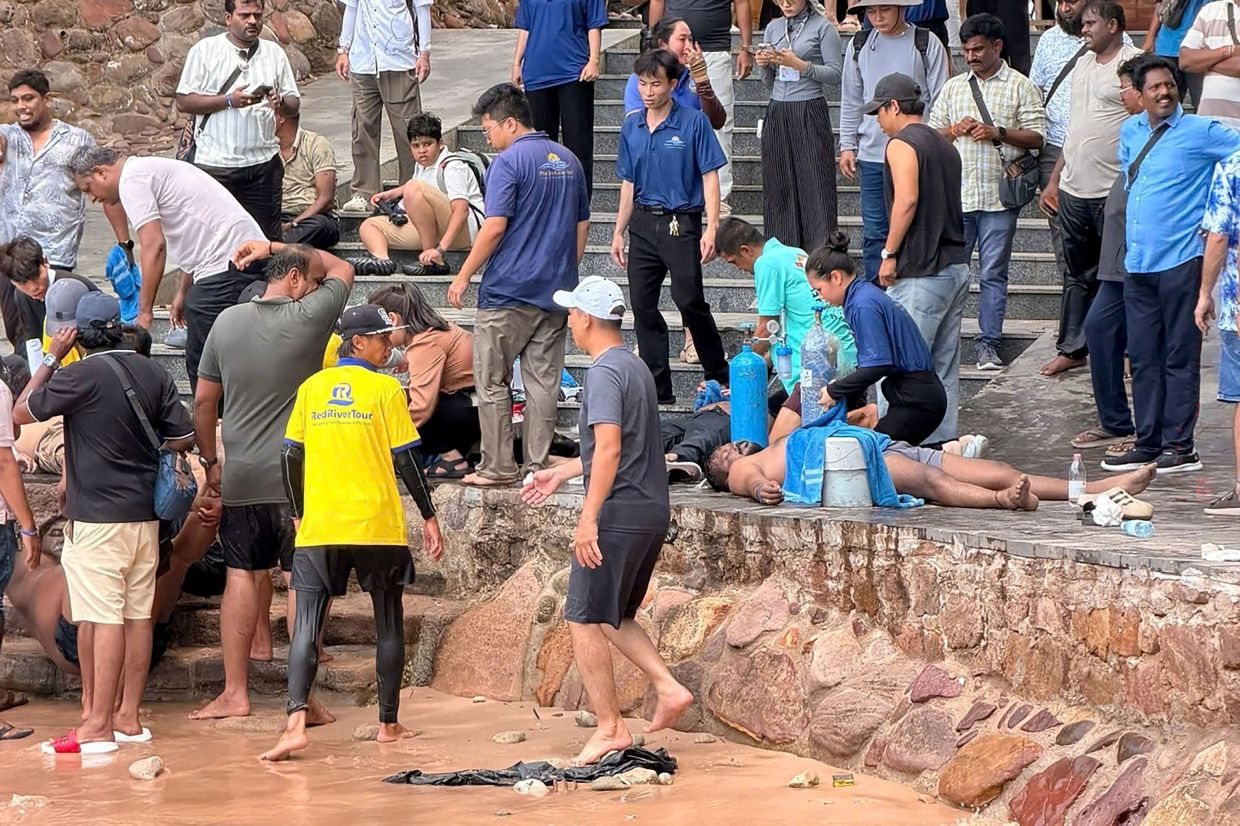
Vietnam's government moved swiftly into crisis management mode on July 11 following a devastating maritime accident off Phu Quoc Island that claimed the lives of 15 Indian tourists. The Prime Minister issued urgent directives to multiple ministries and local authorities, signalling the country's commitment to investigating the tragedy and preventing similar incidents in the future. The incident has put renewed scrutiny on Vietnam's water transport safety standards, a critical concern for a nation that depends heavily on tourism revenue and maritime activities.
The speedboat carrying 32 Indian tourists, along with four crew members and tour guides, capsized near Hon May Rut Ngoat in the Phu Quoc Special Zone. The vessel's sudden submersion resulted in 15 deaths comprising 13 men and two women, while rescue teams successfully pulled 21 survivors from the waters. The rapid casualty toll underscores the unpredictable dangers inherent in speedboat operations around the island, which attracts thousands of international visitors annually seeking marine adventures and water-based tourism experiences.
In his official dispatch, the Prime Minister extended formal condolences to the bereaved families and emphasized the government's responsibility to provide comprehensive medical care for the injured survivors. The directive specifically instructed all relevant ministries and agencies to marshal every available medical resource and pharmaceutical supply to treat the wounded and mitigate further loss of life and property damage. This immediate humanitarian response represents the standard protocol for major disasters affecting foreign nationals on Vietnamese soil, where reputational management intersects with genuine concerns for victim welfare.
An Giang Province, the administrative authority overseeing Phu Quoc Island, received designation as the lead agency responsible for coordinating the investigative effort. Provincial officials were tasked with examining the circumstances surrounding the capsizing in meticulous detail, identifying systemic failures, and implementing corrective measures to eliminate gaps in oversight. This delegation reflects Vietnam's decentralized approach to crisis management, placing responsibility on local authorities who possess intimate knowledge of regional maritime conditions and operational practices.
The Ministry of Public Security was assigned the critical function of conducting a forensic investigation into the accident's root causes. Authorities must determine whether mechanical failure, human error, adverse weather conditions, or regulatory violations contributed to the disaster. The ministry also bears responsibility for pursuing strict legal action against any individuals or organizations found culpable, signalling that accountability rather than mere bureaucratic shuffling will guide the response. This investigative burden is particularly significant given ongoing questions about enforcement of maritime safety standards in Vietnamese waters.
Beyond the immediate investigation, the Ministry of Construction received instructions to conduct comprehensive safety audits of maritime and inland waterway operations throughout the region where the accident occurred, as well as comparable areas facing similar environmental and operational challenges. This broader review suggests official recognition that isolated accident investigation may prove insufficient without systemic examination of safety protocols, vessel maintenance standards, crew training requirements, and passenger capacity limits. Such measures could have implications across Southeast Asia's tourism industry, where speedboat operations operate under varying regulatory frameworks.
The Ministry of Foreign Affairs was instructed to establish close coordination with the Indian Embassy in Vietnam to manage consular affairs, citizen protection matters, and broader diplomatic considerations stemming from the tragedy. This coordination channel proves essential for managing bilateral relations during a crisis involving significant loss of Indian life on Vietnamese territory. The Indian Embassy subsequently released identification details for all 32 passengers aboard the vessel and established two assistance contact points in Ho Chi Minh City and Hanoi to support affected nationals and their families.
For Malaysian readers and Southeast Asian observers, this incident carries important lessons about tourism safety standards across the region. Phu Quoc Island has emerged as a major destination competing directly with Malaysian attractions like Langkawi and Tioman Island. The speedboat capsizing raises pertinent questions about whether sufficient regulatory oversight and enforcement mechanisms exist across regional maritime tourism operations. Malaysia's own tourism sector relies heavily on water-based activities, and incidents like this underscore the necessity for consistent safety protocols, regular vessel inspections, and comprehensive crew training programmes.
The tragedy also reflects broader patterns of tourism expansion in Southeast Asia occurring at a pace that sometimes outstrips corresponding safety infrastructure development. Demand for experiential tourism activities, particularly among affluent Indian tourists who represent a growing demographic for Southeast Asian destinations, has driven rapid expansion of speedboat operations and similar adventures. However, infrastructure improvements and regulatory compliance often lag behind commercial growth, creating conditions where accidents become possible despite available technology and best practices.
Vietnam's administrative response through coordinated ministerial action demonstrates how governments can mobilize institutional resources during crises. Yet implementation quality ultimately determines whether official directives translate into meaningful safety improvements. The investigation's findings will prove crucial not only for determining accountability but also for shaping maritime safety policies affecting all Southeast Asian nations competing for tourism market share. Regional authorities should monitor the Vietnamese inquiry's outcomes and recommendations closely, as lessons learned could influence safety standards across comparable operations throughout the region.
For the Indian government and families of victims, the Vietnamese response provides some assurance that the incident is receiving high-level attention and that perpetrators of any negligence will face serious consequences. However, the immediate priority remains comprehensive victim support, transparent communication about findings as the investigation progresses, and concrete preventive measures implemented before tourism operations resume in the region. The incident serves as a sobering reminder that spectacular natural environments and exciting tourist experiences require equally rigorous safety management to protect visitors and maintain public confidence in regional tourism infrastructure.

