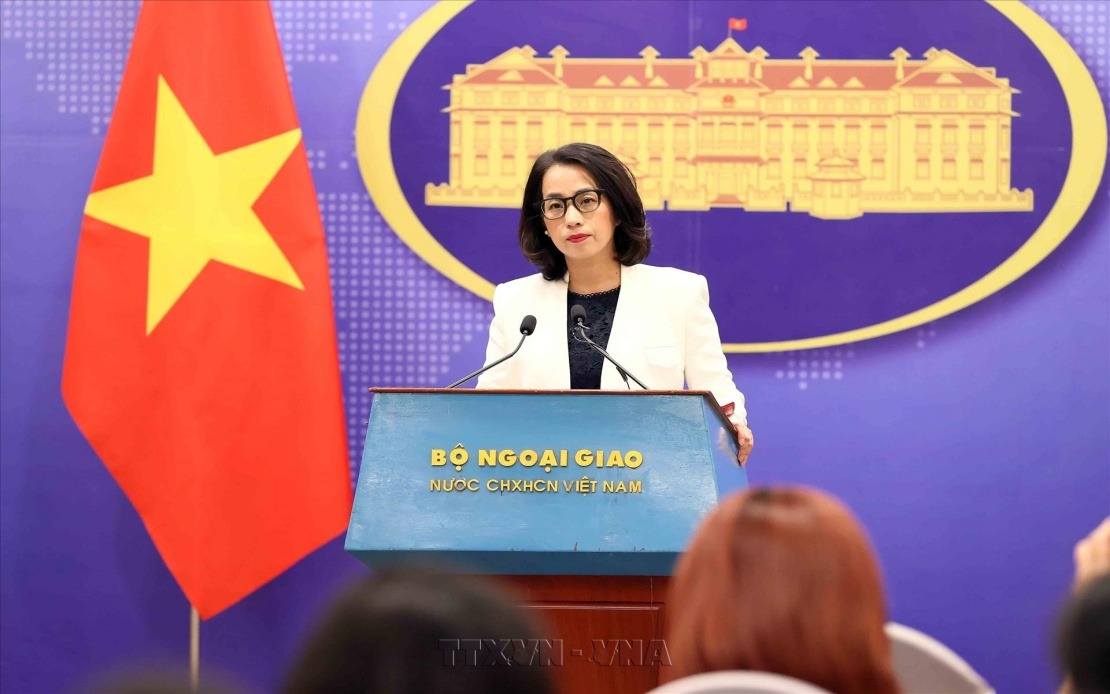
Vietnam's government has mounted a spirited defence of its labour practices and regulatory framework, asserting that it maintains robust protections against forced labour while meeting its obligations under international conventions. Foreign Ministry spokesperson Pham Thu Hang conveyed this position in response to escalating trade tensions with Washington, which recently expanded tariff investigations under Section 301 authority to encompass a broader range of trading partners with a newly imposed 12.5 per cent duty.
The timing of Vietnam's statement reflects broader anxieties within Southeast Asia regarding the unpredictability of US trade policy. As one of the region's most integrated economies into global supply chains and a significant beneficiary of manufacturing operations relocating from China, Vietnam faces particular exposure to protectionist measures. The country's protests against the tariff decisions signal both diplomatic displeasure and concern that even compliant nations may face economic penalties in an increasingly fractious trade environment.
Central to Hanoi's counterargument is Decree 292/2026/ND-CP, enacted on July 22, 2026, which prohibits the importation of goods wholly or partially extracted or manufactured using forced labour. This legislative action demonstrates that Vietnam has taken concrete steps beyond rhetorical commitments, establishing mechanisms to police its import regime and prevent complicity in labour exploitation through its supply chains. The decree represents a proactive measure that aligns Vietnamese domestic law with international expectations and positions the country as attentive to global labour governance standards.
Vietnam's compliance record with International Labour Organisation conventions and various free trade agreements forms the substantive foundation of its defence. The country is party to multiple bilateral and multilateral trade arrangements that contain labour provisions, and Hanoi argues that it has demonstrated genuine commitment to enforcement rather than superficial adherence. Vietnamese authorities maintain that their legislative and administrative efforts to prevent, reduce, and eliminate forced labour practices deserve fuller recognition in trade negotiations than they have thus far received from Washington.
The dispute underscores a recurring tension in contemporary trade relations: the difficulty of calibrating tariff responses proportionate to actual compliance records. Foreign Ministry spokesperson Pham Thu Hang characterised the USTR's decision as insufficiently grounded in on-the-ground realities, suggesting that American officials have proceeded with protective measures without fully accounting for the actual labour standards framework that Vietnam has constructed and operates. This characterisation reflects frustration that good-faith compliance efforts may be discounted in favour of broader strategic trade objectives.
For Malaysian observers, this dispute carries particular relevance. Malaysia itself faces ongoing international scrutiny regarding labour practices in sectors such as palm oil production, manufacturing, and migrant worker treatment. Vietnam's attempt to demonstrate compliance through legislative action and regulatory enforcement offers a potential model, though it also illustrates the limitations of domestic measures when trading partners have shifted toward more protectionist stances. The willingness of major economies to apply tariffs despite professed compliance may signal that purely regulatory responses may prove insufficient to address trade partners' concerns.
Vietnam's appeal to bilateral cooperation and constructive engagement reflects the diplomatic approach favoured by Southeast Asian nations when facing pressure from larger trading partners. Rather than confrontation, Hanoi has emphasised its willingness to work collaboratively with the United States while requesting that American policymakers incorporate the full range of Vietnamese compliance measures into their tariff calibration decisions. This strategy seeks to preserve the relationship while creating space for future tariff adjustments should Washington's review process acknowledge Vietnam's efforts.
The underlying challenge involves verification and attribution of responsibility within global supply chains. Consumer goods, electronics components, and textiles produced in Vietnam often involve inputs sourced from multiple countries or rely on labour management practices that may involve subtle forms of coercion difficult to detect through standard compliance audits. Vietnam's assertion of strict prohibition on forced labour nonetheless cannot guarantee that all production occurring within its borders meets standards acceptable to increasingly vigilant Western consumers and their governments.
The broader context involves shifting American trade strategy and the Biden administration's efforts to address perceived vulnerabilities in supply chain resilience and labour standards globally. Vietnam's inclusion in Section 301 investigations reflects broader questioning about the quality of labour protections across trading partners rather than specific allegations of egregious forced labour practices. However, tariff increases create material incentives for Vietnamese exporters to reduce labour costs, potentially undermining the very standards that the country has sought to establish.
Vietnam's diplomatic manoeuvre aims to reframe the discussion around documented compliance rather than hypothetical risks. By highlighting Decree 292/2026/ND-CP and its commitment to ILO standards, Hanoi attempts to shift the burden of proof onto American authorities to demonstrate specific deficiencies rather than operating from presumptions of non-compliance. This rhetorical strategy recognises that trade disputes increasingly involve labour and environmental standards as justifications, requiring governments to maintain credible domestic regulatory frameworks that can withstand external scrutiny.
For Southeast Asian economies more broadly, Vietnam's experience demonstrates both the utility of regulatory action and its potential limitations in an environment where protectionist impulses may override factual assessments of compliance. Malaysia, Thailand, and Indonesia should observe how Vietnam's legislative measures and diplomatic engagement ultimately influence American tariff decisions, as their own labour standards frameworks may face comparable pressure from Western trading partners increasingly inclined to weaponise labour concerns within trade disputes. The outcome of Vietnam's current engagement with the USTR will likely establish expectations and precedents affecting the entire region's approach to labour governance and international trade relations.

