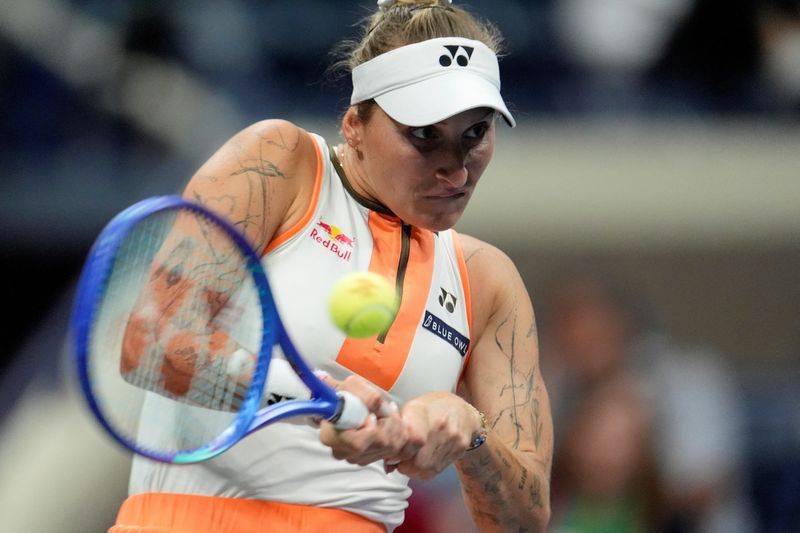
The tennis world is grappling with renewed scrutiny of its anti-doping framework following the International Tennis Integrity Agency's decision to impose a four-year ban on former Wimbledon champion Marketa Vondrousova for failing to comply with an out-of-competition test attempt in December. The Czech player's suspension, formally announced on Monday, has become a flashpoint in an increasingly contentious debate about how sport balances the integrity of competition against player welfare and privacy rights—a tension particularly acute for female athletes.
Vondrousova's case centres on her refusal to provide a sample when a testing officer arrived unannounced at her home at 8:15 p.m. In a statement released in April, the 26-year-old explained that the late-night visit from an unidentified person demanding immediate compliance represented a serious violation of her personal safety and privacy. She described reaching a breaking point after enduring months of physical and mental strain, and her concerns were amplified by historical context: in 2016, her compatriot Petra Kvitova survived a knife attack at her own residence, an incident that has understandably heightened anxiety among female players about unexpected home visits from strangers.
The Professional Tennis Players Association has seized upon Vondrousova's situation to escalate its longstanding campaign for meaningful athlete representation in anti-doping decision-making. In a statement, the PTPA acknowledged that without commenting on the merits of the specific case, the severity of the sanction—a four-year suspension for an athlete who has never tested positive—warrants serious reflection by the sport. The association emphasised that while testing itself remains necessary to maintain competitive integrity, players deserve genuine voice in formulating the rules that govern them, rather than remaining passive subjects of systems imposed from above.
This latest controversy arrives amid broader frustration over perceived inconsistencies in how anti-doping cases are handled at the highest levels of professional tennis. High-ranking players including Jannik Sinner and Iga Swiatek faced far more lenient outcomes for positive test results, drawing accusations of preferential treatment based on ranking or profile. The disparity between Vondrousova's four-year ban for non-compliance and the minimal sanctions imposed on other prominent players has fuelled perceptions that tennis authorities apply double standards, further eroding trust in the system's fairness and transparency.
The PTPA's position reflects a broader philosophical shift among player advocates who distinguish between supporting rigorous testing to protect clean sport and challenging the current structure's approach to implementation. Last year, the association filed legal action against tennis governing bodies, alleging that their random testing protocols violate players' fundamental privacy rights. This ongoing litigation contextualises the Vondrousova case not as an isolated incident but as symptomatic of systemic tensions between the sport's anti-doping objectives and athlete autonomy.
Tennis authorities, led by International Tennis Integrity Agency CEO Karen Moorhouse, defend the current framework by pointing to its alignment with World Anti-Doping Agency standards applied uniformly across international sport. Moorhouse stated that case determinations rest exclusively on factual and evidentiary grounds, with no consideration given to a player's ranking, nationality, or public profile. She acknowledged that testing procedures impose genuine burdens on athletes already managing extraordinary pressure and public scrutiny inherent to professional competition, yet she maintained that unpredictable testing remains essential to preserve competitive integrity and protect the interests of clean athletes.
Regarding safety concerns specifically raised by female players, Moorhouse outlined protocols designed to protect both athletes and testing officials. She emphasised that testers receive comprehensive training and carry identification at all times, with additional verification methods available to players who doubt an officer's credentials. The ITIA also noted that the gender of testing witnesses is carefully matched to players to ensure comfort and appropriateness. However, these assurances have not fully assuaged anxieties, particularly given the psychological impact of unannounced late-night visits to residential addresses, an issue that disproportionately affects women players confronting genuine safety risks.
The independent tribunal that reviewed Vondrousova's case ultimately upheld the principle that unpredictable testing at any time and location is fundamental to preventing doping violations and maintaining sport integrity. This ruling reaffirms the anti-doping authorities' legal position while simultaneously illustrating the philosophical divide between those who prioritise testing comprehensiveness and those who believe current protocols inadequately balance athlete welfare. Moorhouse reiterated that the suspension serves as a cautionary reminder to all players that test refusal carries substantial consequences, effectively signalling that the sport will not compromise its enforcement approach.
For Malaysian and Southeast Asian tennis followers, this case carries particular relevance given the region's growing investment in developing tennis talent and hosting international tournaments. The Vondrousova precedent establishes that even world-ranked champions face severe consequences for perceived non-compliance, setting expectations for how regional players might be treated within the same system. As Southeast Asian tennis develops greater depth and international competitiveness, athletes and their advisors must navigate these anti-doping protocols with careful attention to both their legal obligations and their personal safety considerations.
Vondrousova retains the option to appeal her suspension to the Court of Arbitration for Sport, potentially providing an opportunity to challenge the proportionality of the sanction and revisit safety concerns. Her case will likely influence broader discussions within professional tennis about reforming testing procedures to address legitimate player concerns without undermining anti-doping objectives. The outcome may ultimately determine whether tennis authorities demonstrate willingness to collaborate with players in redesigning protocols that protect both competitive integrity and athlete welfare, or whether they maintain that current systems, despite their friction, remain non-negotiable.
Meanwhile, Vondrousova's injury-enforced absence from competition since January has rendered the practical implications of her ban less immediately apparent, though the suspension fundamentally alters her career trajectory and earning potential. Her case exemplifies how anti-doping enforcement, while essential to sport's credibility, must grapple with the human dimensions of implementation—particularly when procedures intended to protect competitive fairness instead generate fear and undermine the safety of the athletes the system purports to serve.

