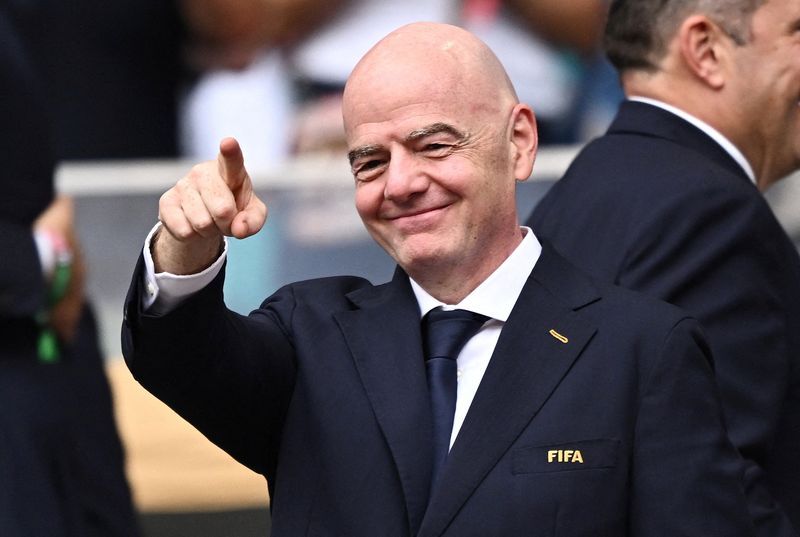
The Football Association of Wales has formally withdrawn its backing for FIFA President Gianni Infantino's candidacy for the 2027-2031 term, marking a significant blow to the Swiss administrator's previously assured path to re-election. The Welsh federation's decision follows the spectacular implosion of an ambitious FIFA scheme to raise up to $4.2 billion by selling approximately 20 per cent of a newly created entity responsible for overseeing major competitions, including the World Cup. The plan's collapse this week represents a watershed moment in world football governance, with implications that extend far beyond the immediate boardroom politics of the sport's international hierarchy.
Infantino's privatization proposal met with fierce and coordinated resistance from multiple stakeholders across world football. The scheme sought to unlock substantial capital by offering private investors a significant minority stake in the commercial machinery that generates revenue from FIFA's most prestigious tournaments. Proponents had framed the initiative as a modernization effort that would unlock financial resources for investment in the sport globally. However, opposition from powerful confederations, national associations, and other stakeholders proved insurmountable, forcing FIFA to abandon the initiative before it could advance further. The rapid retreat signals that even FIFA's leadership underestimated the depth of institutional resistance to such a fundamental restructuring of the organization's financial architecture.
Wales' formal statement articulated a comprehensive indictment of Infantino's stewardship, citing failures in governance, institutional processes, leadership capacity, organizational values, and stakeholder management. The Welsh FA emphasized that Infantino's handling of the privatization proposal demonstrated a failure to prioritize the interests of football itself—the foundational principle upon which international sport governance ostensibly rests. By withdrawing support, Wales positioned itself as the first national federation willing to publicly challenge Infantino's continued leadership, potentially opening the door for other member associations to voice similar concerns ahead of the presidential election process.
Infantino's position has deteriorated markedly in recent days as major confederations have withdrawn their confidence. UEFA, the European governing body that spearheaded opposition to the privatization plan, welcomed FIFA's decision to abandon the initiative but stopped short of confirming reports that it intends to pursue legal action against FIFA over the matter. More significantly, UEFA has issued a document preservation order, a procedural step that prevents the destruction of emails, files, and other data while an investigation is anticipated or underway. This administrative action suggests that UEFA may be preparing for potential litigation and signals serious institutional concern about how FIFA's decision-making processes operated regarding the commercial rights proposal.
CONCACAF, the confederation responsible for North and Central American football, similarly announced on Saturday that it had lost confidence in Infantino's leadership. The combined withdrawal of support from UEFA and CONCACAF—two of FIFA's most influential regional bodies—represents an unprecedented challenge to an incumbent president. These confederations collectively represent dozens of national associations with substantial voting power at FIFA's Congress, where presidential elections occur. Their public dissatisfaction with Infantino's tenure creates a framework within which other federations might feel emboldened to voice criticism or withhold support.
Infantino's path to the FIFA presidency has been remarkably smooth since he succeeded Sepp Blatter in 2016. He secured re-election twice without facing meaningful opposition, suggesting consolidated control over world football's governing structure. His announcement in April of his intention to contest a fourth consecutive term appeared to signal another uncontested victory. However, the backlash surrounding the failed privatization scheme has exposed underlying tensions and dissatisfaction among FIFA's membership that remained dormant during his unopposed elections. Experts believe the controversy surrounding the commercial rights proposal has fundamentally altered the political landscape ahead of the March Congress scheduled for Morocco.
The timing of this institutional rebellion carries particular significance for Southeast Asian football interests. Malaysia and other regional nations ultimately depend on FIFA's decisions regarding tournament structures, broadcasting rights, and financial distributions that flow from the organization's commercial operations. A destabilized FIFA presidency during a period of competitive tension within its governance structures could create unpredictability in decision-making affecting regional federations. The outcome of the March Congress will likely shape FIFA's strategic direction, including potentially significant changes to how international football competitions are organized and financed in the coming decade.
Infantino's apparent miscalculation regarding the privatization plan reveals important lessons about institutional power dynamics within FIFA. The initiative represented a top-down proposal that failed to secure sufficient buy-in from the confederation level before advancing publicly. Rather than building consensus through consultation with major stakeholder groups, FIFA appears to have presented the scheme as largely settled policy, triggering defensive reactions from powerful constituencies concerned about preserving their institutional influence and the sport's traditional governance structures.
The broader implications of this crisis extend to questions about FIFA's strategic direction and governance philosophy. The failed privatization attempt raises fundamental questions about whether FIFA should operate as a quasi-commercial enterprise optimizing financial returns or as a sporting organization primarily accountable to its member federations. These competing visions have generated the current institutional conflict. Member associations, confederations, and even legal authorities increasingly scrutinize FIFA's governance practices, reflected in UEFA's document preservation order and the broader withdrawal of confidence signals.
As the situation develops ahead of March's Congress in Morocco, football organizations worldwide will monitor how Infantino responds to this unprecedented institutional challenge. Whether he chooses to step aside voluntarily, attempt to rehabilitate his standing through governance reforms, or contest the election despite diminished support remains unclear. What appears certain is that his assumption of an automatic re-election has evaporated, potentially opening space for alternative candidates or forcing him to campaign actively to retain his position. This transformation in FIFA politics carries implications extending well beyond the immediate question of presidential succession.

