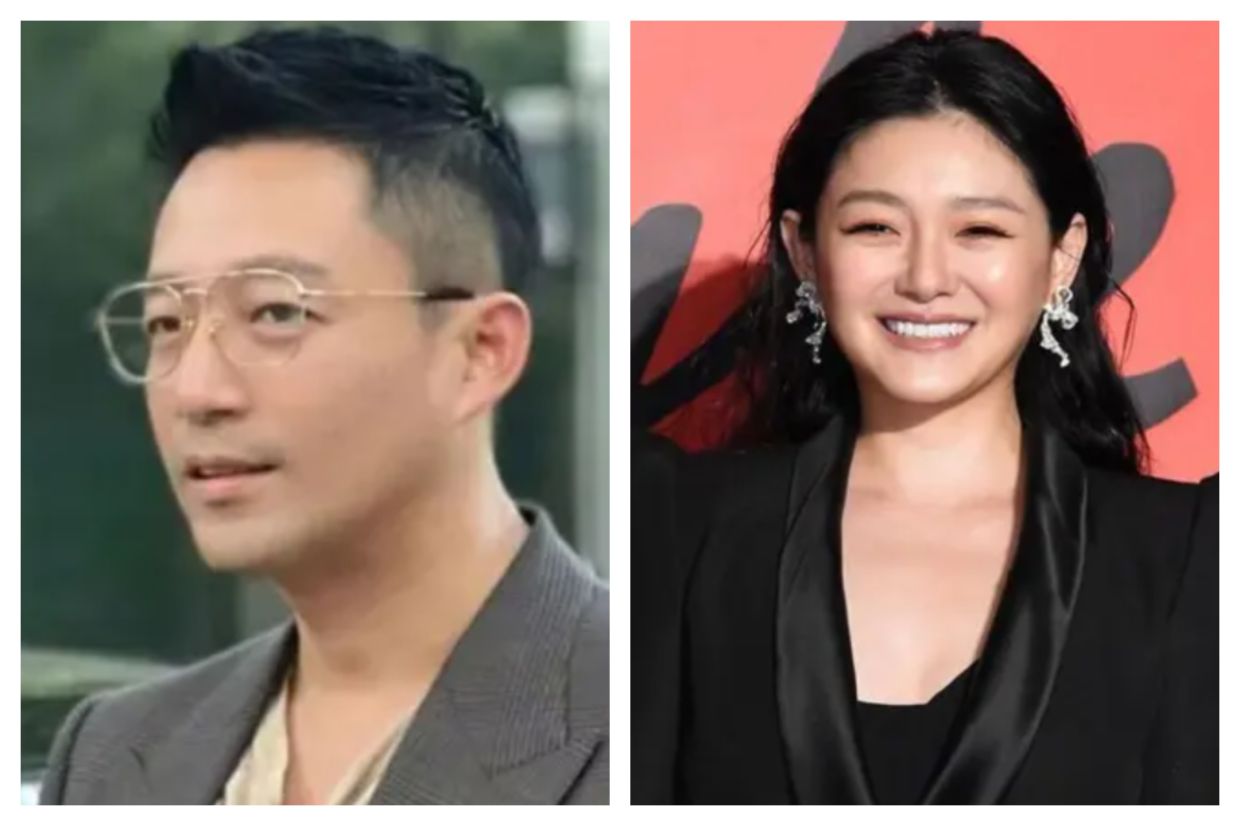
Chinese entrepreneur Wang Xiaofei has stepped forward to clarify the swirling controversy surrounding the estate of his late ex-wife, acclaimed Taiwanese actress Barbie Hsu, affirming his acceptance of the legal framework governing her inheritance distribution. Through an official statement released by his representatives on July 8, Wang addressed mounting speculation that had gripped regional media outlets, asserting that he respects the statutory entitlement of Hsu's second husband, Korean entertainer Koo Jun-yup—professionally known as DJ Koo—to receive one-third of her substantial estate.
The death of Hsu from pneumonia in 2025 triggered a cascade of inheritance-related disputes and unfounded rumours that have placed considerable emotional strain on the family. The actress's passing marked the conclusion of a complex relationship narrative that spanned decades and multiple marriages. Having divorced Wang after an 11-year marriage that produced two children in 2021, Hsu subsequently rekindled a romantic relationship with Koo, whom she had originally met in 1998. The couple eventually formalized their union, though their time together proved tragically brief.
Under Taiwanese inheritance law, the distribution of Hsu's estate follows a prescribed formula designed to protect the interests of multiple stakeholders. According to Wang's representatives, two-thirds of the actress's total assets have been allocated to her two minor children and are being held in protective trust arrangements. This legally mandated division ensures that the younger generation retains control of the majority of their mother's wealth during their formative years. To further safeguard their interests, Wang has recently petitioned the courts to appoint a specialized legal representative with explicit authority to defend the children's rights throughout the probate process.
The remaining third of Hsu's estate rightfully belongs to DJ Koo under prevailing inheritance statutes. Wang's statement notably emphasizes that he harbours no objections to this allocation and respects whatever decisions Koo elects to make regarding his inherited share. This posture demonstrates a measured and legally informed approach to a potentially contentious family matter, signalling Wang's commitment to honouring established legal frameworks rather than contesting lawful distributions. The entrepreneur's willingness to accept the statutory scheme reflects a pragmatic acknowledgment of both legal realities and the broader principle that inheritance disputes, if contested, would likely protract family suffering and complicate the estate's administration.
A significant source of public speculation has centred on allegations that Hsu's residential property faced imminent auction due to accumulated mortgage arrears. Taiwanese tabloid coverage suggested that Hsu's elderly mother faced eviction from the family home, creating a narrative of financial instability and familial discord. However, Wang's representatives have forcefully contradicted these claims, providing concrete details about ongoing mortgage servicing. They confirmed that since Hsu's death, Wang has consistently maintained all mortgage payments on the property. Critically, the legal responsibility for this debt has been transferred to the trust funds established for the children, ensuring that mortgage obligations do not deplete the broader estate and that the minors inherit real property unencumbered by payment arrears.
Addressing another sensitive family matter, Wang's team categorically denied allegations that Hsu's mother had been pressured to vacate the residence. The representatives explicitly stated that no such request has been issued and that Hsu's mother remains welcome to reside in the property indefinitely. This clarification becomes particularly significant given cultural expectations in East Asian societies regarding filial responsibility and the care of aging parents. By publicly affirming his commitment to housing Hsu's mother, Wang has demonstrated that inheritance disputes need not result in the destabilization of vulnerable family members' living circumstances.
Taiwanese media organizations have estimated Hsu's total estate to be worth approximately 600 million yuan, equivalent to roughly RM361 million in Malaysian currency. This valuation encompasses a diverse portfolio of assets including high-value real estate, notably a penthouse unit and a property located at the National Taiwan Museum of Fine Arts, alongside considerable financial assets that Hsu received as part of her divorce settlement from Wang. For Malaysian readers accustomed to considering local property values, this figure underscores the scale of wealth accumulated by prominent entertainment industry figures in the greater China region and the complexity of cross-border and multi-jurisdictional asset management.
The administration of Hsu's inheritance is currently proceeding under the supervision of a court-appointed legal professional, a procedural safeguard intended to ensure transparency and minimize the potential for disputes among beneficiaries. This judicial oversight provides an institutional mechanism for resolving any contested claims and for managing the distribution of assets according to applicable law. The involvement of the court system transforms what might otherwise have been a purely private family matter into one governed by established legal procedures designed to protect all stakeholders.
Wang's representatives have issued an appeal to media organizations to refrain from publishing unverified claims and speculative narratives regarding the estate's distribution. The family has emphasized that rumour-mongering has caused considerable distress and has potentially complicated efforts to resolve the matter expeditiously and amicably. This statement reflects a growing tension between legitimate public interest in high-profile cases and the privacy interests of grieving families navigating complex inheritance matters. The episode illustrates how celebrity deaths in the region, particularly involving substantial estates and remarriage scenarios, generate disproportionate media attention that can amplify family tensions rather than illuminate substantive issues.

