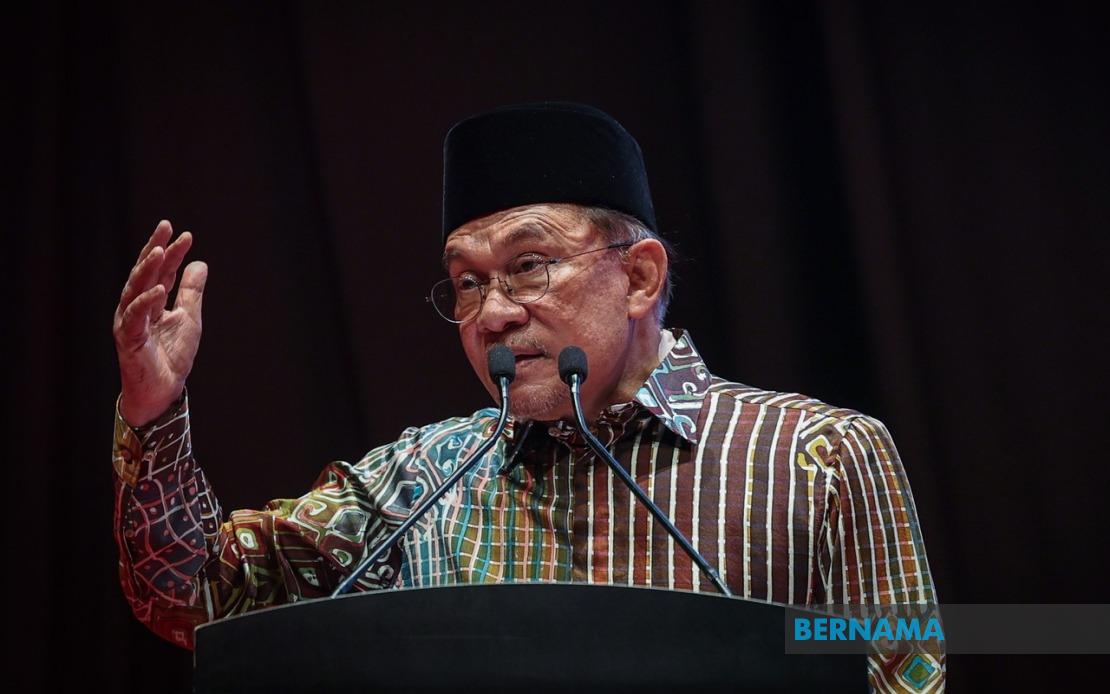
Prime Minister Datuk Seri Anwar Ibrahim has urged Malaysia's waqf institutions and Islamic dakwah organisations to harness the potential of modern technology, including artificial intelligence and digitalisation, to maintain their relevance in an increasingly globalised world. Speaking at the closing ceremony of the 2026 International Waqf Dakwah Convention at the Kuala Lumpur Convention Centre, Anwar emphasised that technological advancement alone is insufficient without a parallel commitment to strengthening religious faith, ethical standards and humanitarian principles across Malaysian society.
The Prime Minister articulated a central tension in contemporary Islamic institutional development: the imperative to modernise in order to remain competitive and effective, balanced against the risk that unchecked technological adoption could undermine the spiritual and moral foundations that give these organisations purpose and legitimacy. This challenge extends beyond Malaysia's borders, reflecting broader concerns across the Muslim world about maintaining religious and cultural integrity while navigating digital transformation. Anwar's framing suggests that the question is not whether to adopt AI and advanced technologies, but how to do so in ways that reinforce rather than corrode the values these institutions exist to serve.
Centrally, Anwar warned that artificial intelligence, information technology, quantum computing and related innovations pursued without ethical guardrails pose genuine dangers to human dignity, ethical standards and social cohesion. The notion that technological progress automatically benefits society is rejected in favour of a more cautious, values-first approach. This perspective carries particular weight in Malaysia's context, where rapid digitalisation and economic modernisation have sometimes raised concerns about cultural erosion and the dilution of traditional values among younger generations. The Prime Minister's rhetoric suggests that waqf bodies and dakwah movements have a special responsibility to model how institutions can embrace innovation while remaining anchored to foundational principles.
Anwar invoked the metaphor of reaching for the skies while remaining rooted to the ground—a philosophical stance that attempts to transcend the false choice between tradition and modernity. Remaining grounded, according to this vision, requires deliberate investment in strengthening faith and religious conviction, cultivating moral character and personal integrity, preserving cultural heritage and language proficiency, maintaining a clear sense of national and local historical identity, and upholding established moral principles. This formulation suggests that technological competence must be paired with what might be termed institutional humility: a recognition that waqf and dakwah organisations exist within specific cultural and religious contexts that should shape how they apply new tools.
The Prime Minister commended the Malaysian Islamic Welfare Organisation (PERKIM) and the Regional Islamic Da'wah Council of Southeast Asia and the Pacific (RISEAP), under the leadership of Sarawak Premier Tan Sri Abang Johari Tun Openg, for pursuing what he characterised as a progressive yet prudent approach to dakwah work. This characterisation is significant because it positions these organisations as models for how Islamic institutions in the region can evolve their messaging and methods without abandoning core principles. RISEAP's regional scope underscores that these concerns about balancing modernisation with values are not uniquely Malaysian but shared across Southeast Asia's Muslim-majority and Muslim-minority societies. The emphasis on addressing Islamophobia and strengthening unity among the global Muslim community suggests that institutional modernisation is partly motivated by the need to respond more effectively to external challenges and misconceptions about Islam.
The convention itself adopted three substantial resolutions that translate Anwar's philosophical framework into concrete action items. The first involves establishing a working consortium dedicated to fortifying waqf institutions across institutional and potentially sectoral boundaries. This suggests recognition that waqf bodies cannot modernise in isolation but require collaborative platforms for sharing expertise, resources and best practices. The second resolution specifically targets the integration of technology and digitalisation into waqf management systems, addressing practical dimensions such as financial administration, asset management and stakeholder communication. The third resolution focuses on strengthening the broader waqf ecosystem through improved governance structures and strategic collaboration among diverse stakeholders including government agencies, religious authorities, financial institutions and civil society organisations.
These resolutions represent more than symbolic statements; they commit institutional actors to substantive reform. Improved waqf governance could enhance transparency and accountability in how these often substantial charitable assets are managed, potentially increasing public trust and encouraging greater participation. Digitalisation of waqf management could reduce administrative costs, accelerate disbursements to beneficiaries, and create better data systems for monitoring impact. However, implementing these reforms effectively requires navigating significant technical, institutional and theological questions about how traditional waqf principles translate into modern administrative structures.
The government's stated intention to study these convention resolutions and potentially submit them to Cabinet and the Conference of Rulers indicates that waqf modernisation is being elevated to a matter of national policy importance. This governmental engagement reflects recognition that waqf institutions manage substantial resources—land, endowments, charitable trusts—that have implications for national economic development, social welfare provision and Islamic institutional capacity. Malaysia's experience with waqf management has been mixed, with some states demonstrating effective stewardship while others have faced questions about governance and transparency. A coordinated national approach could help standardise best practices while respecting the constitutional autonomy of state governments in Islamic affairs.
The timing of this conference and Anwar's remarks comes amid broader discussions globally about AI governance, digital ethics and the role of religious and cultural institutions in shaping how new technologies are developed and deployed. Malaysia, as a Muslim-majority nation with sophisticated financial and technology sectors, occupies a distinctive position in these conversations. Malaysian waqf and dakwah institutions have potential to become regional leaders in demonstrating how Islamic principles can inform ethical frameworks for AI and digital innovation, with implications extending far beyond Malaysia's borders.
The challenge articulated by the Prime Minister ultimately reflects a universal institutional dilemma: how to harness new capabilities without losing core identity and purpose. For waqf and dakwah bodies specifically, this means developing technological competence while ensuring that AI systems, digital platforms and information technology infrastructure reflect and reinforce Islamic values rather than simply mimicking secular institutional models. Success will require not only technical investment but also theological reflection on how emerging technologies align with foundational Islamic principles of justice, transparency, accountability and service to community.

