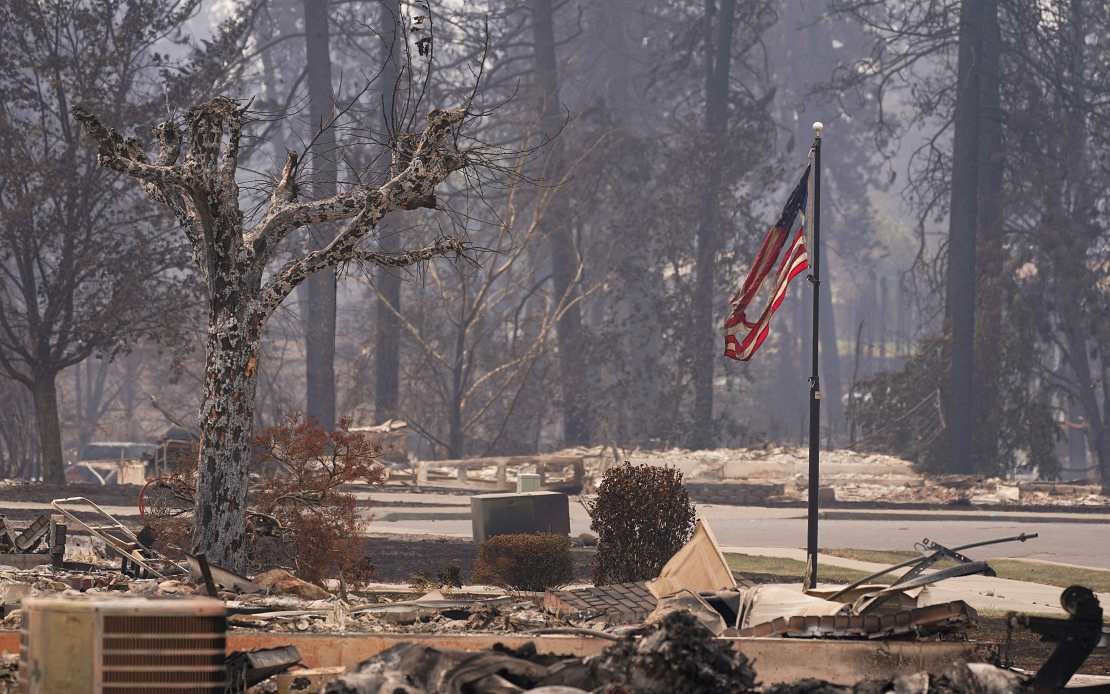
A devastating wildfire crisis is unfolding across Washington state, with the American Red Cross confirming that more than 65,000 people have been forced to evacuate their homes as multiple blazes consume residential areas and natural landscape. Preliminary damage assessments point to the destruction of more than 700 homes, with the heaviest concentration of losses occurring within Spokane County, signalling one of the more serious fire emergencies the region has experienced in recent years.
The scale of the disaster has prompted a swift law enforcement response. Spokane County Sheriff John Nowels revealed that authorities have apprehended a 37-year-old man named Aaron F. Farinacci on a first-degree arson charge, with the suspect being held on a US$1 million bond following his arrest on Monday afternoon. Investigators have linked Farinacci to the Old Trails Fire, one of several concurrent incidents threatening the area, though the connection between the arrested individual and other active blazes remains under investigation.
The Spokane Complex fires present a particularly urgent situation, with data from the interagency tracking system InciWeb indicating that flames near Spokane and Stevens counties have burned approximately 8,026 acres since Saturday. What makes the situation especially concerning is that these fires remain at zero per cent containment despite ongoing firefighting efforts, meaning crews are still in the early stages of managing the threat. However, officials have noted that improving weather conditions are beginning to provide tactical advantages, allowing incident management teams to establish and fortify defensive perimeters around populated areas.
The crisis extends well beyond Spokane County, with other parts of Washington facing equally or even more severe threats. The Sinlahekin fire represents the most alarming of these secondary blazes, having expanded to consume 85,000 acres since it was sparked by lightning on July 26. This massive fire has consumed more than 820 personnel from various agencies in a desperate containment effort, yet it too remains at zero per cent containment. Simultaneously, the Little Giant Fire northwest of Leavenworth continues its destructive march through the Okanogan-Wenatchee National Forest, having scorched 51,298 acres of protected woodland and threatening to expand further.
State authorities have mobilised comprehensively to manage both the immediate emergency and the longer-term coordination challenges. Governor Bob Ferguson reported that emergency responders have successfully made contact with nearly every individual who activated evacuation assistance protocols. However, officials are continuing their efforts to reach 14 additional people within the affected zones to verify their wellbeing and gather information about their current status. Ferguson was careful to clarify that these 14 individuals are not classified as missing persons; rather, authorities want to establish direct communication to confirm they are safe and to ensure no one has been overlooked in the evacuation process.
A critical milestone in the response has been the absence of confirmed fatalities as of the latest reporting. This outcome reflects both the effectiveness of evacuation procedures initiated by local authorities and the speed with which residents responded to alerts and orders to leave threatened areas. The relatively swift evacuation of such a large population—65,000 people represents a substantial portion of the region's inhabitants—demonstrates the importance of established emergency protocols and public cooperation during natural disasters.
The situation in Washington carries broader implications for wildfire management and emergency preparedness across the Pacific Northwest and similar climate zones. The progression from ignition to massive acreage loss in a matter of days, combined with the challenge of achieving containment when weather patterns favour rapid fire spread, illustrates the vulnerability of communities in regions prone to summer fire seasons. The recovery process for affected residents will be lengthy and complex, involving not only rebuilding of destroyed homes but also restoration of natural ecosystems and economic stabilisation of communities dependent on forest resources.
For Malaysian and Southeast Asian observers, the Washington fires underscore the universal nature of climate-related natural disasters and the importance of robust disaster response infrastructure. While the geographic and climatic contexts differ substantially from the region's typhoon and flooding challenges, the principles of rapid evacuation, inter-agency coordination, and public communication remain universally relevant. The event also highlights how lightning-triggered fires in forested areas can rapidly overwhelm firefighting capacity without aggressive early intervention and favourable weather conditions.
The arson investigation adds a criminal dimension to what began as a natural disaster response, raising questions about the circumstances that led to the Old Trails Fire and whether other concurrent blazes might share similar origins. As investigations proceed, the focus for immediate purposes remains on managing the existing active fires and supporting the tens of thousands of displaced residents confronting uncertainty about their homes and futures.

