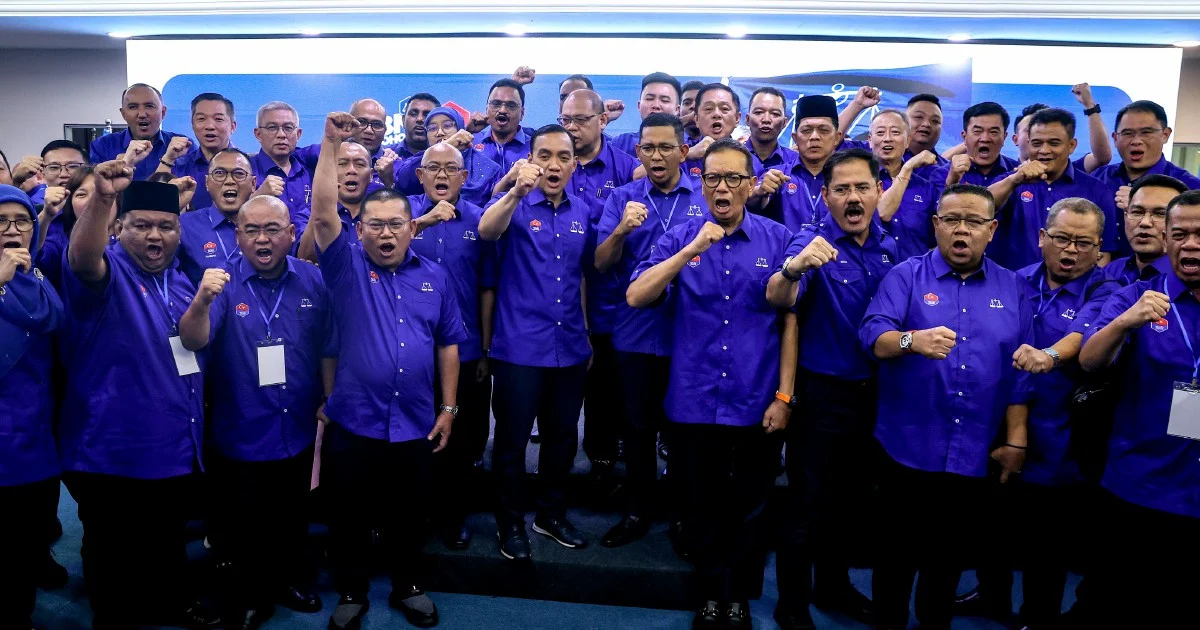
The prospect of a unified opposition-government coalition taking shape in Johor has dissolved after Barisan Nasional released its official candidate roster for the state election, conspicuously omitting any representatives from Parti Wawasan Negara. The exclusion marks a decisive conclusion to weeks of political speculation that had circulated within ruling coalition circles about potentially formalising an arrangement involving BN, the Islamist Pas party, and the relatively newer Wawasan faction—a combination that would have fundamentally altered the political landscape in this economically significant southern state.
Wawasan Negara, which has emerged as a political force in recent years by positioning itself as an alternative to both the established BN and the opposition, had generated enough intrigue to warrant serious discussion about its possible involvement in the electoral contest. However, the composition of BN's candidate line-up sent an unmistakable signal that such arrangements, if they were ever formally under consideration, have now been shelved. The decision reflects the continued centrality of BN's traditional partners and internal structures in determining electoral strategy, even as the broader Malaysian political environment continues to fragment and realign.
Johor represents a critical battleground in Malaysian electoral politics. As the nation's most developed state after the Federal Territories and a key economic engine in the southern corridor, control of its state government carries substantial symbolic and practical importance. The state has long been considered a BN stronghold, though this dominance has been tested in recent elections and political cycles. Understanding the dynamics at play in Johor therefore provides valuable insight into how national political forces are likely to manoeuvre during broader electoral contests.
The timing of BN's candidate announcement is significant in another respect. It arrives at a moment when political formations remain fluid across the country, with various parties constantly evaluating potential partnerships and repositioning themselves relative to competitors. Wawasan, despite its nascent status, has cultivated an image of pragmatism and openness to cooperative arrangements, making it an attractive potential partner for coalitions seeking to expand their electoral reach. That BN ultimately decided to proceed without Wawasan suggests either that negotiations did not yield acceptable terms, or that internal BN dynamics—particularly the interests of its component parties—took precedence over broader strategic considerations.
The relationship between BN and Pas warrants particular attention in this context. Pas has demonstrated increasing willingness to cooperate with BN in certain contexts while maintaining its separate identity and pursuing its own agenda in others. Any three-way arrangement involving BN, Pas, and Wawasan would have introduced additional complexity into these already intricate calculations. BN's choice to maintain its traditional configuration suggests that the coalition's leadership determined its existing structure remains sufficient for electoral purposes, or that incorporating additional parties would have created more complications than advantages.
For Wawasan, the exclusion from BN's candidate list represents a setback in its broader ambitions to establish itself as a meaningful player in Malaysian politics. The party has sought to occupy a distinctive political space, but its relative lack of grassroots infrastructure and electoral track record means it remains dependent on opportunistic alliances to gain parliamentary and state assembly representation. The failure to secure slots under the BN banner in Johor narrows Wawasan's pathways to electoral success in what would have been a significant arena for establishing legitimacy.
The implications for opposition parties deserve equal consideration. The absence of a Pas-BN-Wawasan arrangement means the electoral battlefield in Johor will likely retain clearer ideological and organisational lines, with opposition coalitions facing a more consolidated establishment force. This clarity could either advantage or disadvantage opposition unity efforts, depending on how effectively such parties can coordinate their own candidate placement and messaging to avoid splitting anti-establishment votes.
Within BN itself, the candidate announcement reinforces the continued dominance of the coalition's major components—Umno, MCA, MIC, and various state-based parties—in determining political strategy. While BN has periodically incorporated smaller parties, the core decision-making apparatus remains concentrated among these established entities. Their institutional resources, membership bases, and historical networks continue to outweigh the attractions of accommodating newer entrants like Wawasan.
Regional considerations also influence these calculations. Johor's proximity to Singapore and its significance as a cross-border economic hub mean that both BN and opposition parties factor national and international dimensions into their strategic planning. A more fragmented or experimentally constituted electoral front might be perceived as less stable or predictable by investors and neighbouring governments, making the preservation of clearer political configurations preferable.
Looking ahead, the Johor election will serve as a significant test of whether BN's traditional coalition model remains electorally viable under contemporary circumstances. The exclusion of Wawasan suggests confidence in existing structures, but electoral outcomes will ultimately determine whether this judgment proves sound. For Malaysian politics more broadly, the episode illustrates the continuing tension between the establishment's preference for stability and predictability, and the fragmentation and innovation evident in various quarters of the political landscape.

