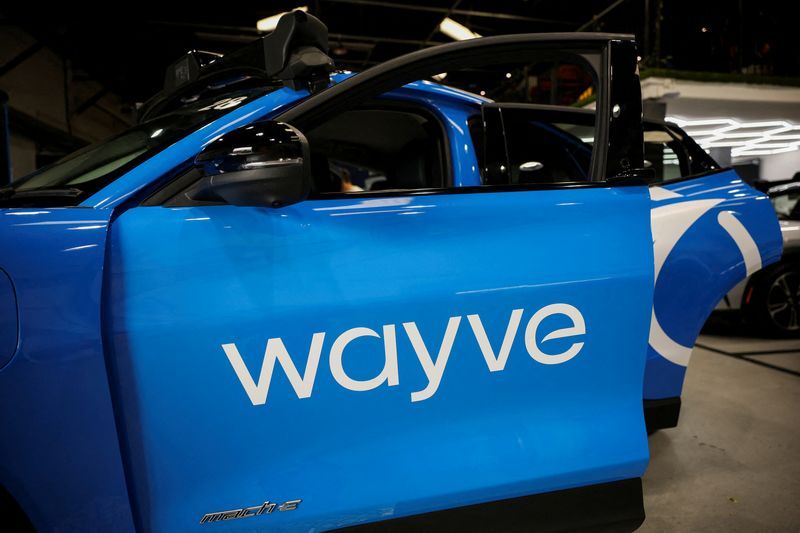
London-based autonomous-driving startup Wayve is capitalising on surging investor confidence in self-driving technology, having attracted $2.8 billion from an impressive coalition of technology titans and automotive manufacturers. The funding round demonstrates renewed faith in a sector that has endured years of setbacks and oversold timelines, with supporters ranging from Nvidia to Mercedes-Benz and Nissan. A recent partnership with Stellantis, the Jeep manufacturer, will see Wayve's technology deployed in robotaxis integrated into Uber's ride-hailing platform, signalling meaningful commercial traction.
The company's competitive advantage rests on a fundamentally different technological philosophy compared to many rival autonomous systems. Rather than relying on the conventional architecture of software coding combined with high-definition mapping to establish predetermined responses for various driving scenarios, Wayve employs end-to-end machine learning. This approach uses artificial intelligence to translate real-time sensor data directly into driving decisions, mimicking the adaptive cognition of experienced human drivers who respond fluidly to changing road conditions rather than following rigid decision trees. The distinction matters profoundly for how vehicles handle unpredictable situations that designers never explicitly programmed for.
This methodology aligns Wayve with Tesla's approach of recent years, yet diverges in a crucial technical respect. While Tesla's system relies exclusively on cameras for sensory input, Wayve's architecture accommodates a diverse array of sensors and AI processors. This flexibility means the London firm can potentially license its technology to virtually any autonomous vehicle developer, regardless of their existing hardware infrastructure. Chief executive Alex Kendall, a 33-year-old New Zealander who founded the company in 2017 immediately after completing his doctorate in AI deep learning at Cambridge University, has articulated an ambitious global vision: making fully autonomous driving accessible to every vehicle manufacturer and every geographic market worldwide.
The autonomous-vehicle sector experienced a crucial turning point with Alphabet's Waymo expansion over the past two years. The mountain view company now operates paid robotaxi services in approximately a dozen cities following more than a decade of research and development, effectively proving the commercial viability of self-driving technology. This milestone rekindled institutional investor enthusiasm that had cooled considerably amid broken promises and repeated delays. Waymo's success created a demonstration effect throughout the industry, persuading previously sceptical stakeholders that autonomous mobility represented a genuine near-term opportunity rather than perpetually distant science fiction.
A decade ago, end-to-end learning represented an obscure research frontier pursued by a handful of academic scientists, including Kendall himself. The technological landscape has transformed dramatically. Today, most autonomous-vehicle developers incorporate at least some elements of end-to-end learning into their operational systems. This shift reflects growing recognition that machine learning can outperform rigid programming in navigating the chaotic, unpredictable reality of public roads where novel situations arise constantly. However, this transition introduces a troubling trade-off that industry engineers and regulators grapple with intensely.
The central challenge concerns interpretability and transparency. End-to-end AI systems function as "black boxes" whose decision-making processes remain opaque even to their creators. When traditional driverless vehicles relied primarily on explicit software code, engineers could readily identify precisely why the vehicle chose a particular course of action. Wayve's system generates safety maps of emerging traffic situations and identifies viable driving paths, but the underlying reasoning lacks the logical clarity of conventional programming. This opacity creates genuine regulatory and liability concerns for automotive companies and transportation authorities considering adoption.
Wayve's technical leadership contends that conventional rule-based programming actually undermines safety in unexpected scenarios because it proves mathematically impossible to encode rules for every conceivable edge case or unusual circumstance. When such unpredictable moments occur, pre-programmed safety logic becomes "brittle," according to Vijay Badrinarayanan, Wayve's vice president of AI. This argument echoes how human drivers maintain safety not through memorising explicit rules but through adaptive, conservative responses when confronting genuinely novel situations. By contrast, Waymo—though increasingly embracing end-to-end models—maintains that this technology alone cannot guarantee safety at scale and continues supplementing it with conventional rules-based programming and mapping infrastructure.
Nissan, one of Wayve's marquee customers, illustrates the genuine hesitancy that traditional automakers harbour regarding this technological leap. The company's technology chief, Eiichi Akashi, acknowledged calling Wayve's system "the most advanced," yet expressed significant reservations about the difficulty of understanding precisely how the technology formulates driving decisions. Nissan plans deploying Wayve's system in Japan on the Elgrand people-mover vehicle during the fiscal year concluding March 2028, but Akashi's comments reveal the profound discomfort automotive executives experience when contemplating deploying technology whose internal logic resists human interpretation.
Wayve's operational structure positions the company to expand rapidly into new geographic markets without the traditional bottleneck of road mapping and localised code development. With substantial operations in Tokyo, Stuttgart and Vancouver, the firm leverages its learning from hundreds of cities worldwide to deploy technology with minimal local adaptation. This represents a genuine competitive advantage over mapping-dependent approaches that require extensive preliminary surveying and software customisation in each new jurisdiction. Kendall's argument centres on this scalability advantage: once the underlying AI has absorbed sufficient training data globally, deployment becomes more of an engineering problem than a research problem.
Academic perspectives on this debate remain measured and inconclusive. Siddartha Khastgir, a professor of safe autonomy at the University of Warwick, acknowledges that end-to-end models should theoretically accelerate commercial development and deployment compared to more labour-intensive traditional approaches, yet stops short of declaring either methodology inherently safer. Phil Koopman, a Carnegie Mellon University computer-engineering professor with extensive autonomous-technology expertise, characterises Wayve's approach as one viable solution among several potentially viable pathways, while cautioning that deploying self-driving systems safely across the United States alone likely demands at least a decade of additional work and novel technological breakthroughs yet to be developed. This sober assessment tempers the optimism surrounding Wayve's fundraising success and suggests the autonomous-vehicle revolution, despite accelerating progress, remains firmly in its developmental phase for most markets.
For Malaysian and Southeast Asian stakeholders, Wayve's expansion carries significant implications. The region's rapidly motorising economies, combined with chronic urban congestion and traffic fatality rates exceeding those of developed nations, represent both attractive markets for autonomous mobility and complex deployment environments. Wayve's claimed ability to learn and operate in diverse international cities without extensive preliminary mapping could theoretically accelerate autonomous vehicle integration in countries where existing digital infrastructure lags wealthier nations. However, regulatory frameworks across ASEAN remain inchoate, and the technology's opacity may encounter particular resistance from authorities prioritising transparency and clear accountability structures for safety-critical systems.

